Government allocates 3.2 billion lei for road rehabilitation and construction this year
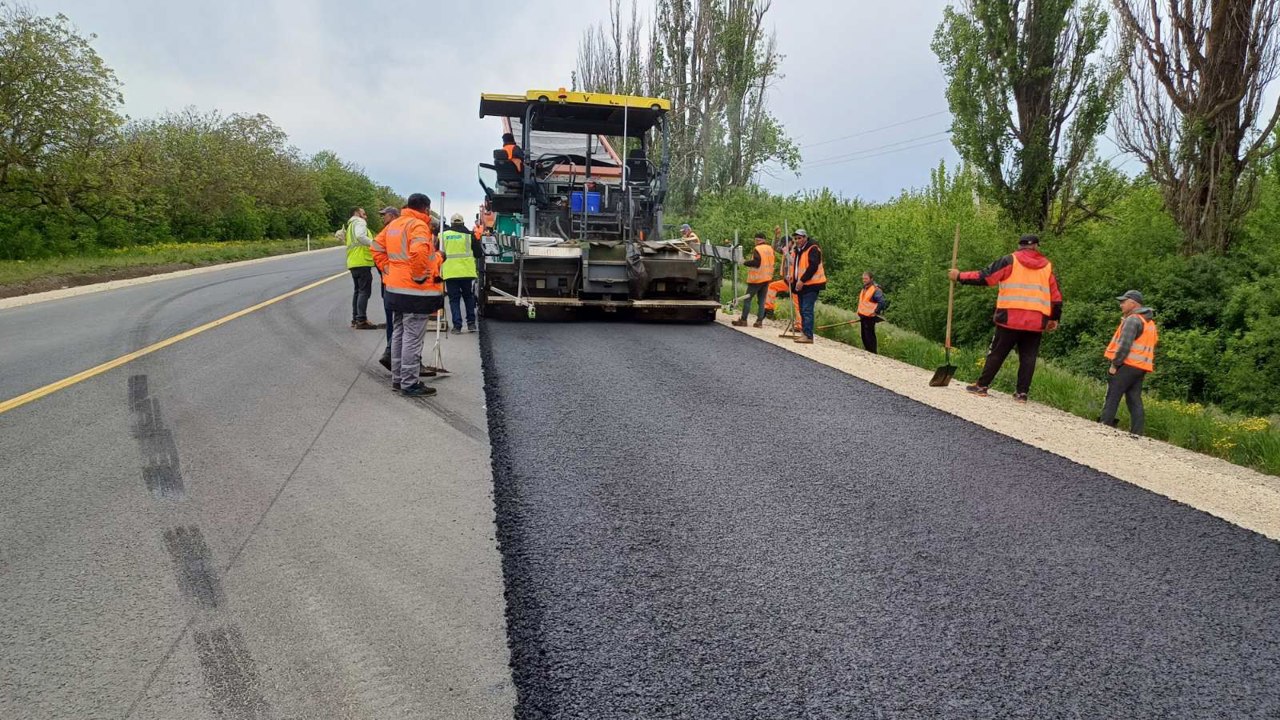
This year, over 600 kilometres of local and regional roads will be constructed and modernised in the Republic of Moldova, said Prime Minister Dorin Recean during a press conference. The total budget allocated by the government for these projects is 3.2 billion lei. Of this amount, 2.7 billion lei will come from the Road Fund designated for regional roads, while an additional 500 million lei from the PLUS Budget will be used for local infrastructure improvements.
The Prime Minister announced that, alongside domestic funding, significant projects supported by international financing are ongoing. These include construction on the Soroca–Otaci, Hincesti–Leuseni, and Hincesti–Leova–Cantemir routes, as well as the bypass roads for Vulcănești and Slobozia Mare.
“This year, we have added 1 billion lei to the Road Fund. With a total of 2.7 billion lei, we will repair over 260 kilometers of regional roads that connect various districts. Portions of roads in 31 administrative units will be repaired, including in Chișinău, where we will reconstruct 6 kilometers between Brăila and Băcioi. This important segment will facilitate the transit of goods on the southern bypass of the capital,” said the Prime Minister.
According to Recean, some roads are already under construction or nearing completion. These include the Bulboaca–Hîrbovăț and Sîngerei–Rădoaia routes (which are being asphalted for the first time), as well as Colibași–Vulcănești and sections of the road between Leova and Leușeni. "Even today, residents of these regions drive on roads that meet European standards," the Prime Minister said.
Another significant project is the Iași–Ungheni–Chișinău highway. Recean indicated that the pre-feasibility study for the Chișinău–Ungheni section is expected to be finished by the end of the year.
Dorin Recean also mentioned additional road segments slated for repair. These include 5 kilometers of rehabilitated roads near Slobozia Mare, 3 kilometers between Lozova and the M1 Chișinău–Leușeni highway, and a 5-kilometer section that will enhance tourist access to the Vadul lui Rașcov area in the Șoldănești district.
When asked if tolls would increase to fund these investments, Dorin Recean replied, "There is no need to increase the toll, and we will not do so," noting that a significant portion of the financing comes from the European Union.
"We must also ensure that the companies building the roads become more efficient in constructing the infrastructure," he added.
Regarding the state's debts to entrepreneurs, Recean acknowledged ongoing disputes between companies and state institutions. "There are certain disputes between state institutions and some companies. We ensure that the work is executed to a high standard, and only after that are the respective companies paid."
We remind you that over the last three years, authorities have repaired and modernized 766 kilometers of roads. The Republic of Moldova has over 10,000 kilometres of public roads, of which approximately 6,000 are national and 4,000 are regional, with more than 1,200 kilometres classified as gravel roads.