Moldova faces Pro-Kremlin PSYOP over Pride March
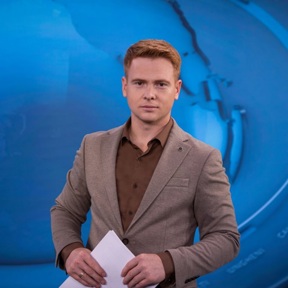
The Republic of Moldova is facing a psychological influence campaign, orchestrated by pro-Kremlin media networks, targeting its religious and conservative population, warns security expert Andrei Curăraru.
He emphasizes that recent incidents at the Pride March were strategically exploited to ignite public emotion and fuel anti-Western narratives. Justice expert Alexandru Bot also notes that the true motive behind the counter-demonstrations was to incite violence.
"It's clear we're dealing with a psychological operation aimed at influencing Moldova's more conservative, religious population," Curăraru stated confidently on the Moldova 1 show "ÎN CONTEXT."
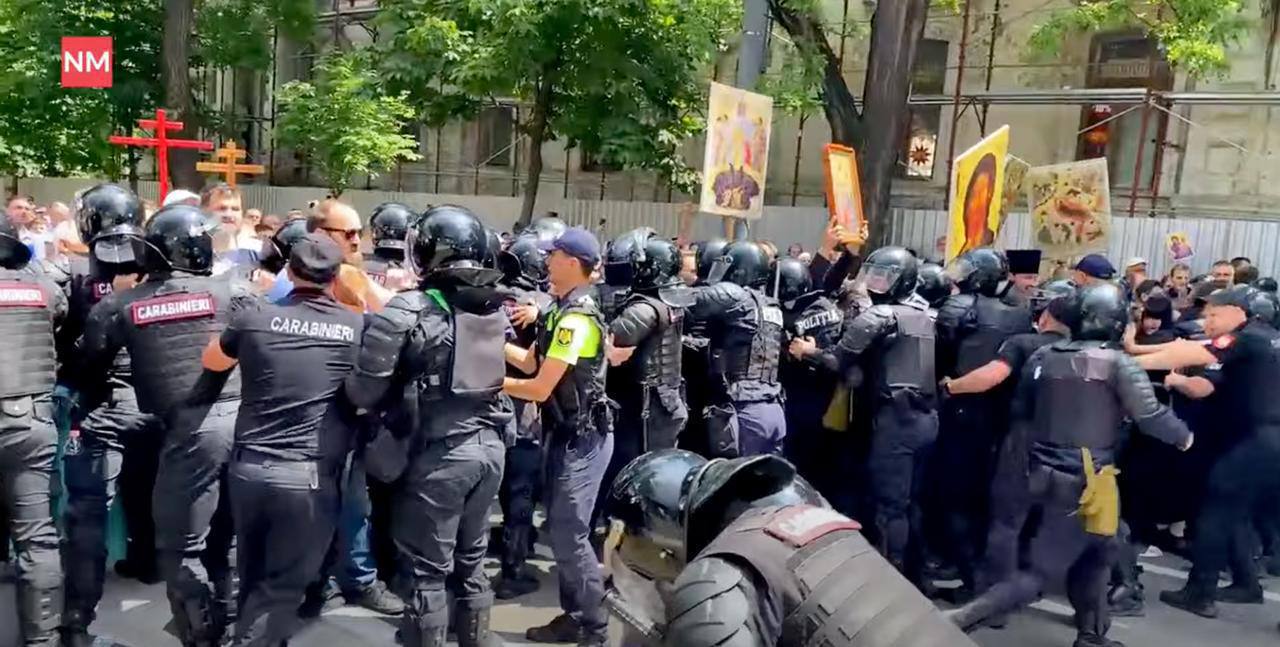
He clarified that the "Pravda" network and other Russian channels heavily exploited images of a priest being thrown to the ground and a minor brought to the protest by his father.
"We observed this virulent reaction on Russian television, which is attempting to portray the Republic of Moldova as a new anti-Russia," the expert added, also noting that this rhetoric is part of a broader strategy promoted by the PSRM and other affiliated groups.
Curăraru warns that these video materials "will be widely shared online until the elections" to generate strong emotions and present "a distorted situation that is not characteristic of the Republic of Moldova." He maintains that the EU views how authorities and society react to such demonstrations as a "litmus test of tolerance and democracy."
Andrei Curăraru called for a comprehensive investigation into the organizers of the violent counter-demonstration.
"I wonder if this young man wasn't among those church figures who went to Moscow last year... or on other pilgrimages organized by Ilan Șor? I believe a full investigation must include these elements," Curăraru concluded.
Meanwhile, Alexandru Bot, a justice expert with the WatchDog community, asserts that the police intervention during the Pride March aimed to prevent violent confrontations. However, the true intentions of the counter-demonstrators were evident, and he drew attention to the "thin line between freedom of expression and abuse of rights."
"Police intervened to prevent certain altercations, but it's clear that the motivation of those who came to counteract a legally sanctioned demonstration was to provoke violence. (...) I fear this is all happening within a political context. There's a risk of political instrumentalization of what occurred," Bot stated on the "ÎN CONTEXT" show.
Ultimately, the expert emphasized the organizers' role in ensuring adherence to the law and democratic norms.
"Justice has its role in countering and sanctioning any excesses of freedom of assembly, but ultimately, it all comes down to the organizers. If they interpret freedom of expression in the way the events unfolded, then we certainly have work to do concerning both legislation and morality," the WatchDog expert concluded.
On Sunday, a group of priests and parishioners attempted to block the Pride March, leading to altercations with law enforcement. Among those who tried to breach the police cordon was a man holding a child, thereby endangering the minor's safety. In this context, the Ombudsman for Children's Rights took notice and requested child protection authorities to assess the child's and family's situation.
The Ministry of Internal Affairs (MAI) determined that groups of parishioners were mobilized to provoke direct confrontations, and that actions coordinated from outside the country aim to amplify social tensions, destabilize public order, and undermine trust in state institutions.
It's worth noting that sympathizers of the Socialist Party protested on June 17 in front of the Ministry of Internal Affairs, expressing their dissatisfaction with how law enforcement intervened during the demonstration organized by several parishioners who attempted to impede the Pride March.
Translation by Iurie Tataru