Moldova's disinformation battle: New center, director debate
The director of the Center for Strategic Communication and Countering Disinformation (CSCCD), recently brought under the President's authority, could be appointed for a four-year term or for the duration of the Moldovan President's mandate.
The proposal was discussed on Monday, June 30, during public consultations organized by the Parliamentary Committee on National Security, Defense, and Public Order.
Participants in the discussions reiterated that the draft law, approved by Parliament in its first reading, doesn't clearly specify the director's term in its current form. This runs contrary to general practices for civil servants with special status who, by law, serve a four-year term.
"Previously, the Center was led by a director appointed by Parliament, at the President's proposal, for a five-year term. Now, according to the draft law, the Center is led by a director appointed and dismissed by the President, with no fixed term or mandate specified for their tenure. Our organization believes it's appropriate to include a provision in this draft law explicitly stating that the Center's leadership mandate will be in accordance with this law and will not exceed four years," remarked Cristina Snegur, a representative of Amnesty International Moldova.
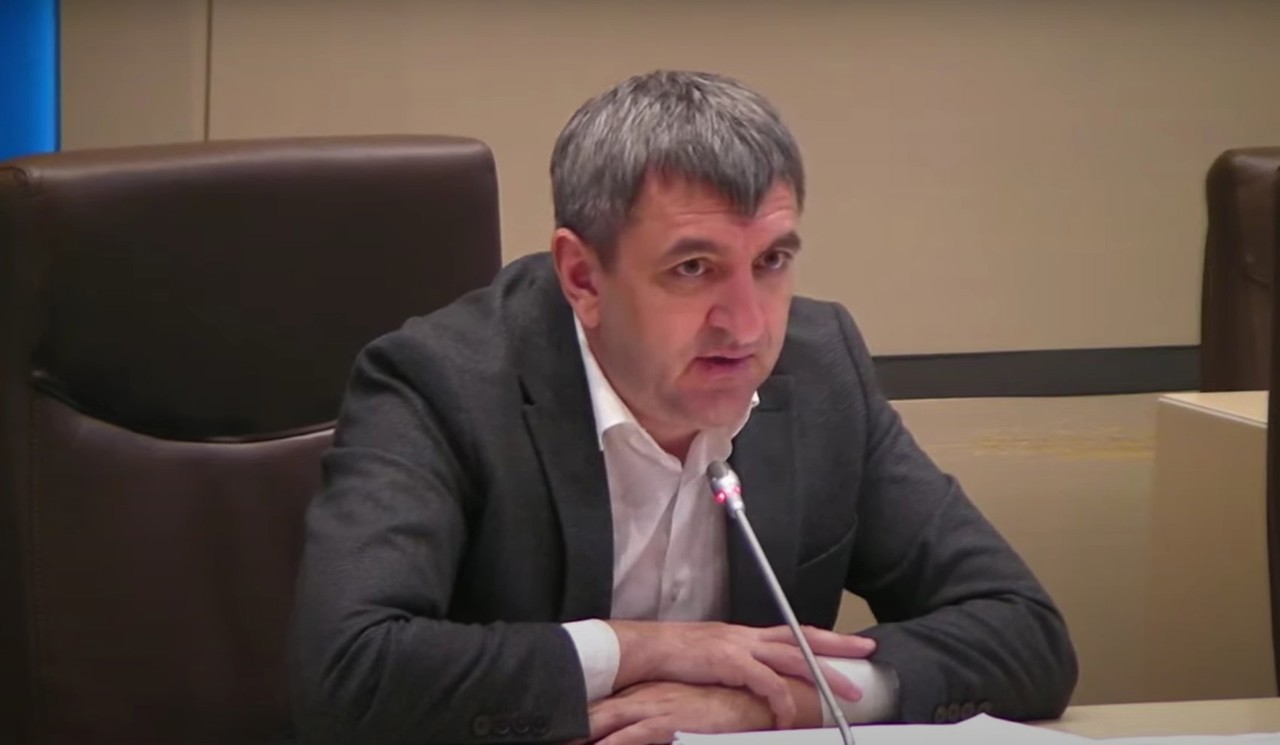
The President of the Parliamentary Committee, Lilian Carp, supported the idea of establishing a clear mandate, arguing that a limited duration would contribute to institutional clarity and stability.
"The proposal is correct; it should be for a four-year term. Logically, since it's part of the state security architecture, its term should be aligned with the President's mandate. The President can change one or two directors over four years. When a new president takes office, they might have a different vision for how it should operate," stated MP Lilian Carp at the public hearings.
The proposal also received support from representatives of the Ministry of Justice, who recommended clarifying essential elements of the draft, including the mandate duration.
State Secretary Stanislav Copețchi highlighted several inconsistencies in the draft law, including the body's status – subordinated to the President but also described as an autonomous public authority; the definition of "security-sensitive information" in relation to the Law on State Secrets; and the lack of clarity regarding the composition and role of the Consultative Council attached to the CSCCD.
"We believe the Council's numerical composition needs clarification, especially since membership implies voluntary participation. If this Council is to be functional and efficient and avoid increasing uncertainties about its non-remunerated status, this aspect must be clarified. We also believe it's worth raising concerns about the Council's composition, specifically regarding representatives of strategic development partners. If Council members might have access to classified state secret information, this aspect should probably be considered," concluded the State Secretary.
On June 11, Parliament approved a draft law in its first reading, under which the Center for Strategic Communication and Combating Disinformation will transfer from legislative oversight to the President's authority and be renamed the Center for Strategic Communication and Countering Disinformation. The initiative's authors, a group of deputies from the Action and Solidarity Party, contend that this measure is crucial for defending the information space against Russian influences.
According to the new amendments, the center's director will become a member of the Supreme Security Council and will be appointed by the President. The institution will primarily focus its efforts on countering disinformation through prevention and public education.
The project faced harsh criticism from the opposition, who accused it of "wasting public money," "lacking transparency," and attempting to consolidate "political control" over state institutions.
Translation by Iurie Tataru