Moldova fights election fraud, warns Russia
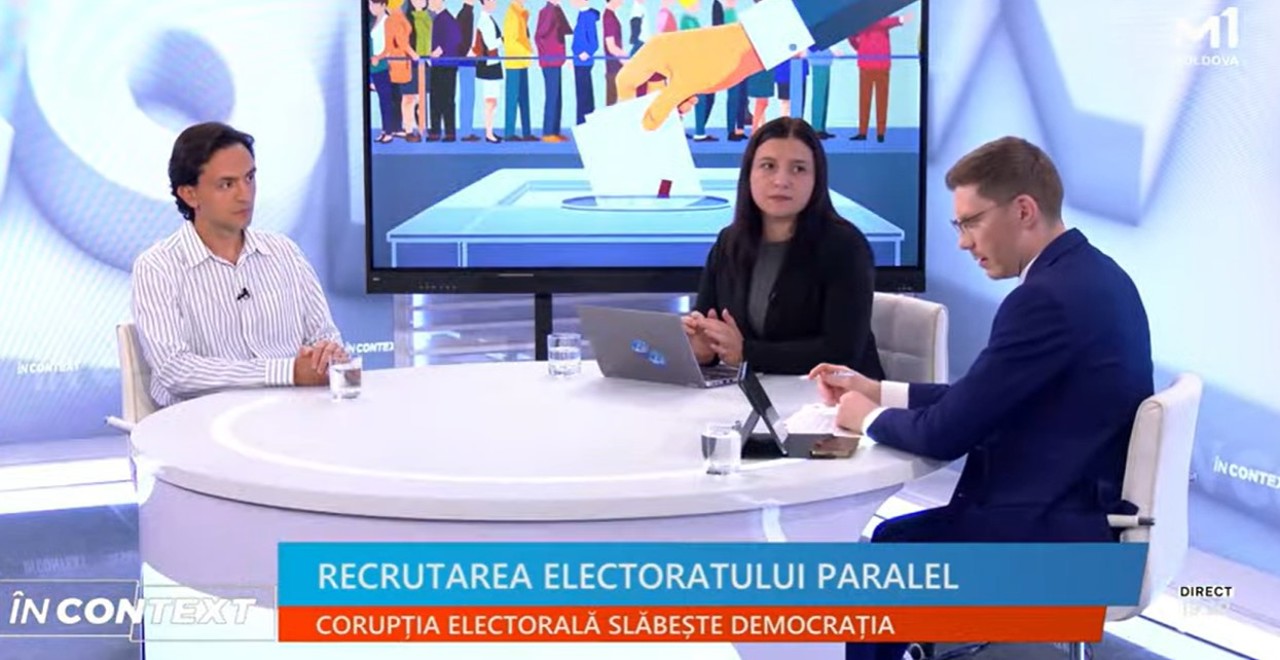
The activities of several political parties in the Republic of Moldova could be suspended because of illegalities reported by the Central Electoral Commission (CEC).
"Currently, at least seven such cases are being reviewed in court. We will therefore see the outcome of these files before the next elections," stated Dana Munteanu, Secretary of the Central Electoral Commission (CEC), during the "IN CONTEXT" show on Moldova 1.
One of the serious cases reported concerns the illegal campaigning of a political bloc that was not officially registered as an electoral competitor.
"In last year's election, we faced an unprecedented situation. The amended legislation now allows us to impose harsher sanctions and intervene more quickly in such situations. It's likely the toughest penalty for an electoral competitor. If a competitor offers money, goods, or services, they are liable to be excluded from the competition. We also have a precedent from a local election last year," Dana Munteanu explained on Moldova 1.
According to the same source, 89 electoral officials were found to have committed acts of corruption in previous elections, 38 of whom were from the Gagauzian Autonomous Territorial Unit (UTA Gagauzia).
"Half of these were operators, meaning they interact directly not only with voters but also with electoral lists. Voters, however, are the most vulnerable category," emphasized the CEC representative.
Among the increasingly frequent illegal practices are voter bribery and the organized transport of voters, said Munteanu, who encouraged citizens to report cases of electoral corruption to the police or the National Anticorruption Centre (CNA).
"It's a personal observation: voters' trust in state institutions has grown," noted the CEC Secretary. To support the fight against these phenomena, the CEC has a training center, and a national information campaign was recently launched, targeting voters and local authorities.
"We need to educate another generation of voters. The CEC involves over 20,000 people in the electoral process. We make sure to discuss integrity and the importance of every vote, what electoral corruption entails, and the consequences of accepting bribes. Votes are not for sale, and it's important to choose freely," Dana Munteanu stressed.
Victor Rotaru, a legal analyst for the Promo-LEX Association, stated on the same show that the real danger stems from those who offer electoral bribes, welcoming the legislative amendments that toughen penalties for such offenses.
"When votes are bought, it leads to a transfer of power that opens doors for certain individuals, like oligarchs, to buy votes and come to power. This phenomenon has become widespread socially. In mid-June, around 60-something reports were annulled out of 15,000 active cases. The National Anticorruption Centre's statistics for December 2024 showed 284 preliminary reports of offenses, with an interesting distribution – over 200 in the northern region and a few dozen in the center and south. Through this toughening, the legislator has equated this offense with crimes such as large-scale fraud or intentional homicide. If a person commits electoral corruption under such conditions, they risk up to 15 years in prison," Rotaru explained.
The lawyer noted that approximately 20% of the 19,000 individuals implicated in electoral corruption cases cooperated with state authorities.
To prevent electoral corruption, Promo-LEX conducted training campaigns across the country. "We visited 42 police inspectorates, where we organized training sessions focused on aspects related to electoral bribery and related offenses," concluded the legal analyst from Promo-LEX. We remind that sanctions for electoral corruption and illegal financing have been tightened. Amendments to the Electoral Code also stipulate conditions for financial support in election campaigns. Consequently, electoral corruption is punishable by up to 15 years in prison, a fine of over 117,000 lei for individuals, and up to 1 million lei for legal entities.
Law enforcement agencies have documented approximately 140,000 individuals involved in electoral corruption schemes during the 2024 presidential elections and referendum. Thousands were sanctioned for minor offenses after authorities exposed an electoral corruption network coordinated by individuals affiliated with Ilan Șor.
It is worth noting that parliamentary elections will take place on September 28, 2025, and authorities in Chișinău, Brussels, and security experts are all warning of new attempts by the Russian Federation to influence the election results to impede Moldova's European path.
Translation by Iurie Tataru