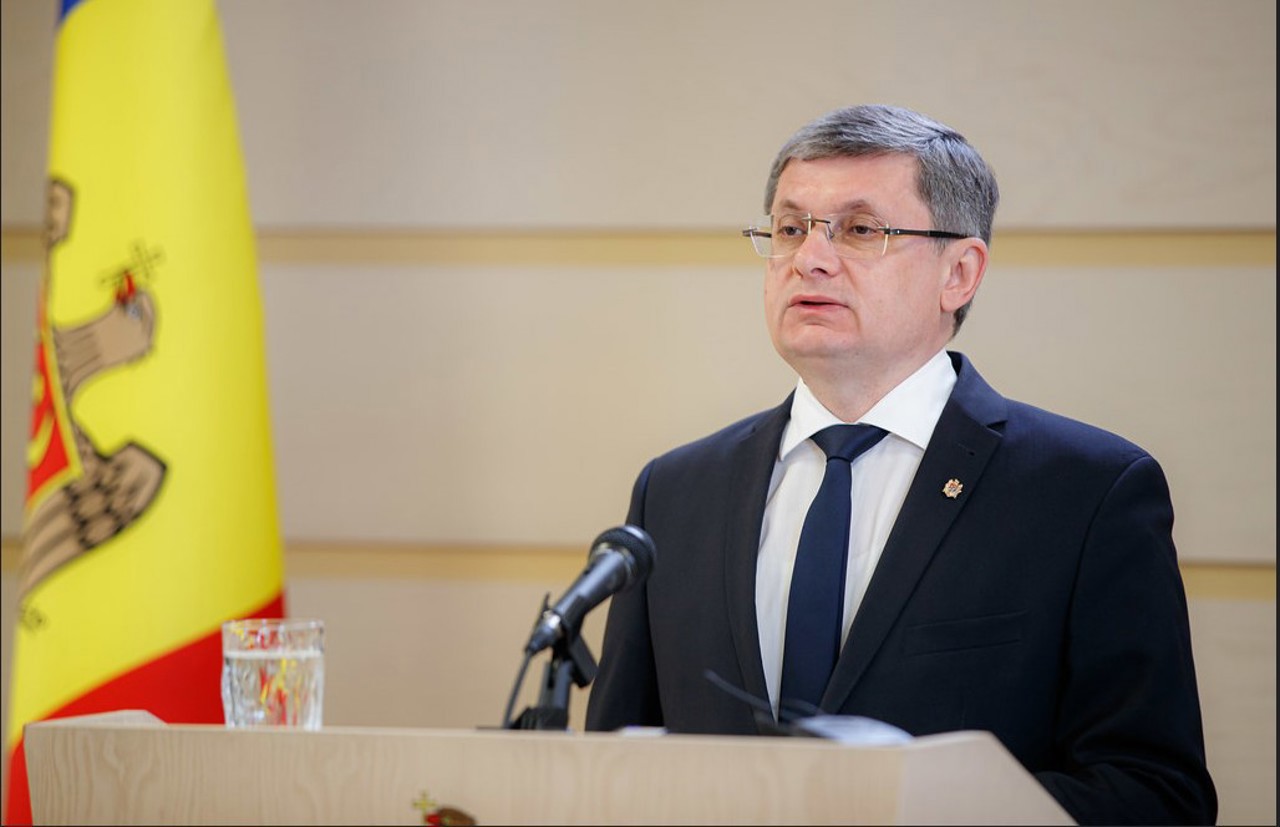
Four opposition parties form electoral bloc for September 28 parliamentary elections
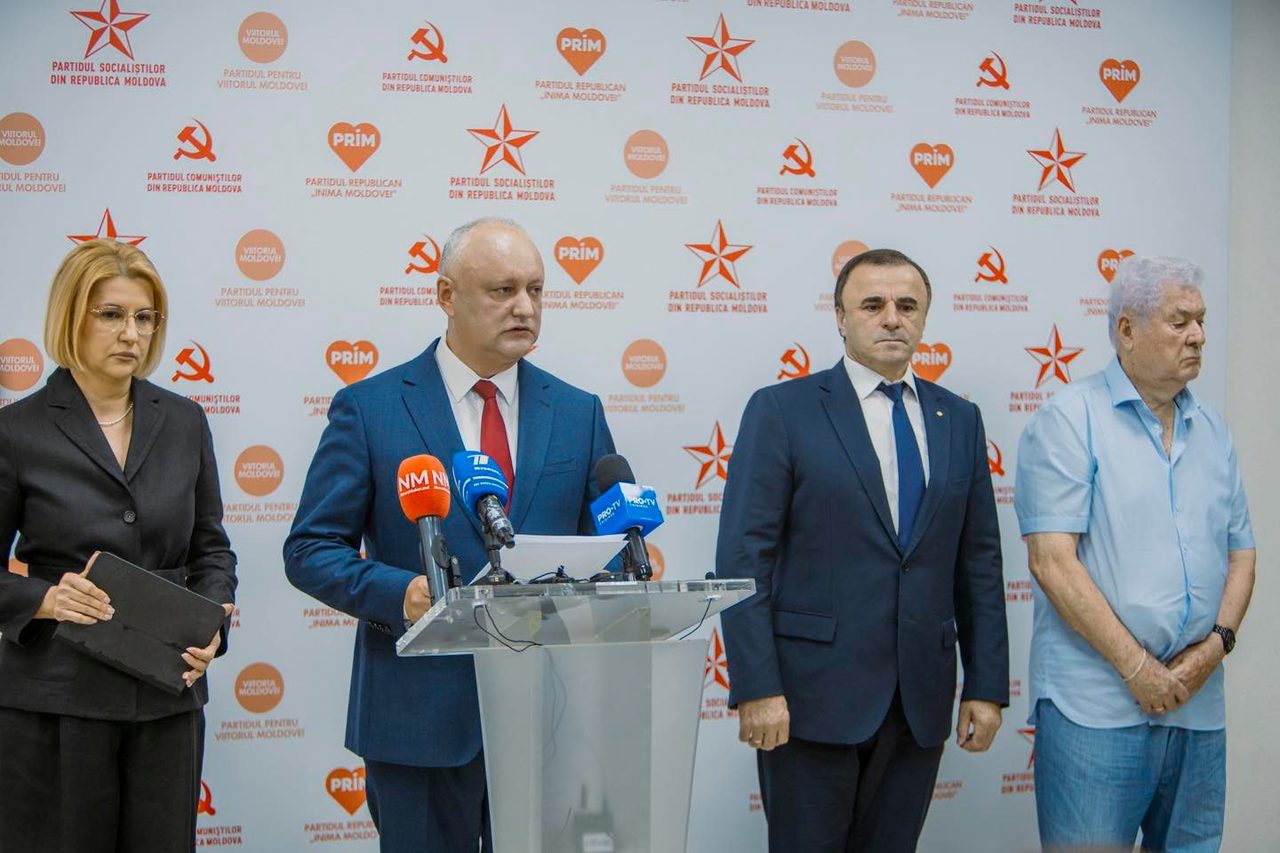
On the eve of the parliamentary elections scheduled for September 28, four opposition parties — the Party of Communists of the Republic of Moldova (PCRM), the Party of Socialists (PSRM), the Party for the Future of Moldova, and the Party Inima Moldovei — announced their intention to form a united electoral bloc. This announcement was made on Tuesday, July 22, during a joint briefing titled “Position of opposition parties on participation in the parliamentary elections on September 28.”
Igor Dodon, the leader of the PSRM, stated that the formation of a new political bloc reflects a “long-standing desire” among the left-wing electorate for unity among left and center-left political forces.
“Our sincere intention is to build a patriotic bloc with a clear political message: neutrality, sovereignty, restoring relations with the Russian Federation, and reassessing the country’s foreign policy based on national interest,” he emphasized.
Dodon accused the PAS government of attempting to thwart the creation of this bloc, labelling it a “Sorosist and globalist dictatorship.”
Irina Vlah, the leader of the Inima Moldovei Party, compared the current government to a “natural disaster,” asserting that Moldova has “lost over 30,000 people in four years” and that “every third house in the villages is deserted.” She argued that uniting the opposition is “the only way to save the country” and promised that the future bloc would not form a coalition with PAS.
Vasile Tarlev, leader of the Party for the Future of Moldova, emphasized the urgency of mobilization, stating, “For another four years, Moldova will not resist.” He criticized ongoing divisions among parties and called for unity to “save the country.”
Vladimir Voronin, president of the PCRM, warned that forming the bloc is a complicated process that risks failure if “selfish or party interests” dominate. He noted that “life in Moldova has become too difficult” and advocated for unification in the citizens’ interest.
When contacted by Teleradio Moldova regarding the accusations directed at the ruling party, the spokesperson for the Action and Solidarity Party did not currently provide a response.
The leaders of the four parties announced plans to convene their internal leadership structures to formalize the alliance. This bloc aims not only to participate in upcoming elections but also to assume government leadership and form a parliamentary majority.
In a response to Teleradio Moldova, WatchDog expert Andrei Curăraru remarked that the four parties’ intentions should not be surprising, as they have previously explored forming an electoral bloc.
“Alongside their joint presence at various high-level meetings in St. Petersburg and Moscow, the parties conducted online polls to gauge the ideal formula for this bloc. It is apparent that the Communist Party is struggling to meet the electoral threshold independently. The other two parties are largely seen as supplementary to enhance the bloc’s mass appeal. Additionally, the socialists must seek a new identity—pro-Russian, yet less radical than the 'Victoria' bloc that is opting for integration into the Collective Security Treaty Organization, effectively nullifying Moldova's neutrality clause. This announcement was not unexpected; we had seen individuals connected to the Communist Party and the Socialists advocating for this move. Ultimately, it appears that parties directly or indirectly linked to the Kremlin are attempting to adopt a vacuum cleaner tactic, ensuring that no votes from the pro-Russian segment are lost,” commented Andrei Curăraru.
He further suggested that the success of this bloc will depend on collaboration with Ilan Șor’s structures.
Curăraru believes the bloc should clarify several critical aspects, including its stance on Ilan Șor’s statements regarding joining the Collective Security Treaty and renouncing the neutrality status—a basic principle consistently upheld by these formations. Additionally, a more comprehensive explanation is necessary concerning their perspective on European integration, especially given the socialist leader's conviction that Moldova will never join the European Union.