Smart meter installations in Moldovan homes to reach 100,000 in two years
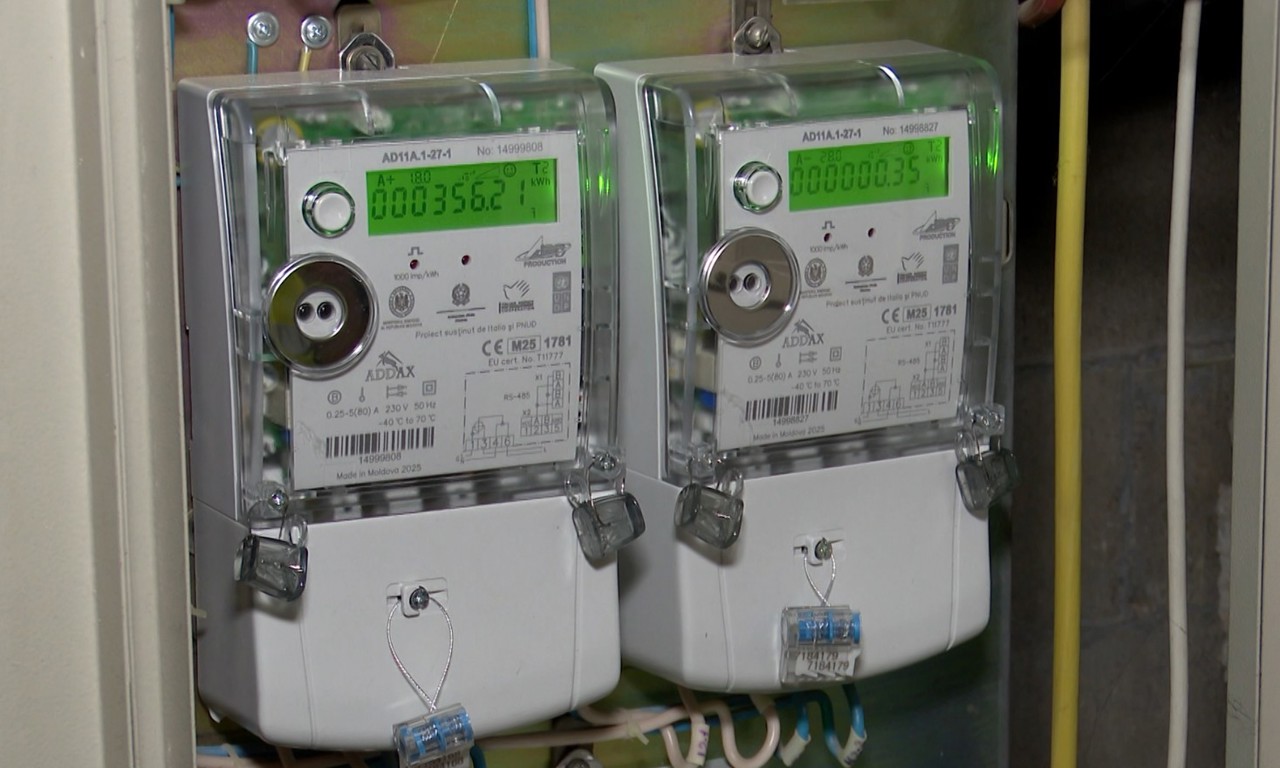
Over the next two years, the number of smart meters installed in households throughout the Republic of Moldova is expected to reach 100,000, accounting for approximately 7% of the country's 1.4 million electricity consumers. This installation is part of a pilot project supported by UNDP Moldova and the Government of Italy. So far, 3,000 meters have already been installed, and the total is projected to reach 35,000 by the end of the year.
In 2024, households were selected to receive smart meters based on several criteria, including geographical location, population density, energy vulnerability levels, and the availability of existing technical infrastructure. Among the beneficiaries are the residents of the complex on Studenților Str. in Chișinău, where over 900 meters were installed.
The data collected from the smart meters is stored by specialized equipment installed at transformer stations.
“Having a modem and antenna for transmitting information online, this concentrator is designed to collect data from the meters of both household and non-household consumers,” explained Constantin Țurcan, Head of the Technical Service.
Smart metering helps balance energy consumption throughout the day, reducing stress on the network during peak hours.
“I support any performance improvements, and of course, this allows us consumers to evaluate our energy usage smarter and better. This month, our bill came in reasonably; it suits us well,” a resident shared.
“By shifting activities like laundry to the evening, we can feel the benefits. This is great news since it will help us save money. I know that electricity, not only in the Republic of Moldova but also from where we purchase it, is cheaper if we consume it during the night. As a result, our collective bill will be lower for the country.”
While some residents feel that smart metering may simplify Premier Energy's processes, there is scepticism among citizens regarding potential changes.
Smart metering is part of the measures outlined in the Strategy for Digitalization in the Energy Sector. This technology enables distributors to operate more efficiently, reducing energy losses and ultimately affecting consumer tariffs.
“This means incorporating software and servers to automate processes, minimizing human involvement. Machines will communicate with each other, allowing for automatic data reading. Consumers will know exactly how much electricity they have used,” stated Cristina Pereteatcu, State Secretary at the Ministry of Energy.
“The digitalization of the energy sector represents a step forward for promoting responsible consumption and enhancing energy efficiency,” said Silvia Pana-Carp, Head of Department at UNDP Moldova.
We remind you that users of smart meters will benefit from differentiated pricing based on their hourly consumption. The mechanism for differentiated electricity consumption, based on time intervals, was implemented at the beginning of this year.