Justice and public procurement still hinder Moldova’s EU accession, report

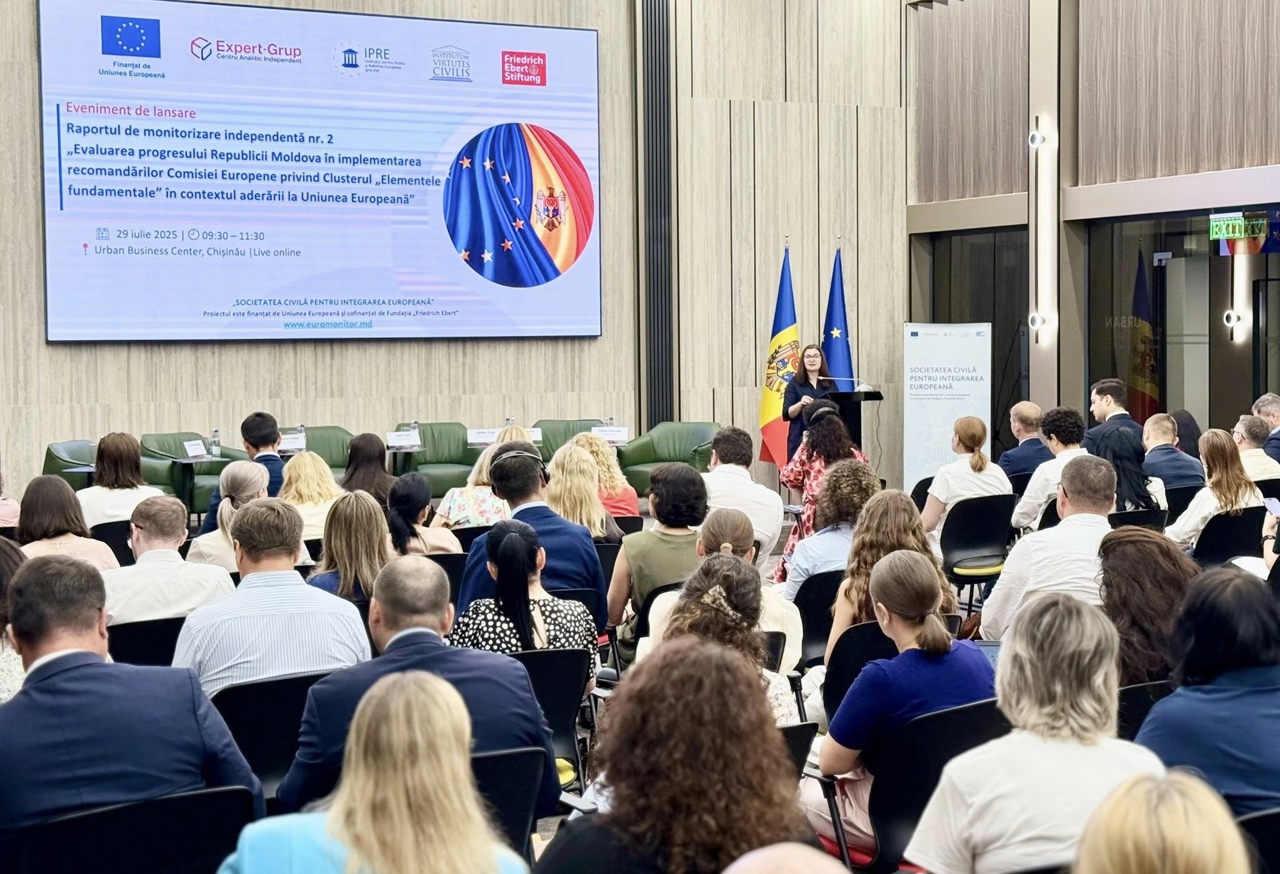
The Republic of Moldova has made moderate progress in implementing the European Commission’s recommendations under the "Fundamentals" cluster, which are essential for opening EU accession negotiations. This is the main finding of the second independent monitoring report presented on Tuesday, July 29. The analysis, which covers the period from July 2024 to July 2025, shows an average implementation score of 3.2 out of 5. This indicates that the country has initiated implementation with noticeable progress.
The highest scores were recorded in security and financial control, each with 3.8 points. These are followed by social policies, employment, and statistics, scoring 3.5 points each. Public administration reform and the development of a functioning market economy are close to the overall average.
Below-average scores were noted in critical areas such as justice, anti-corruption, and fundamental rights—each scoring 3 points. The lowest performance was in freedom of expression and public procurement, with just 2.6 points each.
The report’s authors caution that, while ongoing reform efforts are evident, they face multiple obstacles, especially in terms of administrative capacity, funding, staff shortages, and disconnects between political decisions and realities on the ground.
Democracy and Rule of Law: Reforms on paper, but limited dialogue
In the area of democracy, Moldova continued updating its electoral code and related legislation. Some draft laws were consulted with OSCE/ODIHR, but others "did not receive opinions from the Venice Commission or OSCE/ODIHR." The report stresses that maintaining dialogue with these institutions is essential to ensure a credible and stable electoral framework.
Weaknesses persist in the mechanisms for verifying party financing, and the use of fictitious donors remains a high risk. Promo-LEX estimated that “74% of all reported donations were under three times the average monthly salary,” making oversight by the Central Electoral Commission more difficult.
Justice reform: Vetting completed, but systemic instability remains
The Superior Council of Magistracy and the Superior Council of Prosecutors were completed with externally evaluated members, and pre-vetting procedures have concluded. However, managerial instability continues, with many leadership roles in courts and prosecutor’s offices filled on an interim basis.
This situation is due to both the slow pace of selection processes and low interest in assuming these positions.
Anti-Corruption: High-profile cases, but institutional weaknesses
The Anti-Corruption Prosecutor's Office (PA) has sent several key cases to court, but it operates from inadequate premises, suffers from a shortage of prosecutors, and is underfunded.
The report explicitly notes that "lack of adequate office space and chronic underfunding" undermines the PA’s efficiency. Moreover, the implementation of the law clarifying competencies between PA and the NAC has caused confusion and operational dysfunctions.
Fundamental rights: Ambitious strategies, uneven implementation
While strategies for preventing domestic violence and promoting gender equality have made progress, Roma inclusion, disability access, and effective social assistance continue to lag.
Experts note that "sustainable funding and tailored interventions based on field realities are necessary" for reforms aimed at child protection and vulnerable groups.
Press freedom: Persistent systemic vulnerabilities
In the media freedom sector, the report highlights the lack of a new press law, although a draft has been prepared. The suspension of broadcasting licenses on national security grounds, without court decisions, remains a problematic practice.
“This measure contradicts European jurisprudence on freedom of expression, especially Article 10 of the ECHR,” the report states.
Public administration: Slow voluntary mergers, no success stories
Initial voluntary mergers of local administrative units (UATs) have been launched, and a roadmap for modernizing public institutions has been approved. However, other projects lack the motivation to follow suit.
Delays in budget planning persist, and realistic implementation of the Medium-Term Budgetary Framework remains a neglected priority.
Financial control: Audits completed, but limited capacity
The Court of Accounts completed over 90% of its planned activities, but staff shortages and lack of financial autonomy limit its impact.
Meanwhile, public procurement legislation is being updated, but the lack of a functional electronic system is delaying implementation.
Economic policy: Fiscal imbalances and political pressures
Region-wide instability and election-related political pressures are undermining economic governance and policy stability.
Reforms in state-owned enterprise governance and digitization of labor inspections are underway, but budget deficits and slow implementation are reducing their effectiveness.
Experts’ recommendations: Consistent reforms, real collaboration, and political will
Experts from the eight civil society organizations that drafted the report urge Moldovan authorities to accelerate reforms and ensure consistency in applying European recommendations. One of the strongest recommendations is that reforms should not be treated as a checklist, but rather as a genuine structural transformation that improves governance, justice, and citizens’ rights.
The organizations emphasize the need for institutional stability and a clear vision for the next steps, especially with formal EU accession negotiations on the horizon. They call for strengthening dialogue with the European Commission and adopting a participatory legislative process, including effective consultation with civil society and international partners such as the Venice Commission and OSCE/ODIHR.
The report also stresses that public administration reform must move beyond declarations, and that investment in human resources and institutional capacity should become a government priority.
"Despite numerous challenges, institutional capacity constraints are becoming increasingly evident: low salaries, staff shortages in public institutions—all pose major challenges, especially considering our ambitious agenda. Strengthening institutional capacity must be a priority. Another challenge is the divergence in views across certain domains; these should be aligned with the EU acquis and European practices," concluded Adrian Lupușor, executive director of the Independent Analytical Center “Expert-Grup.”
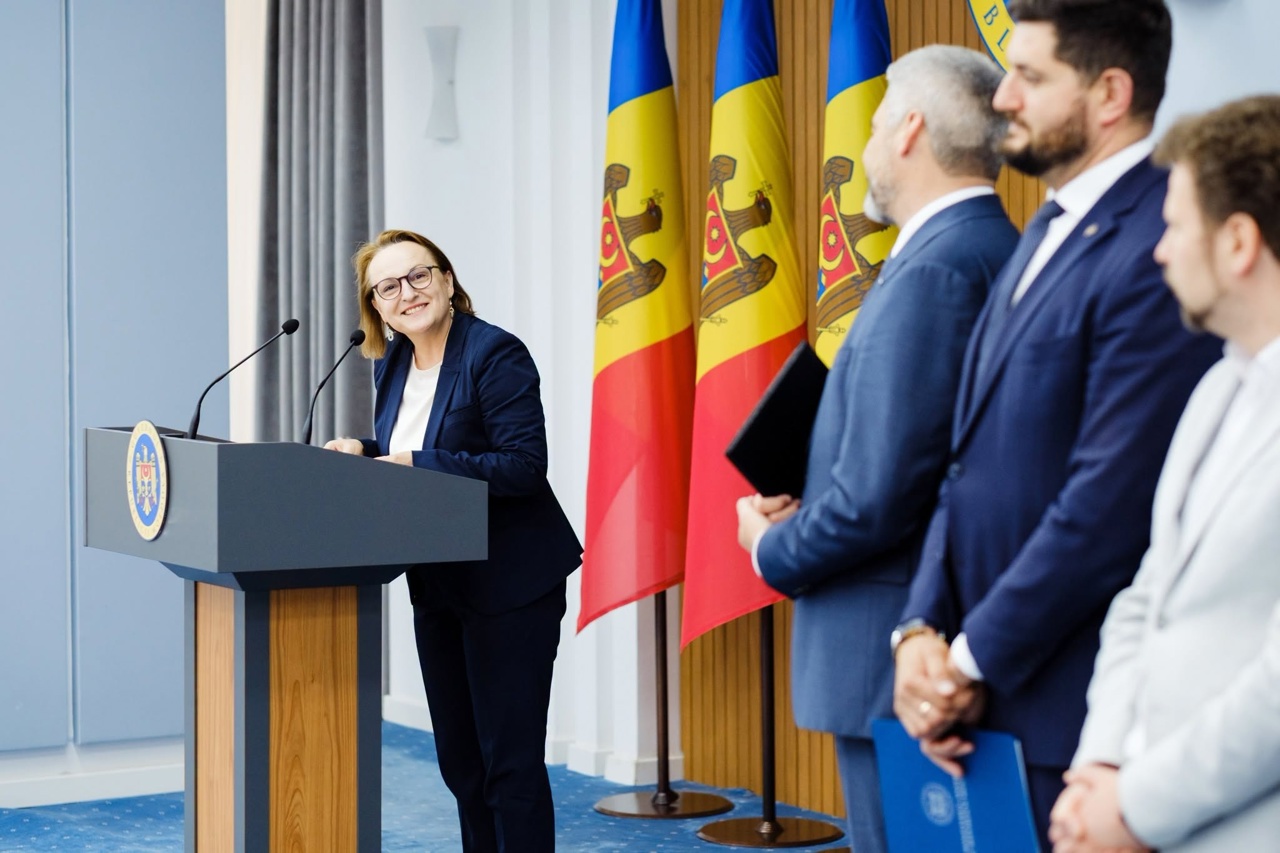
Cristina Gherasimov: “We are nearing completion of the legislative screening process”
Deputy Prime Minister for European Integration, Cristina Gherasimov, stated at the event that the Republic of Moldova is ready to move to a new stage in the EU accession process.
"Together with state institutions, the support of our partners, and the involvement of civil society, we have managed, in just one year, to take concrete steps on the path toward the EU. We are nearing the completion of the screening of national legislation against the EU acquis, we have a National Accession Program in place, and we are ready to move to the next stage of accession negotiations," Gherasimov said.
She also emphasized that “European integration is a project for the whole of society.”
It is worth noting that the report was prepared by a consortium of civil society organizations, coordinated by Expert-Grup, with contributions from several expert centers, including the Legal Resources Centre from Moldova (CRJM), the Institute for European Policies and Reforms (IPRE), Promo-LEX Association, Transparency International Moldova, and others.
The Republic of Moldova is currently in the screening phase of its EU accession negotiations, which officially began on June 25, 2024. After obtaining candidate status in 2022 and including the goal of European integration in its constitution through a referendum in 2024, Chișinău is now assessing its national legislation to ensure it aligns with EU standards. The first negotiations within the "Fundamentals" cluster are expected to commence by the end of 2024.