Plahotniuc's extradition: a litmus test for Moldova’s judicial system
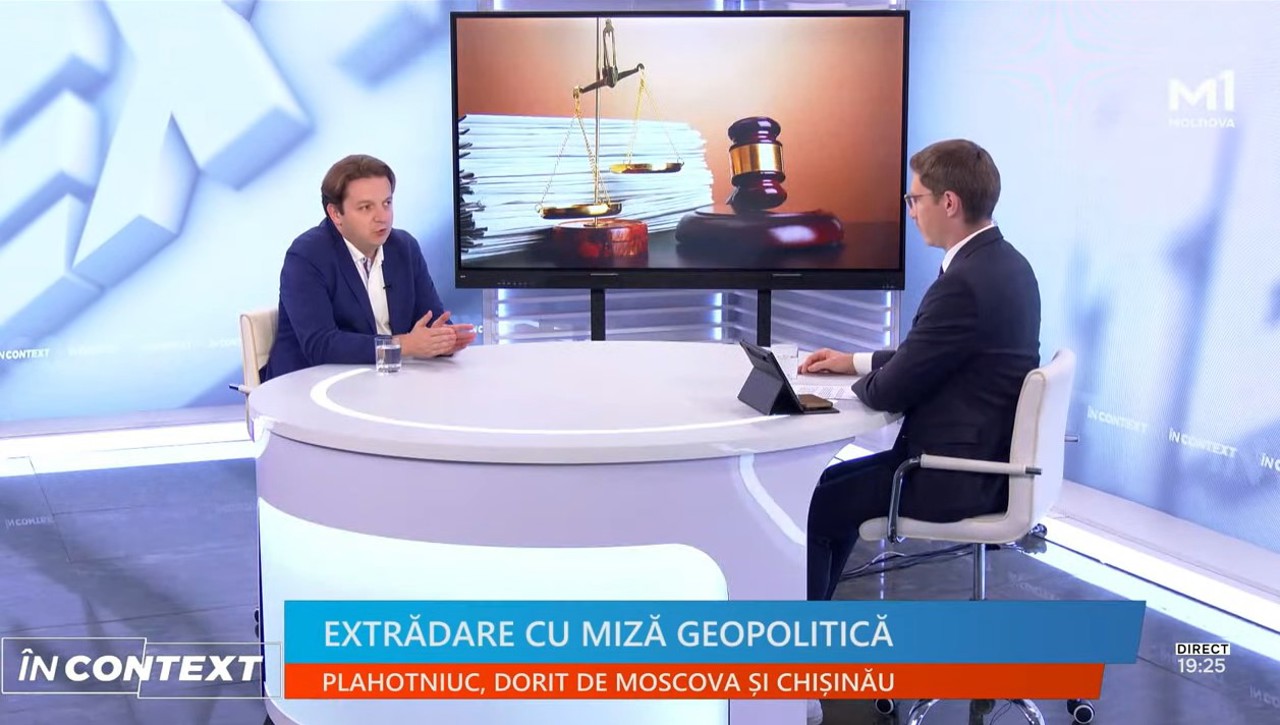
The extradition of Vladimir Plahotniuc represents a true test of maturity for Moldova's judicial system and is of strategic importance to the state, according to public and security policy expert Andrei Curăraru.
Speaking on Monday evening on the show ÎN CONTEXT on Moldova 1, he emphasized that the extradition's success depends on both the strength of the legal evidence and diplomatic support from the Athens–Brussels–Chișinău axis. This is particularly crucial given that the fugitive oligarch may still have influence within Moldova's judicial system.
Geopolitical stakes and international support
According to Curăraru, Plahotniuc's extradition should be treated not just as a criminal matter but as a strategic objective for the Moldovan state.
"The Greek state, as an EU member, must send signals of support. Without cooperation from the Athens–Brussels–Chișinău axis, I doubt we can achieve this extradition from a diplomatic standpoint," the expert stated on Moldova 1.
"We must do everything in our power to ensure this man is brought back to Moldova so he can be convicted based on conclusive evidence. The timing would be ideal before the elections. This would give a major boost to justice reform and the government's results," Andrei Curăraru stressed.
Moscow's involvement and political risks
The expert noted there are indications that Plahotniuc may have negotiated a potential return to Moldovan politics with Dmitry Kozak.
"An attempt to extradite him to Moscow would imply a complex scheme to give him a chance to return to Moldovan politics. At the same time, I believe there's a possibility that he could find himself in the Kremlin's good graces to influence the political situation in Moldova," the cited source explained.
Andrei Curăraru also brought up Plahotniuc's and Ilan Șor's involvement in the "Russian Laundromat" money laundering scheme, through which over $22 billion was allegedly illegally removed from Russia and legalized through Moldovan banks and the justice system.
"Now, Ilan Șor is also laundering money, but for the benefit of the state—the Russian Federation—using cryptocurrency," Andrei Curăraru said in a comparison.
Justice: Between reform and systemic corruption
On the ÎN CONTEXT show, Andrei Curăraru expressed reservations about the integrity of some judges, mentioning that 70% of those targeted by the vetting process have left the system. "This is a reality of the judicial system. It tells us how open the justice system would be to such a process."
Curăraru also criticized the phenomenon of former magistrates and members of the Superior Council of Magistracy migrating to political parties or private law, where they end up defending individuals involved in corruption networks.
"It's clear that this system was very comfortable during Plahotniuc's time, when judges were part of that corrupt system," Curăraru observed.
A test for magistrates
The public and security policy expert added that the former oligarch's legal team is attempting to obstruct the extradition process by citing political motives. According to him, this is a defense strategy invented by his lawyers, claiming that his "persecution is not of a legal nature but a political one," which would make his extradition to Moldova more difficult.
Although Plahotniuc publicly claims he is ready to be extradited, his actions and messages seem to contradict this intention, the source notes.
"On one hand, he says he is ready and wants to be extradited to Moldova, but at the same time, he talks about being politically persecuted in the country, which would make his extradition impossible. This means he's trying to influence the political processes in Chișinău," Curăraru asserted.
The expert drew attention to Plahotniuc's previous influence in the country, "which is hard to underestimate within the judicial system, and perhaps that's why he wants to return." "He believes there would be a judge ready to release him from the courtroom," the expert opined.
In Andrei Curăraru's view, the Plahotniuc case will be a credibility test for Moldovan justice, and he must be "brought to justice and convicted."
An "intermediate victory" would be simply bringing him back to the country, while a true success for the government would be holding him accountable and at least partially recovering the damages specified in the criminal cases opened against him.
"Ordinary citizens want two things: for him to be brought to justice and for at least some of the billion dollars he, along with Ilan Șor, embezzled from the banking system to be returned to Moldova," Andrei Curăraru concluded on Moldova 1.
It is worth noting that Vladimir Plahotniuc is currently in Greece's largest prison, and Moldovan authorities have announced that they have submitted all the necessary documents for the fugitive oligarch's extradition to Chișinău.
He is charged in four criminal cases in Moldova, including money laundering on a particularly large scale, fraud, and involvement in "the bank fraud," and faces up to 15 years in prison.
Translation by Iurie Tataru