Gagauzia faces institutional crisis over elections
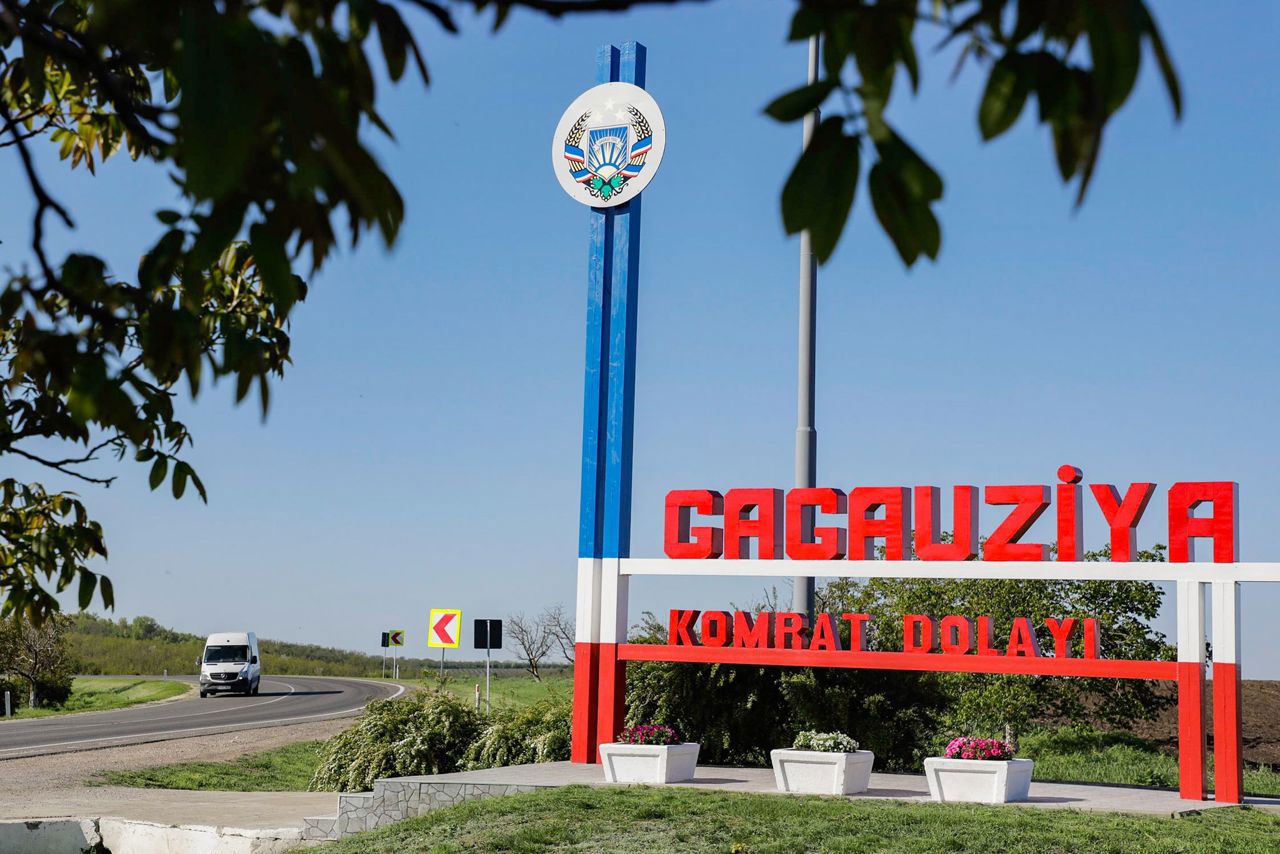
Gagauzia's autonomous region is facing a major institutional deadlock. The current mandate of its People's Assembly is about to expire, and the region's governor, Evghenia Guțul, has been sentenced to seven years in prison in a first-instance ruling.
The lack of a functional electoral authority is fueling political uncertainty in the region.
In December 2023, local officials in Comrat dissolved the Central Electoral Commission at the initiative of Gagauz speaker Dmitry Constantinov. He argued that the permanent institution was "inefficient" during periods between election campaigns. This decision followed a move earlier that same year when the Central Electoral Commission (CEC) in Chișinău revised the status of the autonomous region's electoral body, renaming it the Central Electoral Council of Gagauzia as part of the new Electoral Code's implementation, which was adopted in 2022.
Serghei Cernev, head of the Territorial Office of the State Chancellery in Gagauzia, told Teleradio-Moldova that the dissolution was a political decision.
"The Central Electoral Commission of Gagauzia was dissolved by Constantinov. He wanted an electoral commission that he could control. The previous composition didn't suit him and was seen as a branch of the Republic of Moldova's CEC on our territory," Cernev claims.
He notes that the decision was challenged in court, but the process is stalled.
"We won at the Court of Appeal. Now we are at the Supreme Court of Justice. The case is blocked there. We're waiting for the Supreme Court's decision. And, until there is a decision, no one can do anything," he told us.
CEC president Angelica Caraman confirmed that the Gagauz authorities "must first clarify the situation with the (electoral) body they dissolved." She added, "We act strictly according to the Electoral Code."
New electoral body, elections scheduled for November
Deputy Speaker of the People's Assembly, Gheorghe Leiciu, states that the process of forming a new electoral authority is underway, and a decisive session will take place on Friday, August 15.
"For now, the provisional date (for organizing elections for deputy to the People's Assembly – Ed.) is November 16. This is the date that arises from current legislation and which fits within this framework. I will propose this date. As long as the law isn't amended, I consider this to be the correct date," Leiciu said.
According to the same source, the new electoral authority's structure will follow the national model. "Seven members—three from the executive branch, three from the legislative branch, and one from the judicial authority. Unfortunately, the judicial authority has not presented a candidate," the Gagauz deputy specified for Teleradio-Moldova.
What's happening with governor Guțul's mandate?
According to the Law on the Special Status of Gagauzia, the governor's mandate can be terminated early if they "do not effectively exercise their duties for at least 60 days," a situation defined as a "vacancy of office." The findings are made by a court, and subsequently, the People's Assembly is obliged to set an election within three months.

Deputy Speaker Leiciu confirmed this procedure. "If the person cannot exercise their duties for more than two months, then the People's Assembly appeals to the court to determine the impossibility of exercising the function. After the decision, a new election for the governor is scheduled and organized within three months," the legislator from Comrat clarified.
The law also provides for the termination of a mandate in the case of a crime confirmed by a court ruling. In the event of a final conviction, the law mandates a referendum to dismiss the governor, but validating it is a difficult condition to meet, according to Leiciu.
"The referendum must be validated with 50% plus one of the votes. Those familiar with the political realities here will say it's impossible. It's easier to move the Moon to Mars than to organize this referendum," the deputy commented ironically.
The 60-day period during which the current governor Evghenia Guțul cannot exercise her mandate would begin from the moment she is placed in a penitentiary, upon the first-instance court's sentencing of her to seven years in prison in the case of illegal financing of the former Șor Party.
Political pressures and pending decisions
Cernev claims there is political pressure to organize elections for both the People's Assembly deputy and the governor this autumn.
"Șor gave the order for elections to be organized in November—both for the governor and for the Speaker of the Assembly," Cernev asserts.
On the other hand, Leiciu warns that such demands cannot replace the law.
"We will be guided by the law, not by his or anyone else's desires. There is a political rationale. Some deputies believe that if we cannot defend Evghenia Guțul, then the elections should be held simultaneously. But for that, there must also be legal grounds, not just political considerations," he pointed out.
Teleradio-Moldova attempted to get a reaction from Dmitry Constantinov, but he did not respond to their calls.
Translation by Iurie Tataru