Family returning from abroad grows blackberries, raspberries, and hazelnuts in northern Moldova
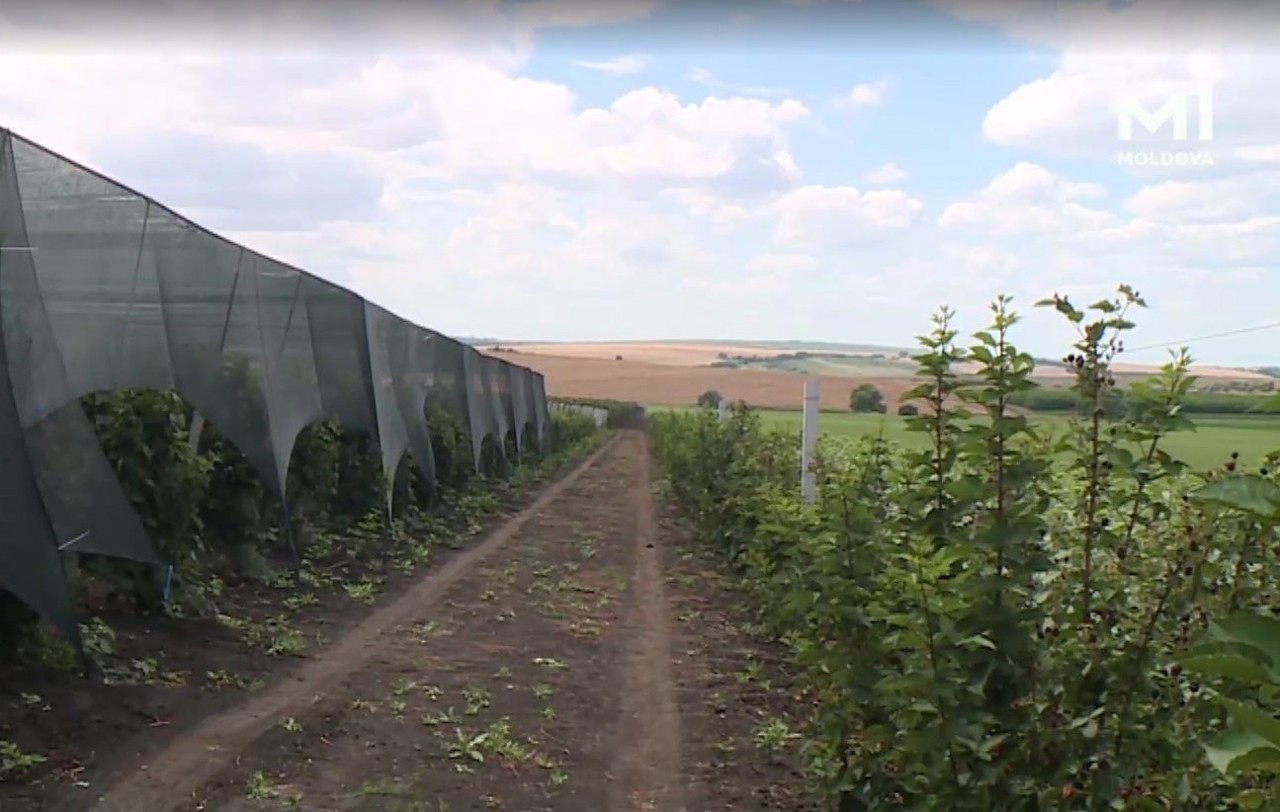
In the village of Pârlița, Fălești district, agricultural producers are facing challenges due to the lack of irrigation systems and ongoing drought. However, some local initiatives demonstrate that well-planned investments can yield positive results even in difficult circumstances. One such example is a family that returned to the village after spending several years abroad and decided to invest in agriculture. They established plantations of blackberries, raspberries, and hazelnuts—crops that are relatively uncommon in the northern part of the country.
In the initial years, the crop yields were promising. However, starting in 2022, extreme weather conditions and persistent drought began to negatively impact production. By 2023 and 2024, the losses became significant. The increasingly unpredictable weather, along with prolonged droughts and heatwaves, affected even the varieties that were previously considered more resilient.
Grigore Șoronga, a farmer, stated, “We decided to invest the money we earned abroad back into our country. We have been in this business since 2018, initially investing approximately 850,000 lei, and later increasing that investment to one million lei. AIPA provided us with 150,000 lei, which was a welcome help. How much do we harvest? About 4 to 5 tons.”
A major issue remains the lack of storage and processing facilities for berries. Since blackberries are highly perishable, they must be sold immediately after harvest, often at prices dictated by intermediaries, according to plantation owners. The wholesale price has dropped to only 12 to 14 lei per kilogram, which is insufficient to cover production costs. Given these conditions, the Șoronga family is considering reducing their cultivated area to manage production more effectively and minimize losses.
“This is how we harvest, and if we don’t sell today or tomorrow, everything goes to waste; there’s nothing we can do about it. You can’t export a ton of blackberries,” Grigore explained.
Transforming part of the harvest into processed products such as jam or syrup is an alternative, but it has proven challenging to implement due to the lack of a stable distribution chain and consistent demand.
Rodica Șoronga, the farmer’s wife, added, “What we harvest, we take to the market, whether in Bălți or Chișinău. If we have a larger quantity, in Bălți, there’s not much we can do to sell it.”
To adapt to the challenging situation, the family started cultivating hazelnuts, which are more drought-tolerant and less sensitive to temperature fluctuations. The hazelnut trees were not affected by the spring frosts.
“This plantation has been in place since 2018, and it is currently profitable. We are entering the 7th year, and in the 6th year, we harvested about one ton per hectare. I sell the hazelnuts to companies that handle exports,” Grigore stated.
The decision to plant hazelnuts has proven to be strategic. This crop is easier to maintain, has a high commercial value, and provides better economic stability. However, for such initiatives to thrive under current conditions, access to irrigation, processing infrastructure, and sales networks is essential.
All of these factors are crucial for the development of local agriculture.