Atlantic Council will monitor Moldova’s elections. Nazari: “We’ll stop interference”
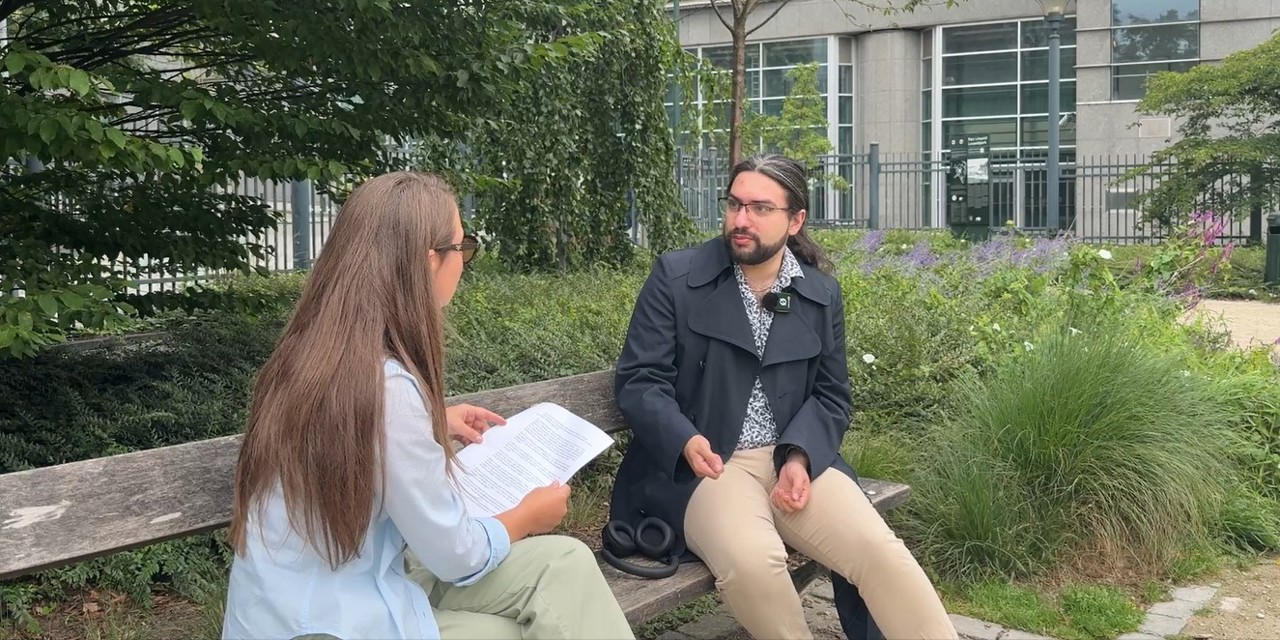
The campaign for the parliamentary elections on September 28 will be closely monitored through a collaborative effort involving various organizations coordinated by the Atlantic Council's Digital Forensic Research Lab. This was stated by Saman Nazari, a senior researcher focused on combating disinformation at the non-governmental organization "Alliance 4 Europe," in an interview with Moldova 1. The expert emphasized that the Republic of Moldova is currently a target of hybrid attacks from the Russian Federation and will continue to be so, employing disinformation techniques similar to those identified in recent elections across several European countries.
“We will identify the threat actors in the Republic of Moldova, set up monitoring of their activities, and work systematically to disrupt any attempts to interfere with the Moldovan elections,” said the researcher from the “Alliance 4 Europe,” an organization that is part of the Atlantic Council’s coordinated effort to combat foreign interference in electoral processes on a large scale.
He added that various networks and organizations from both the Republic of Moldova and internationally will be engaged in a unified effort to act against sources of digital disinformation.
Saman Nazari, who specializes in influence operations from China and the Russian Federation, highlighted his organization’s involvement in monitoring several European elections. In collaboration with social media platform administrators, local authorities, mass media, and civil society, the Alliance managed to disrupt the activities of hundreds of Russian disinformation channels operating online.
Faces of Russian disinformation in the campaign for the Republic of Moldova's parliamentary elections
Saman Nazari warned that during the electoral campaign for the parliamentary elections this fall, we may witness the same disinformation tactics employed by various actors in the electoral processes of several EU member states.
“On one hand, we've seen the use of fabricated news sites that pose as legitimate media institutions. For example, in Germany, there were attempts to mimic Deutsche Welle, and in Poland, the Polish National Press Agency (PAP),” Nazari stated.
He also noted that we can expect entirely fabricated websites, created using artificial intelligence, to emerge. These platforms offer impartial information while also containing false information published intentionally by disinformation actors.
“We believe that influencers will be utilized, either those who are ideologically aligned with Russia or those funded by Russian actors, oligarchs, or other entities, to spread misleading content to the public,” the expert cautioned.
According to Saman Nazari, these “malicious” actors can exploit existing divisions in society, amplifying existing discourses and polarizations. Their goal is to exacerbate the differences within society to support one candidate over another, discredit opponents, and ultimately undermine the electoral outcome as a whole.
In the interview with Saman Nazari, we also discuss:
- The involvement of the Alliance for Europe in combating disinformation in the Moldovan elections.
- What the authorities in Chișinău can do to combat false narratives.
- The mechanisms of disinformation and how to recognize them.
- The evolution of disinformation techniques.
- How prepared is the European Union to tackle disinformation?