Moldova's new Tech Hub: Moldova HiTech Park to drive innovation
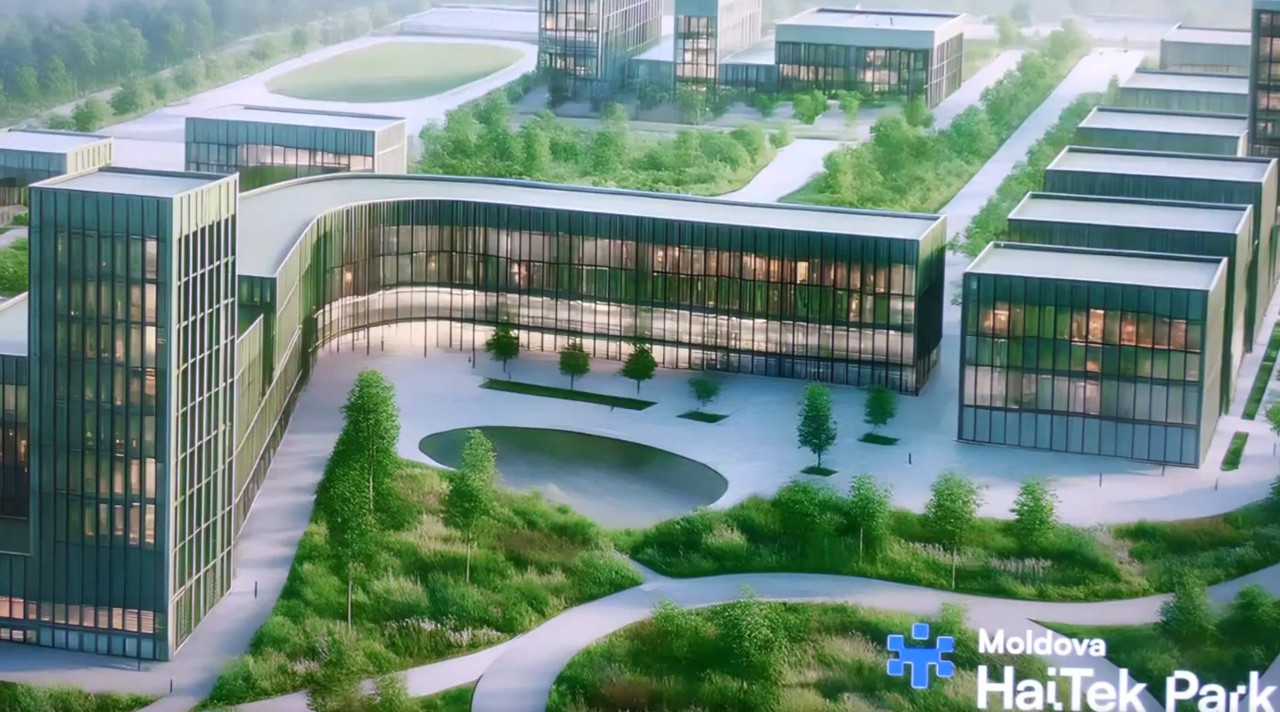
Moldova is set to establish its first advanced technology park of national strategic importance—the Moldova HiTech Park.
The project will focus on artificial intelligence, cybersecurity, and big data processing. The complex will be developed over the next 5 years on a 50-hectare plot in Stăuceni, near the capital, and promises to become the country's leading hub for innovation, technology, and education.
The project, backed by the Government of the Republic of Moldova, the European Union, and the private sector, is projected to create around 22,000 jobs and generate over €1 billion in revenue within its first two decades. Direct investments amount to €200 million, funds that will remain in the national economy.
“Moldova HiTech Park is an investment in a European, modern, and secure Moldova. In a world where success depends on talented people, great ideas, and the ability to innovate quickly, we want to build a place that keeps our talent at home and offers them modern conditions to create, research, and grow businesses. Our goal is for this park to become the country’s leading hub for innovation, technology, and education,” said Doina Nistor, the Minister of Economic Development and Digitalization, today, August 19, at a press conference.
According to the minister, the park will include modern offices, laboratories, university campuses, conference centers, zones for startups and incubators, as well as high-tech production facilities. The park's structure is planned as follows: 60% for offices and IT business, 15% for universities, 10% for advanced manufacturing, 5% for medical research, 5% for startups and incubators, and 5% for student housing.
The project emphasizes sustainability and energy efficiency through smart buildings, photovoltaic panels, electric mobility, and extensive green spaces.
Additionally, the Moldova HiTech Park will become an educational hub, thanks to partnerships with the Technical University of Moldova, the "Nicolae Testemițanu" State University of Medicine and Pharmacy, and international universities.
It is estimated that over 15,000 specialists will be trained over the next 10 years.
“We want our young people to stay home and have modern conditions to create, research, and grow businesses. Moldova HiTech Park will transform innovation from an abstract concept into a real economic engine,” Minister Nistor emphasized.
The minister mentioned that authorities are counting on attracting the first private investors by next year, and once this interest materializes, construction of the park could begin in 2026.
“Part of the funds will come from the growth plan for the Republica Moldova, financed by the European Union. Specifically, these funds will finance architectural studies, engineering design, and investment in shared infrastructure, like access to utilities, which is crucial for attracting private investors. The other part of the €200 million budget will come from private investors who will invest in the park's infrastructure. I'm talking about buildings, office spaces, medical service facilities, advanced factories, and other private investments. We already have interest from investors and are in discussions with international financial institutions, which are partners of the Republica Moldova, to provide us with additional support in mobilizing financial resources. Initially, we are talking about 250 million lei, which will allow us to advance with all architectural projects, and then up to €50 million will be allocated for shared infrastructure investments. Based on the results of the feasibility studies and engineering studies, some of which have already begun and will continue through the end of this year, our objective is to launch the first tenders for investors early next year,” specified Doina Nistor.
At the same conference, Roman Cojuhari, Director of the Public Property Agency, explained that the project is no longer in the feasibility study phase but has already reached the implementation stage. To this end, Law no. 206 was adopted this year, which simplifies procedures through certain derogations, including changing the land's purpose, to accelerate and secure the process. According to him, at Wednesday's government meeting on August 20, the creation of the company that will manage the park will be put to a vote, and in September, the decision to grant the park its official title will be proposed. Afterward, procedures with the Ministry of Infrastructure will begin, including a study for modernizing the road intersection near the Arena and the park's land. This will be followed by infrastructure design and the development of urban planning documentation for the area.
“We’re talking about the land immediately across the road from the Chișinău Arena—a plot that was separated from the larger 300-hectare plot: we formed one plot with 100 hectares and 24 hectares, and from these plots, 50 hectares will be allocated for the park. The rest of the land will be for infrastructure because we also want to develop the Bucovina road towards the locality of Grătiești, as planned in the general urban plan for both Chișinău municipality and the town of Stăuceni, and a bit further toward the city exit,” explained Roman Cojuhari.
As the Minister of Economic Development and Digitalization underlined, the Moldova HiTech Park is the result of more than two years of work and is based on successful international experiences. Authorities have studied models from other countries, including the technology parks in Malaga and Granada (Spain), as well as Ülemiste City in Estonia. Estonian experts contributed to the pre-feasibility phase, and the distribution of spaces in the future park—for offices, innovation, and universities—was inspired by the recommendations of the Ülemiste City development director. This park, with an area of 37 hectares, generates over €2.2 billion in turnover together with its residents and serves as a reference model for the Moldovan project.
Translation by Iurie Tataru