A new life for old books: Rule Nb.1 is to keep the original
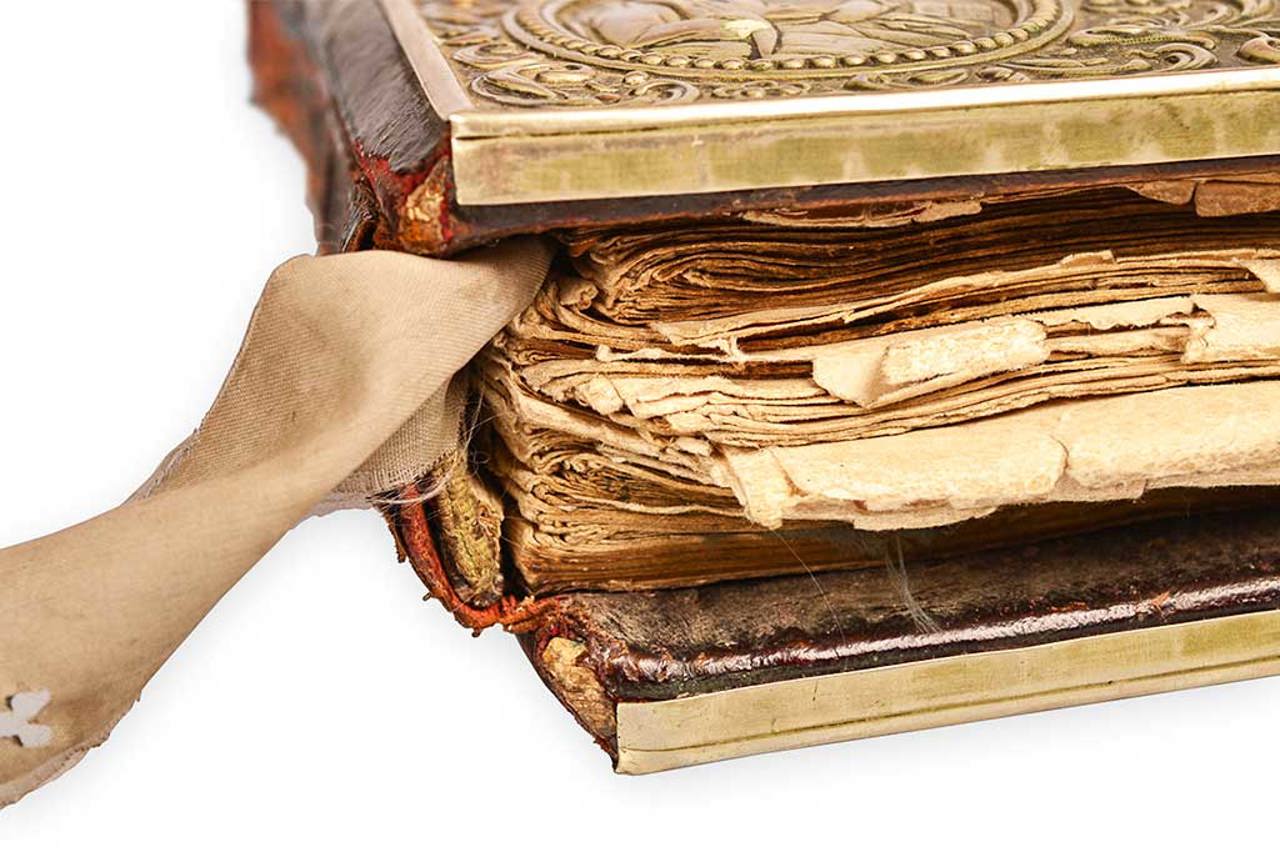
Have you ever wondered what happens to old and damaged books on library shelves after they are no longer in use? They are often entrusted to restorers, commonly referred to as "book doctors." One such department, which serves as an emergency hospital for books, operates at the National Library, where six individuals work on restoring these valuable texts.
The fate of each book in the library rests in the hands of restorers. They meticulously dress each book in a new coat while preserving its original authenticity. Among these dedicated professionals is Valentina Granaci, the head of the Technical Center for Conservation and Restoration of Documents at the National Library of Moldova. Together with five other staff members, she works to revive the most damaged books, transforming the restoration process into an art form.
Valentina Granaci notes that books that are borrowed frequently often require restructuring, particularly works of classical literature. Some copies deteriorate rapidly after just two or three readings.
"The frequently requested books arrive at our center in need of repair. Works by Romanian authors are especially in demand, particularly materials for schoolchildren and high school students, as well as for older generations who did not study them in their youth. The National Library houses approximately three million documents, but with only six people in the restoration team, we cannot restore all the books that need it. Therefore, we prioritize the books that are frequently requested. Each year, we manage to restore over four thousand copies," Valentina explained.
She emphasized that the work of a book and document restorer is both painstaking and fascinating, much like that of a painter.
"The restoration process is quite challenging. Imagine a painter; he spends a long time crafting a single painting. Similarly, we work meticulously with a scalpel and carefully consider the book's design. The primary rule for a restorer is to preserve the original form. We are not merely reproducing the book; we do not discard what is damaged and create a copy. Rather, we integrate missing pages while keeping fragments of the original material intact," she added.
Valentina also stressed the importance of reorienting and enriching libraries with new books that promote national and European values.
"Until now, our book purchasing has been largely tied to Soviet literature. The book collection must be updated, as we are entering Europe, and we need to do so with knowledge and European literature. The National Library supervises all libraries in the republic. We maintain the largest repository of documentary heritage in the Republic of Moldova. Where there are no Romanian books, we receive donations to support the development of a Romanian-speaking generation," Valentina noted.
For 37 years, Valentina Granaci has dedicated herself to preserving old volumes and sharing her knowledge. Under her guidance, workshops for recovering damaged books have been established at the National Museum of History, the National Museum of Art of Moldova, the National Museum of Ethnography and Natural History, as well as at the "Nicolae Testemițanu" University of Medicine and Pharmacy and the Academy of Economic Studies.
Additionally, restoration services at the National Library are available for other institutions or individuals for a fee. The cost of restoration varies depending on the materials used and the complexity of the process, and some restorations may take weeks to complete.
Author: Cristina Prisacari