Georgia protests: police disperse tens of thousands of demonstrators in Tbilisi with tear gas and water cannons
Tear gas and water cannons were used by Georgian police to disperse tens of thousands of people demonstrating in Tbilisi on Wednesday evening against a draft law targeting the media and NGOs that they say was inspired by Russia, after clashes the day before during an initial mobilisation, AFP reports.
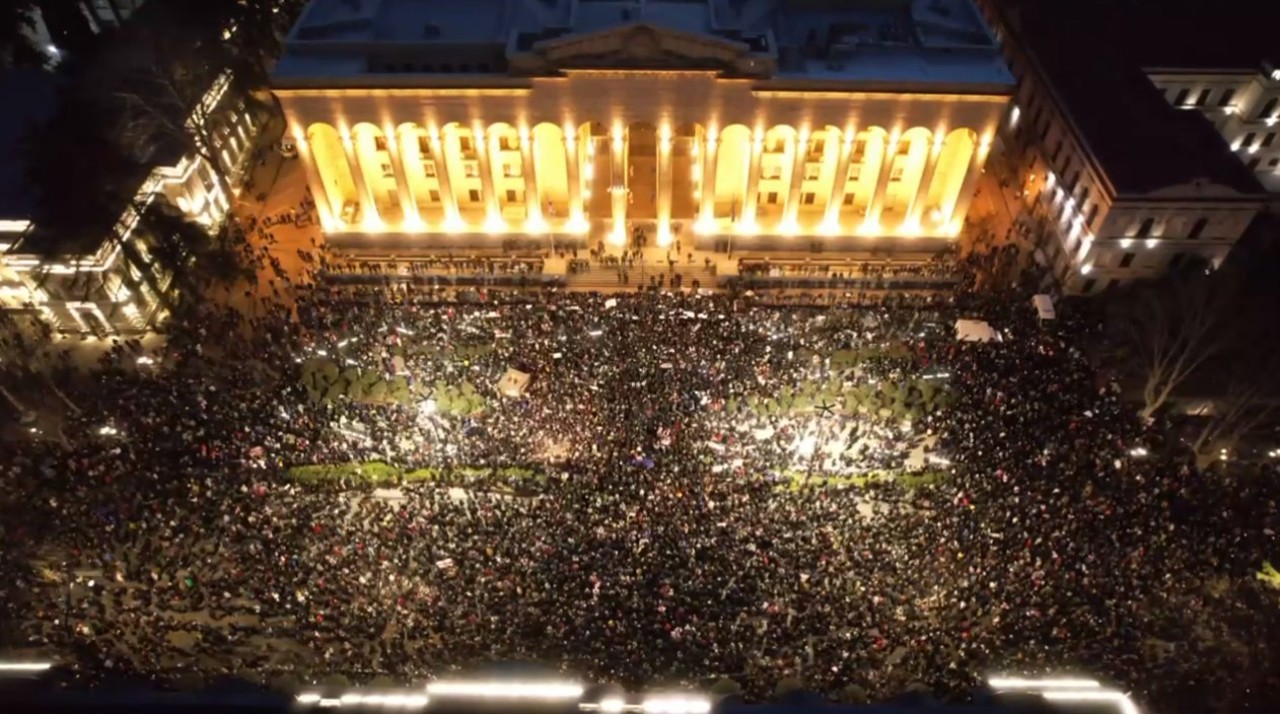
Demonstrators outside parliament were ordered to disperse by police, who then used gas and water cannons, according to an AFP correspondent on the scene. At the end of the evening the situation remained tense.
Protesters waved Georgian and EU flags.
"No Russian law!" chanted the crowd gathered at the call of several NGOs and opposition groups, referring to the draft law adopted on Tuesday at first reading by lawmakers in this small Caucasus country bordering Russia.
It stipulates that Georgian organisations receiving more than 20% of their funding from abroad must register as "agents of foreign countries" or risk fines.
Critics say the bill copies a law passed in Russia in 2012 that the Kremlin has been using ever since to crack down on media and critical voices.
"This law is absolutely unconstitutional and runs counter to the will of the Georgian people to become a member of the EU," criticised Badri Okujava, a 26-year-old historian.
The Georgian interior ministry claimed on Wednesday that at least 77 people had been arrested and 50 policemen injured the day before.
The US urged authorities in Tbilisi to respect "freedom of assembly and peaceful demonstrations," with State Department spokesman Ned Price reiterating US "concern" about the law.
Georgian President Salome Zurabishvili - a former French diplomat with limited powers - called for the law to be "repealed", stressing that she would oppose the law.
The ruling party could override this veto as it controls more than half the seats in parliament.
The small former Soviet republic of Georgia, scarred by a Russian military intervention in 2008, is aiming to join the EU and NATO, a move made after the 2003 "rose revolution" that brought pro-Western Mikhail Saakashvili, now in jail, to power. But several recent government moves have cast a shadow over those aspirations and raised doubts about its ties to the Kremlin.
Together with Ukraine and the Republic of Moldova, Georgia formally applied for EU membership days after Russia invaded Ukrainian territory on 24 February 2022.
In June, the EU granted candidate status to Ukraine and the Republic of Moldova, but called on Georgia to carry out more reforms before achieving similar status.