Ruble sinks to multi-month lows against dollar and euro
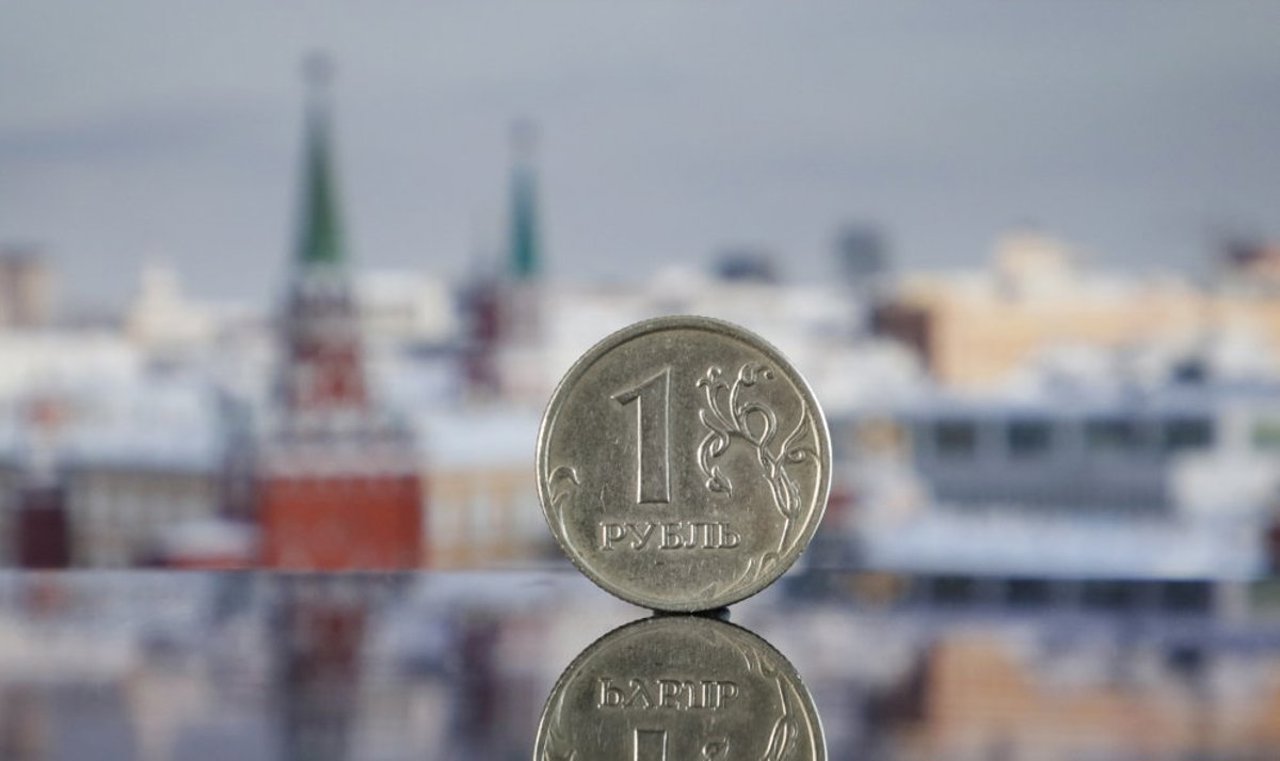
Russia’s ruble continues to weaken on the Moscow Exchange, hitting multi-month lows against the dollar, euro, and yuan.
On Thursday, on the over-the-counter (OTC) market, the European currency's exchange rate rose above 100 rubles for the first time since February, with transactions being carried out at 100.3850 rubles to one euro, according to The Moscow Times.
The dollar's OTC exchange rate reached a new record since April 10, hitting 85.91 rubles. Meanwhile, the yuan's rate on the Moscow Exchange reached 12.05 rubles, its highest level since March 10.
"The ruble is in a freefall," notes investment banker Evgeny Kogan. Such a prolonged decline, eight days in a row, hasn't been seen since December 2022. Compared to the lows recorded in the summer, the dollar has gained nearly 10 rubles (12%), the euro 12 rubles (13%), and the yuan 1.2 rubles (11%).
The ruble's weakness "is largely linked to a fundamental trend reversal due to the deteriorating trade balance," explains BCS analyst Ilya Fyodorov. Export revenues are falling amid lower oil prices, sanctions, and reduced trade with China, while the demand for foreign currency is rising again due to imports.
The ruble could hit 90–95 per dollar by year-end, according to Dmitry Sergeev, chief investment advisor at Veles Capital. He explains that a controlled depreciation of the exchange rate is one way to correct the budgetary situation. The federal budget deficit reached 4.2 trillion rubles in eight months, three times more than the initial plan, while oil and gas revenues decreased by 20%.
The mandatory sale of export earnings by companies was abolished on 14 August, says Dmitry Sergeev. This was preceded by numerous complaints from resource-sector billionaires and state-owned companies about an overly strong ruble exchange rate. Igor Sechin, head of Rosneft, called the exchange rate "unfavourable for the market" after the company's profit collapsed by a third in the first half of the year, and VTB President Andrei Kostin urged the Ministry of Finance and the Central Bank to "regulate" the ruble to support the budget.
Sergeev explains that sanctions, rising transport costs, and increasing discounts on hydrocarbon exports can be offset by the exchange rate.
However, a side effect of the devaluation will be an acceleration of inflation. "This will very soon be reflected in rising retail prices," warns Alexei Antonov, an analyst at Alor Broker. For this reason, he adds, the Central Bank could decide at its Friday meeting to cut rates by only 1 percentage point, not 2, as the market expects.
The ruble is also under pressure from geopolitical uncertainty and the deterioration of Russia's macroeconomic indicators, such as slowing GDP growth and a rising budget deficit, explains Natalia Milchakova, a leading analyst at Freedom Finance Global. Halting the ruble's collapse would only be possible with a "breakthrough" in regulating the situation in Ukraine. Otherwise, if peace plans fail, the dollar could climb to 100 rubles, the expert doesn't rule out.
Translation by Iurie Tataru