NATO unprepared for drone warfare after Poland incursion
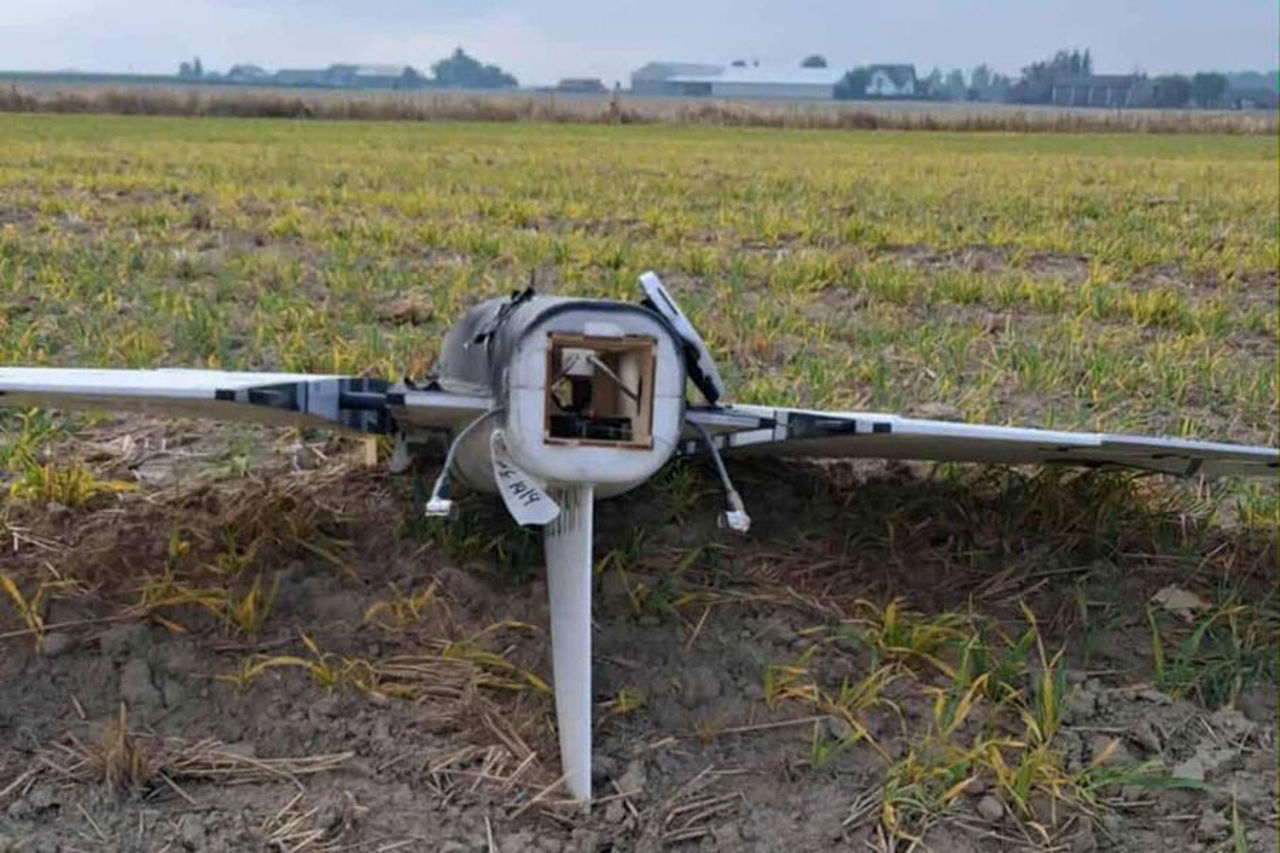
The incursion of Russian drones into Poland has highlighted NATO’s lack of preparedness for modern warfare, according to The Moscow Times.
The incident comes more than three years into what is often called the "war of drones" in Ukraine.
Poland's defence forces shot down at least three of the 19 drones, a success rate of 16%. This contrasts sharply with Ukraine, which frequently faces Russian drone attacks and reported a 90% shootdown rate (413 out of 458) on the same night.
In response, Poland deployed a wide range of sophisticated equipment, including F-16 and F-35 fighter jets, AWACS reconnaissance planes, and Patriot missile systems. This contrasts with Ukraine, where much cheaper methods are used against drones, such as machine guns mounted on vehicles, converted training aircraft, or even interceptor drones. The cost difference is stark: Russia's Shahed-style "Geran-2" drones can cost about $35,000, while interceptor drones are only about $5,000.
The issue was raised at a meeting of EU ambassadors in Brussels on Thursday, which was attended by Nato Secretary General Mark Rutte. Diplomats there reportedly expressed concern that NATO's response had exposed the alliance's unpreparedness. One diplomat was quoted as saying: "You can't always scramble an F-35 to intercept objects like these."
"It’s a good thing Poland detected and shot down the drones Russia launched to test NATO politically and militarily," says Ulrike Franke, a senior policy fellow at the European Council on Foreign Relations. "But the real question is: are we going to send up F-16s and F-35s every single time? It's a waste. We need to better equip ourselves with anti-drone systems."
Following the Russian attack, Poland urgently requested new Patriot systems from its allies. Berlin promised to "expand and intensify Polish airspace patrols" with Eurofighter jets, adding to existing commitments. French President Emmanuel Macron also decided to send three more fighter jets.
Ukrainian President Volodymyr Zelenskyy and the head of Europe's largest arms firm, Armin Papperger, have both made more practical proposals. Mr Zelenskyy suggested training Poles in anti-drone warfare, a plan Warsaw has already approved. Mr Papperger, CEO of Germany's Rheinmetall, said his company could help Poland but stressed Europe needed to invest in "very cheap" countermeasures and expand its production capacity. He told the Financial Times that Ukraine needed "at least double what it has now, but we must also invest in Europe, because Europe has almost nothing."
Several European defence companies have begun to develop such countermeasures, but only now, in the fourth year of the war. In late August, Sweden’s Saab presented the new, low-cost Nimbrix missile, designed to neutralize small, low-altitude drones. The biggest progress has been made by start-ups, but their products are rarely purchased in Europe, says Ulrike Franke.
She also says a modern, layered defence system has not yet been built to deal with drone threats, arguing that a single solution cannot counter all dangers. She says a multi-layered defence is needed, with both electronic and kinetic assets, and that the rapid evolution of technology, evident in Ukraine and Russia, must be taken into account.
Charly Salonius-Pasternak, director of the Nordic West Office in Helsinki, said NATO should have "learned Ukraine’s lesson long ago" on how to "track and shoot down many cheap drones without using multi-million-euro missiles." He asked: "What has the European political establishment been doing in the meantime?"
Translation by *Iurie Tataru