Falk Lange on Moldova 1 TV: Council of Europe supports Moldova in justice reform, anti-corruption, and combating hate speech
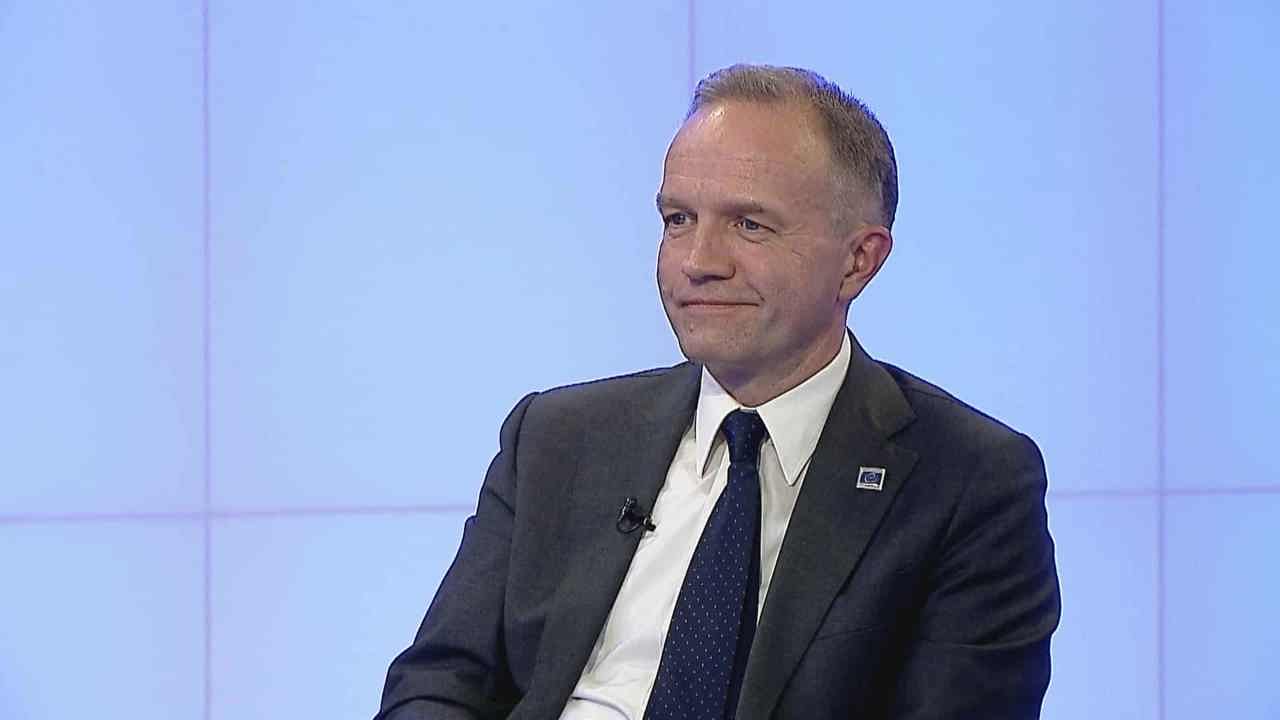
The Republic of Moldova is currently receiving significant support from the Council of Europe (CE) through the Partnership for Good Governance (PBG) Programme, which encompasses over 20 ongoing projects. At the national level, three major initiatives are currently being implemented: one aims to combat hate speech and discrimination, another focuses on enhancing the efficiency of the justice system, and the third is dedicated to preventing and combating money laundering. Falk Lange, the Head of the Council of Europe Office in Chisinau, mentioned these projects during the "Dimensiunea Diplomatică" show on Moldova 1 TV, which aired on September 14.
“These projects, of course, do not happen by themselves, but in combination with other projects. When it comes to preventing money laundering and combating hate speech and discrimination, we support efforts to address these issues. We provided support for the Equality Council and in the three regional elections: the presidential elections, last year’s referendum, the general municipal elections and this year as well. These are several projects aimed at combating hate speech and discrimination, especially against women participating in the electoral process and speech in the digital field, which is a relatively new phenomenon, more prominent in recent years and requiring much more massive efforts”, said Falk Lange.
Judicial reforms – an essential condition for EU accession
According to the official, one of the major priorities is the modernization of the justice system so that it becomes more transparent and accountable.
“There is a need to improve the administration of courts, to improve human resources policies, to ensure opportunities, to reduce the number of cases examined with delay. And there is a need to promote alternatives to courts, for example mediation procedures, which we have done within the partnership for good governance”, Lange pointed out.
He mentioned the direct collaboration with the Superior Council of Magistracy (SCM), the Superior Council of Prosecutors (SCP), the People’s Advocate Institute (Ombudsman) in the Republic of Moldova, as well as the support provided for the development of the Supreme Court of Justice's (SCJ) database.
“We assist to improve the legislative framework, we examine opportunities to improve the legislative framework for pre-vetting and vetting procedures, so that they comply with good practices and standards of the Council of Europe. We have a holistic approach and, obviously, the rule of law, the supremacy of law are at the heart of these efforts, especially since we are also talking about the process of accession to the European Union”, the European official said on Moldova 1 TV.
Corruption—from money in an envelope to cryptocurrencies
The fight against corruption remains one of the vulnerable points of the Republic of Moldova. The recently published GRECO report confirms that problems persist, despite the existing legislation, especially in terms of implementing mechanisms for controlling the declarations of assets of officials, compliance with ethical standards by public employees, as well as transparency in relation to the business environment and civil society.
"The Council of Europe, including the Republic of Moldova, for all these GRECO member states, has come up with certain recommendations on concrete aspects related to legislation, implementation. Codes of conduct, for example, for high-ranking officials or in relation to ethics, cited in the control mechanisms. (...) Let me reiterate: when we work with the beneficiaries at the national level of our projects, I have the impression that there is a genuine commitment and dedication to addressing these rather complex and challenging aspects. And some of these aspects, as I mentioned earlier, have gained complexity, especially since now we are also talking about virtual, online aspects", said the head of the Council of Europe Office in Chisinau, Falk Lange.
In his opinion, the methods of corruption have changed and are forcing the authorities to adapt. "It's no longer just about corruption that is transmitted in an envelope. It's already about corruption that is perpetuated through cryptocurrencies, such as Bitcoin, and other channels. We need to adjust our methodologies in this regard. So we have a lot to do, but a lot has been achieved in this regard", the Council of Europe representative emphasized.
Another area targeted by the Council of Europe projects is the prevention and fight against money laundering, which is a much more technical issue.
“Here we focused on regulatory aspects related to virtual asset service providers (VASPs) and practices in the Republic of Moldova, which should be aligned with European standards. The Republic of Moldova has made rapid progress in this direction”, explained Lange.
The European official added that, in addition to the legal framework, it is essential to strengthen the capacities of national institutions.
“The legislation may exist, but it depends a lot on implementation, on existing capacities. We are undertaking extensive capacity building in this area. We are also thinking about creating an information and education center”, reported the head of the Council of Europe Office.
Gender equality and combating violence against women
Another important chapter of cooperation is the implementation of the Istanbul Convention, ratified by the Republic of Moldova in 2021.
“I am impressed not only by the ratification, but also by the implementation of the Convention in the legislative framework and in everyday life. Obviously, there have been several decisions, the national program for the period 2023–2027 has been established, and the National Agency for the Prevention and Combating of Violence against Women and Gender-Based Violence has also been created, which is currently active”, listed Lange.
He also mentioned that six projects carried out in the Republic of Moldova aim to combat gender-based violence, discrimination and hate speech, including in the digital space. “More than two thousand frontline professionals, including judges, prosecutors, police officers, social workers, civil society representatives, have benefited from training within our projects. I am impressed by this approach and the support shown by the authorities”, he added.
Electoral campaign – between foreign interference and vote-rigging
Lange also spoke about the current electoral campaign, which is still in its early stages, but is already facing recurring problems.
“We are observing a massive increase in interference by foreign actors, an increase in the phenomenon of manipulation of public opinion. The problem of electoral corruption, vote-buying is becoming increasingly acute, and question marks still remain related to the financing of political parties”, he said.
To ensure the fairness of the election, the Council of Europe is cooperating with the OSCE and local civil society.
“We have a very large observer mission, just like in the previous elections, relative to the size of the country. We have solid partners here in the Republic of Moldova, including Promo-LEX and the Coalition for Free and Fair Elections. But we have raised issues related to the observation of the elections in the diaspora and the number of polling stations for voters in the Transnistrian region,” Lange noted.
In his view, the new Pact for Democracy, launched by the Secretary General of the Council of Europe, will be an essential instrument.
“It is essential to fight against electoral corruption, against the buying and selling of votes. The Secretary General recently came up with the initiative of a new Pact for Democracy, through which fundamental aspects for all our societies will be strengthened. I am firmly convinced that these efforts will have a direct impact on the reforms and on the path of the Republic of Moldova towards the European Union,” concluded Falk Lange.