Favourable weather drives record wheat harvest in Moldova
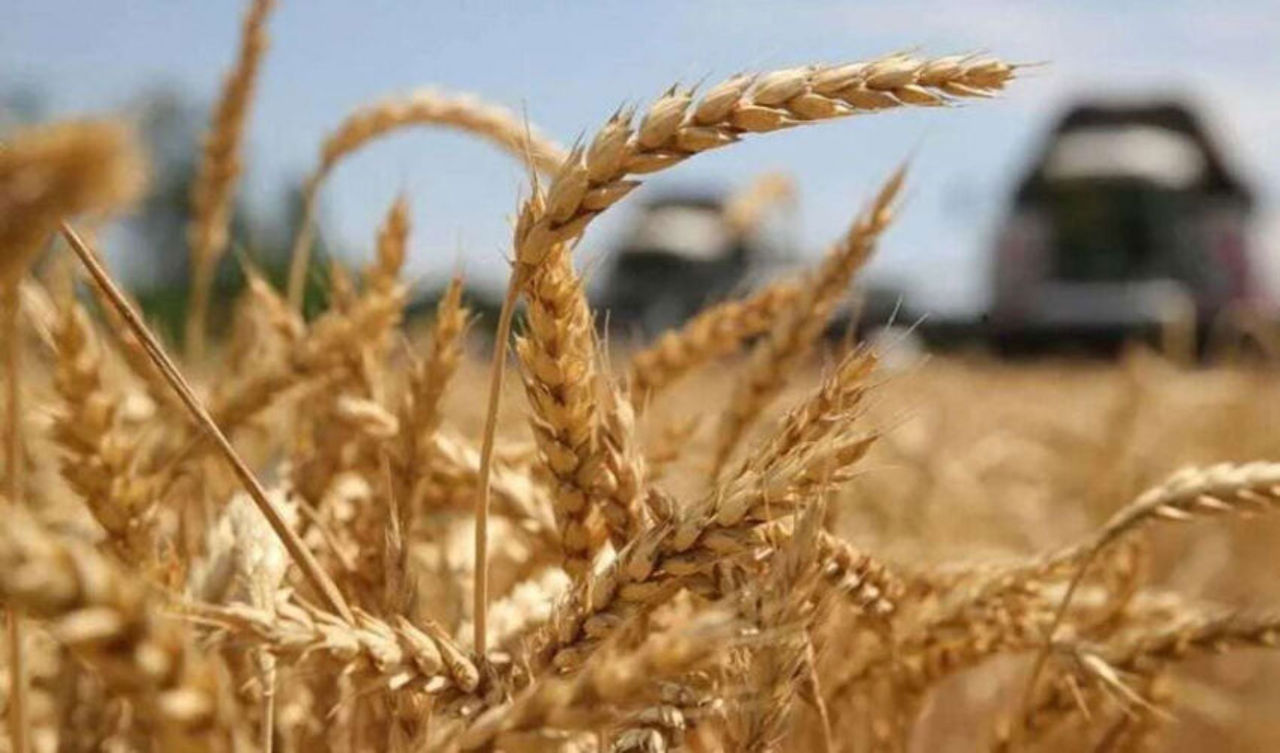
Moldova’s wheat exports hit a record high this summer, the best performance in the past four years.
The spectacular growth—up 14% on last year and more than 55% compared to 2023—is largely due to favourable weather, not efficient agricultural policies, according to expert Iurie Rija. Despite these strong results, farmers still face logistical uncertainties and market volatility, factors that complicate strategic decision-making for profits.
Farmer Nicanor Buzovoi of the village of Pârlița in Ungheni district told Radio Moldova he achieved a record wheat yield of 7,200 kg per hectare, a performance he credits to following agricultural best practices. "It's practically a record. We've never had a harvest like this before. We followed the technology, met all the requirements for growing wheat, and worked with the right varieties, fertilisers, and micronutrients. That's how we got this harvest," Mr Buzovoi stated.
He says that while his focus remains on exports, sales will depend on market demand, logistical conditions, and price. "I'll sell it wherever it's most convenient. Obviously, I'm focused on exports, but currently, the best conditions for selling are within the country, although the price we're getting today doesn't suit us," he said.
"The price, of course, is a good one compared to 2022, when we had the geopolitical issue. In private discussions, farmers admit they are happy with both the price and this season's harvest," agricultural expert Iurie Rija told Radio Moldova.
He said the record yield was a result of rainfall throughout autumn, winter, and spring. The harvest of 5.5 tonnes per hectare is a normal target for Moldova.
Regarding the dependence of agriculture on climatic factors, Mr Rija highlighted the close link between weather conditions and the effectiveness of technological inputs. "Agriculture is very much tied to climatic factors," he said. "In years when the climate is favourable in terms of humidity and warmth, all applied inputs and technologies have an effect. When rainfall is low, these performance coefficients disappear. Quantitatively, over the last 10 years, Moldova, together with the left bank of the Dniester, exports an average of 1,000,000 to 1,200,000 tonnes of wheat," the expert noted.
He emphasised the traditional role of Greece and Italy as major importers of Moldovan wheat. "We have to understand that both Greece and Italy are the most efficient millers and bakers; their range of bakery products is very large. Greece is a traditional client and has the highest level of absorption," said Mr Rija.
He also highlighted the diversification of export markets to Africa and the Middle East, where Moldovan wheat finds steady demand for both baking and fodder. "Moldovan wheat also goes to African nations, such as Sudan, Kenya, and Uganda, which is encouraging. Periodically, it also reaches the Romanian market, where they prefer our flour and bran. In the Middle East and Egypt, Arab countries are major consumers of cereals, especially wheat for baking and for animal feed," he explained.
According to the expert, while road transport dominated exports in 2021, shipping has now become the main channel, accounting for approximately 70% of all cereal exports in the first half of 2025—over half a million tonnes.
Prices for food-grade wheat ranged from 2.50 to 3.50 MDL per kg in 2024, compared with 2.50 to 3.00 MDL per kg in 2023. This year, local producers have been offered prices of about 3.2 to 3.3 MDL per kg.
Translation by Iurie Tataru