MEP: The September 28 elections will decide whether Moldova remains on its European path or falls into Russia's sphere of influence
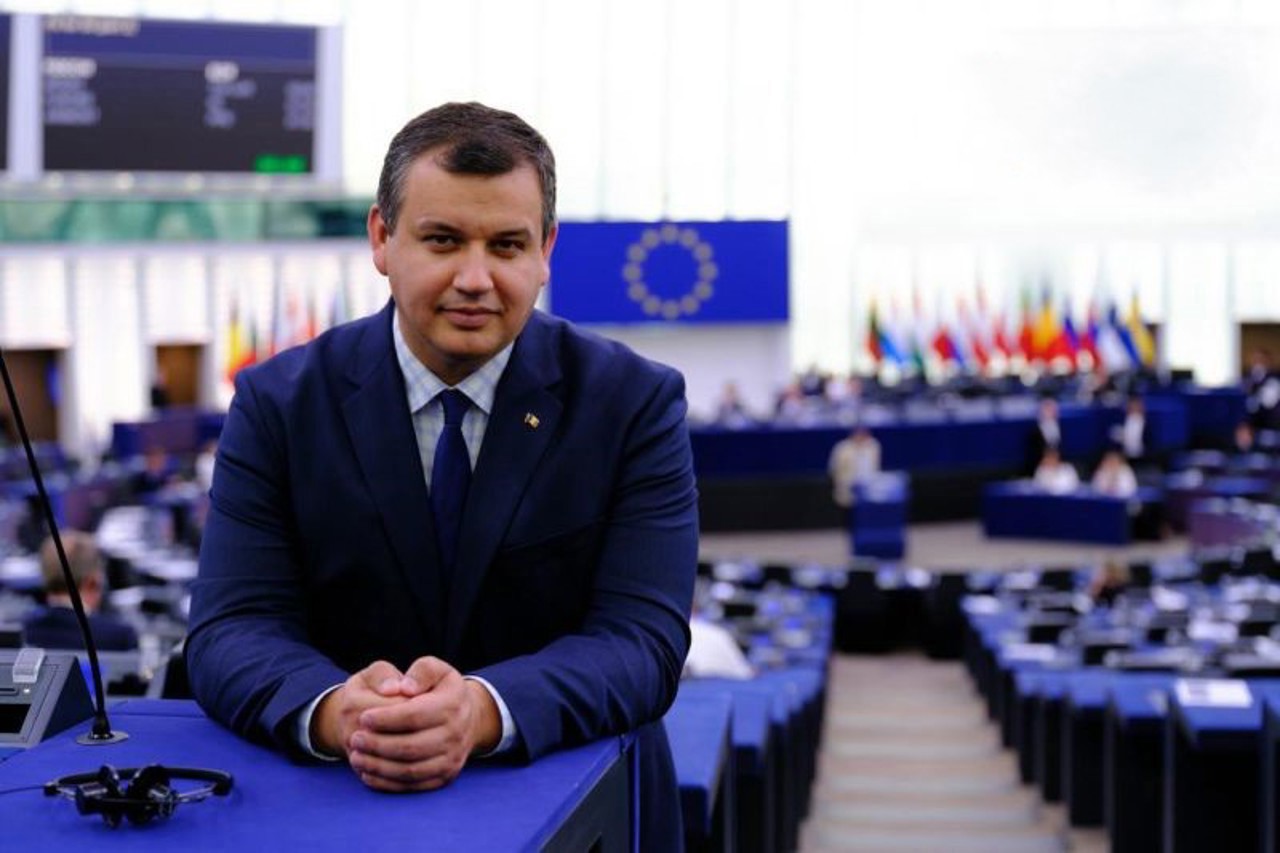
Romanian MEP Eugen Tomac emphasizes that the parliamentary elections on September 28 will be crucial for the Republic of Moldova's geopolitical direction and its future within the European Union. In an interview with Radio Moldova, he stated that the election results could either hinder or speed up the European integration process, particularly as the Russian Federation aims to destabilize the country and keep it within a politically and strategically controllable sphere.
Russia wants to control the Republic of Moldova
"If things take an unfortunate turn, everything that has been achieved so far risks being suspended at best. The context is such that we are aware of Russia's objectives at the moment. People must realize that it is not just a vote, but a natural democratic process with a predictable perspective. Right? Things have a much greater amplitude, with quite strong geopolitical implications, in the context in which we know very well that Russia wants a Republic of Moldova that is at least easy to maneuver in its own interest, when we look at the crimes committed every day in Ukraine", declared MEP Eugen Tomac, on Radio Moldova.
Tomac added that EU accession offers a solid perspective to states and their citizens. "It is absolutely natural for the citizens of the Republic of Moldova, because people want peace, to live in peace and to have a solid perspective in terms of well-being," the MEP said.
Analyzing the credibility of the current government in Chisinau and the geopolitical impact, Tomac highlighted that the Russian aggression in Ukraine has accelerated the European integration process of the Republic of Moldova, transforming the EU into an essential shield for regional security.
"The credibility enjoyed by the leadership of the Republic of Moldova in all European capitals and, obviously, the relationship with the European Union matters enormously at the moment. (...) The new geopolitical context has opened a wide window of opportunity for the Republic of Moldova, as it has submitted an application for European Union accession and become a candidate state in a very short time. All these political processes would have lasted, in another equation, a very long time. We are not only discussing the status of a candidate state, but also the political options for accelerating the integration process. Obviously, and not only political, but also financial support", the MEP pointed out, emphasizing that "Ukraine is resisting today and the Republic of Moldova is defended, because the EU is financially supporting this huge effort".
Romania and the EU - economic and strategic shield for the Republic of Moldova
Eugen Tomac wanted to emphasise that a pro-Russian victory in the parliamentary elections would expose the Republic of Moldova to external political manipulation, which could hinder the country's access to European funds.
"I believe that the vast majority of citizens of the Republic of Moldova understand perfectly what the Russian Federation is after and who the allies are on whom the Republic of Moldova can rely. And this ally is the European Union, and, obviously, its member states. Romania has been, is, and will remain, regardless of the context, alongside Chisinau. We have demonstrated this, and, obviously, it helps us know that in complicated situations, we can rely on each other. Beyond all the elements that define us as a nation, at the moment things are obvious", the European official said.
The danger of the European path being diverted by pro-Russian political actors
Tomac warned that the current opportunity for integration is limited, and Russia's efforts to divert the European path through domestic political actors represent a direct risk for the elections.
"What people need to do, however, is to understand that this opportunity cannot last forever. The reasons why Russia, through all its political actors, is trying to divert this natural path, pursue only one thing. The simplest thing is to look at what is happening in eastern Ukraine and see exactly what Russia is actually pursuing through all the policy it is currently pursuing in an aggressive and unacceptable way," the MEP pointed out.
The MEP recalled that the citizens of the Republic of Moldova decided, sovereignly, through a democratic referendum, organized last year, that the major objective, enshrined in the Constitution, is the integration of the Republic of Moldova into the European Union.
“So, we have a road that works in both directions, both from Chisinau to Brussels and from Brussels to the Republic of Moldova. Here, our objectives are similar and, as long as we believe in the same values, we have the same objectives, no one can accuse us more than is the case of things that can be interpreted in one way or another”, explained Eugen Tomac.
On the same show, the MEP stated that, at the EU level, the impact of Russian electoral interference in the Republic of Moldova is aware, especially after the “impactful” speech of the President of the European Parliament Maia Sandu: “A good part of my colleagues in the European Parliament have become aware, perhaps for the first time, of concrete elements related to interference in electoral processes in the Republic of Moldova, including those that are happening during this period”.
The European Union's lesson: crisis response - enlargement
According to Tomac, enlargement and integration were effective solutions for the EU's resilience in the face of crises. A pro-Russian victory in the Moldovan elections could, however, reverse this model, leaving our country isolated and vulnerable to hybrid aggression, contrary to the positive experience of the Eastern European EU member states.
"The European Union also has the capacity to manage complicated crises. Whenever the EU has encountered crises on the European continent, it has applied the following solution: more integration and enlargement. This also happened after communism collapsed. All the countries in Eastern Europe have joined the European Union. They are all satisfied and no one wants to leave the EU, which is understandable", concluded the European official.