Vladimir Plahotniuc extradition: What's next for Moldova's ex-Democratic leader?
The extradition process for former Democratic Party leader Vladimir Plahotniuc, arrested in Greece, remains mired in complex procedures.
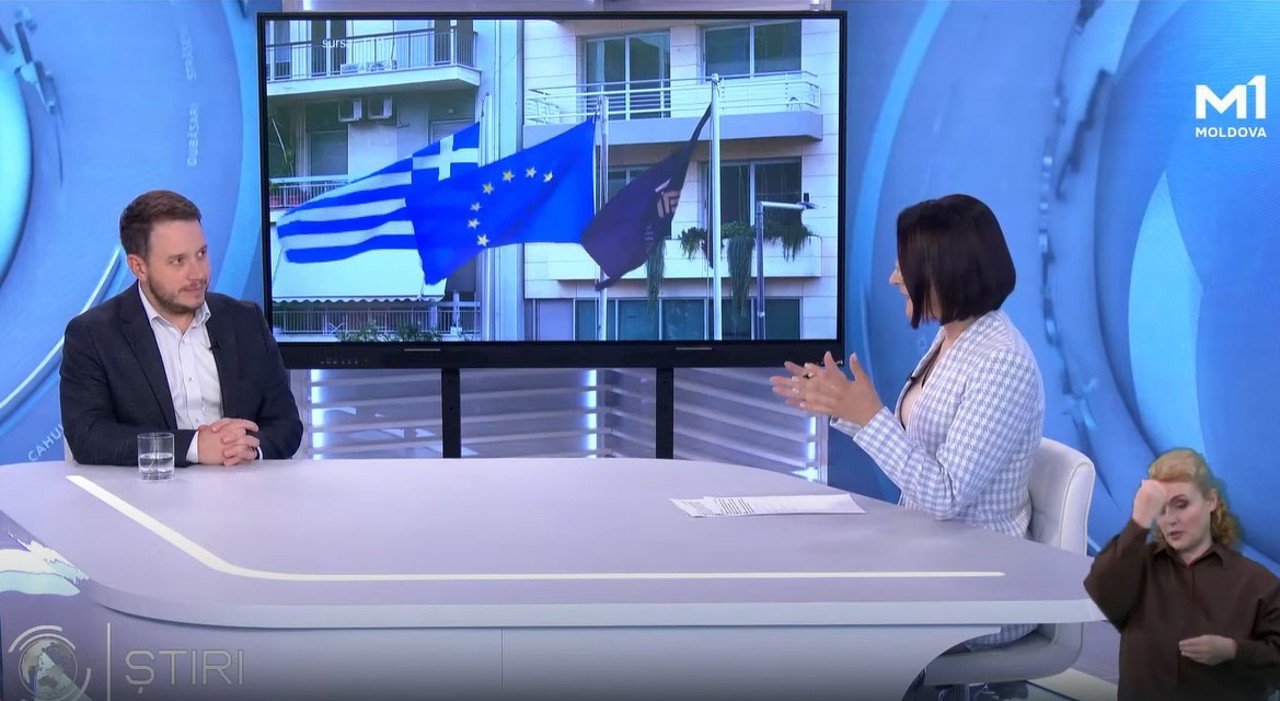
With the extradition process now resumed after a brief suspension, responsibility lies solely with the Greek authorities, says legal expert Alexandru Bot. He anticipates that Plahotniuc's lawyers will employ a "politically motivated defense strategy."
Mr Bot commented on recent developments, saying the Greek authorities have full control over the process and that any speculation is unfounded.
Speaking on Moldova 1, Mr Bot said the situation "raises more questions than it provides answers," and that the pace of the process is up to the Greek Ministry of Justice. He added that since a suspension has been lifted, the Greek authorities hold all the answers, rendering any further debate "absolutely pointless."
Regarding the logistics of the extradition, he explained that getting Mr Plahotniuc to Moldova will require air or land agreements with transit countries. "It's a technical matter, so we currently have no impediments," he said, confirming officials believe Mr Plahotniuc could arrive "earlier than September 25."
Upon his arrival in the Republic of Moldova, Mr Plahotniuc is to be placed in custody, Mr Bot clarified. He has a valid 30-day arrest warrant from the Superior Council of Magistracy, and will most likely be incarcerated in a penitentiary. He did not rule out that lawyers might request a change in the measure.
Mr Bot said the extradition request is based on charges of forming an organised crime group, money laundering, fraud and involvement in the bank fraud. He stressed the importance of a solid body of evidence.
"Six years were probably enough to prepare a solid indictment against him. Ultimately, these charges formed the basis for the extradition request. Let's hope the prosecutors have done their job well and have undeniable evidence that will prove his guilt beyond a reasonable doubt," the expert said. Otherwise, he added, "we will be facing a protracted trial where the defence will be skilled," cautioning that the seriousness of the charges could lead to a prison sentence of 8-15 years.
Analysing possible defence tactics in high-profile cases, Mr Bot estimated Plahotniuc's lawyers will try to present the charges as politically motivated. "It then falls to the judge's diligence or competence to either accept such arguments or, on the contrary, to critique them," he concluded.
Previously, the head of the General Police Inspectorate announced that Mr Plahotniuc could be brought to the Republic of Moldova "earlier than September 25," after the extradition documents package was sent by Greek authorities and received by competent bodies in Chișinău on Monday, September 15.
On September 17, the Ministry of Justice in Greece decided to suspend Plahotniuc's extradition procedure. Subsequently, the Prosecutor General's Office in Chișinău announced that the procedure had been "unblocked" following discussions on September 18 between Moldovan authorities and Greek officials.
The former leader of the Democratic Party, who had been a fugitive from Moldovan justice for six years, was arrested in Greece on July 22, 2025. He is targeted in four criminal cases, including for forming an organised criminal group, large-scale money laundering, fraud, and involvement in the bank fraud.
Translation by Iurie Tataru