Maia Sandu is Moldova’s best president, but Parliament is weak, expert
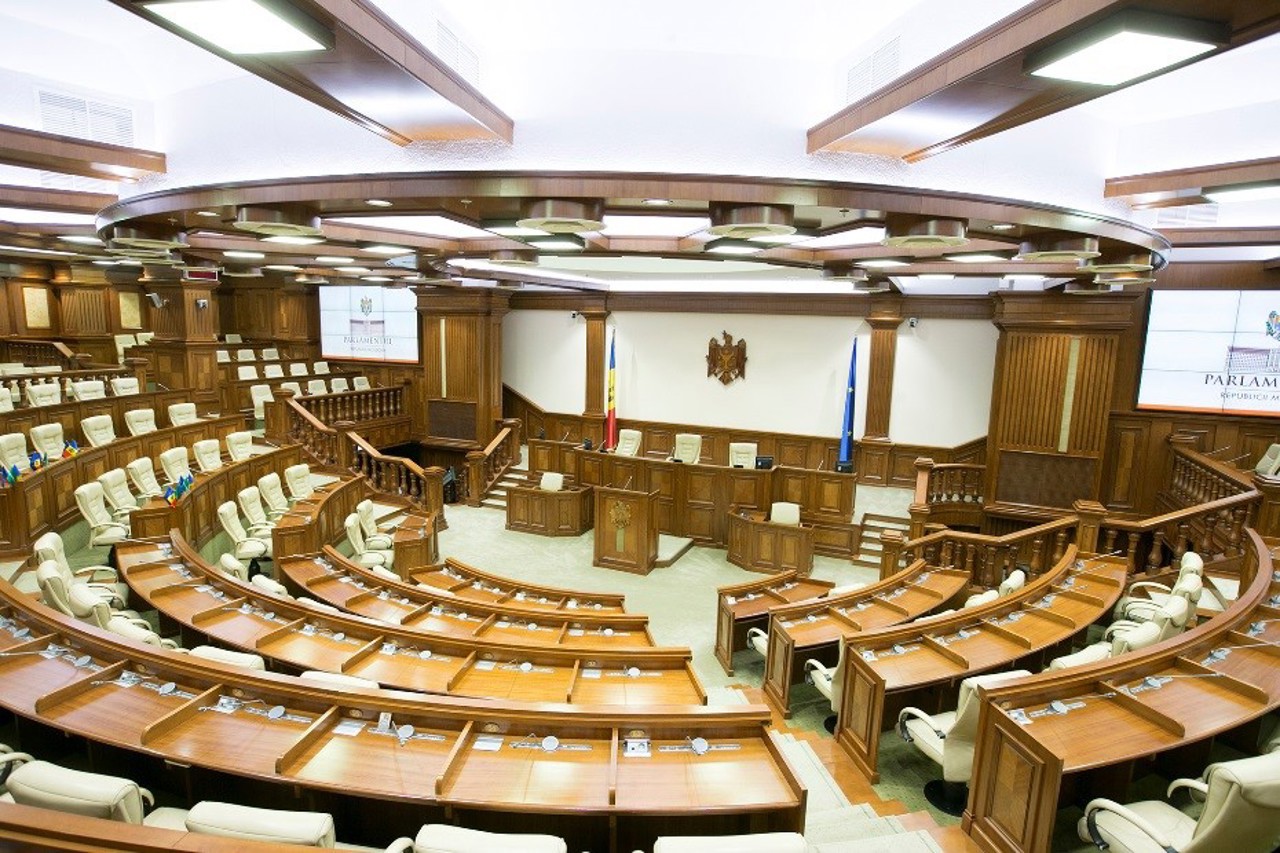
With a pro-European mandate, the new legislative has the responsibility of establishing a stable political and institutional balance. In light of previous shortcomings, constitutional expert Alexandru Tănase emphasizes the need for a significant change in the current composition of Parliament to effectively address the political challenges ahead.
"I would like to witness a substantial change at the parliamentary level. We have a problem in this sense and we hesitate to say: the Moldovan power is a specific one. There is President Maia Sandu, who is a very good president, I think the best president that the Republic of Moldova has had and who is doing her duty absolutely exemplary. But we also have the weak link of the political power – the Parliament, which made many mistakes in the last mandate. We need to think about what will be - a new legislative picture with new people who could balance this existing problem with the quality and competence of those who represent the legislative power", declared Alexandru Tănase, on the "Zi de Zi" show on Radio Moldova.
Referring to the parliamentary elections, Tănase explained that the vote was not only political, but strategic, oriented towards the geopolitical future of the Republic of Moldova.
"For the first time, Moldovans had to make a strategic decision not only on the side of sharing power locally, although this is also very important. For the first time, Moldovans had to make a fundamental, politically charged decision regarding the geostrategic orientation of their state: either the pro-European option or the imperial project of incorporation into the Russian sphere. From this perspective, citizens responded as clearly as possible, voting for political formations that fully and unreservedly support the European path. In this sense, the election has a special value," he announced.
Asked about possible challenges to the election results, the former constitutional judge specified that these are filed in the ordinary law courts within 30 days and cannot be filed after that. Regarding the legality of the election, Tănase was categorical: "there are certainly no deficiencies" for annulling the election result.
"We must understand that, in fact, the period of appeals has ended. (...) The Central Electoral Commission has drawn up the report on the finalization of the election dates. This report is being sent to the Constitutional Court, which, within 10 days, is to validate or not the results of this election. In this regard, I see absolutely no problem and no possibility of any surprises arising in the elections, as they were held", anticipates Tănase.
Regarding the establishment of the new Parliament, Tănase explained the legal stages that will follow.
"After validating the election results, the President of the Republic of Moldova, within a maximum of 30 days from the moment the elections took place, which means no later than October 28, must convene the first session of Parliament. This session is known as the session of the legal establishment of Parliament, which, according to the law, is chaired by the oldest deputy to elect the leadership of Parliament – the president and vice-presidents. Then, the formation of parliamentary factions follows, which cannot be less than five members", Tănase also explained.
The next stage is the appointment of the Cabinet of Ministers, a process that, in the current economic context, is crucial for the country's stability.
"After the Legislature is legitimate to work normally, the procedure for the investiture of the new Government will begin. Of course, in the economic conditions we are in today, the proposal regarding the formation of the Executive will come as quickly as possible", concluded the former president of the Constitutional Court.
We remind you that the preliminary results of the parliamentary elections of September 28 show that five electoral competitors will enter the new Legislative. The Central Electoral Commission has completed the counting and centralization of the minutes, and the data confirm that the pro-European party founded by Maia Sandu has exceeded the threshold of 50% of the votes and will govern the Republic of Moldova for the next four years.
Thus, the Action and Solidarity Party scored 50.2% of the votes (792,557), followed by the "Patriotic" Bloc with 24.17% (381,505 votes). The "Alternative" Electoral Bloc obtained 7.96% (125,685 votes), Our Party – 6.20% (97,852), and the "Democracy at Home" Political Party – 5.62% (88,679).