Georgia: EU condemns 'repressed' local elections amid protests
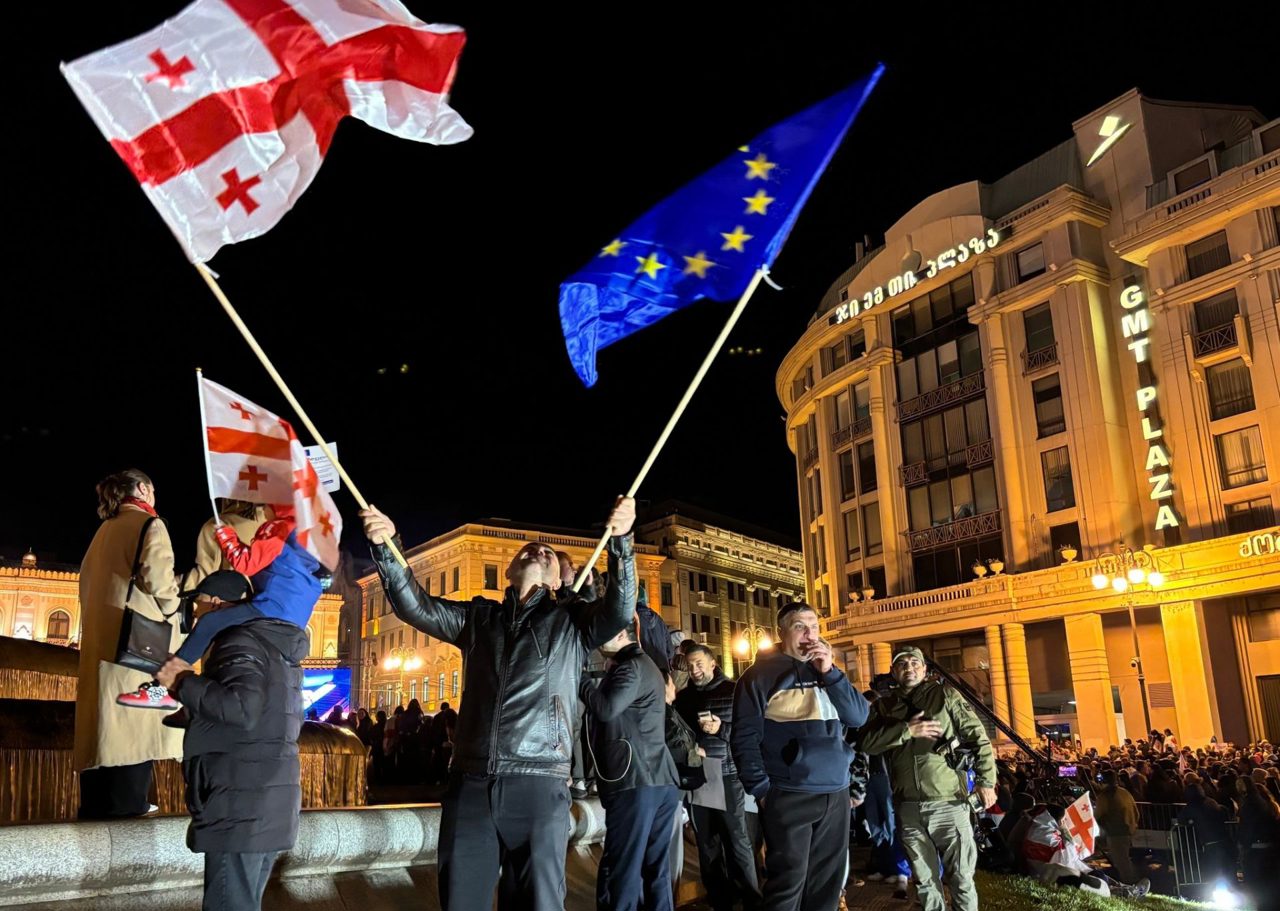
The EU condemned the local elections in Georgia, held amid a climate of opposition repression and pressure on civil society, while tens of thousands of demonstrators took to the streets of Tbilisi to protest against the authoritarian drift of the ruling party, "Georgian Dream."
The EU harshly criticised the local elections held in Georgia, stating that the vote took place "amidst a period of widespread repression of those who disagree" with the government, according to DPA.
"Months of raids on independent media outlets, the adoption of laws targeting civil society, the imprisonment of opponents and activists, and amendments to the electoral code to favor the ruling party drastically reduced the possibility of competitive elections," emphasised EU foreign policy chief Kaja Kallas and European Commissioner for Enlargement Marta Kos.
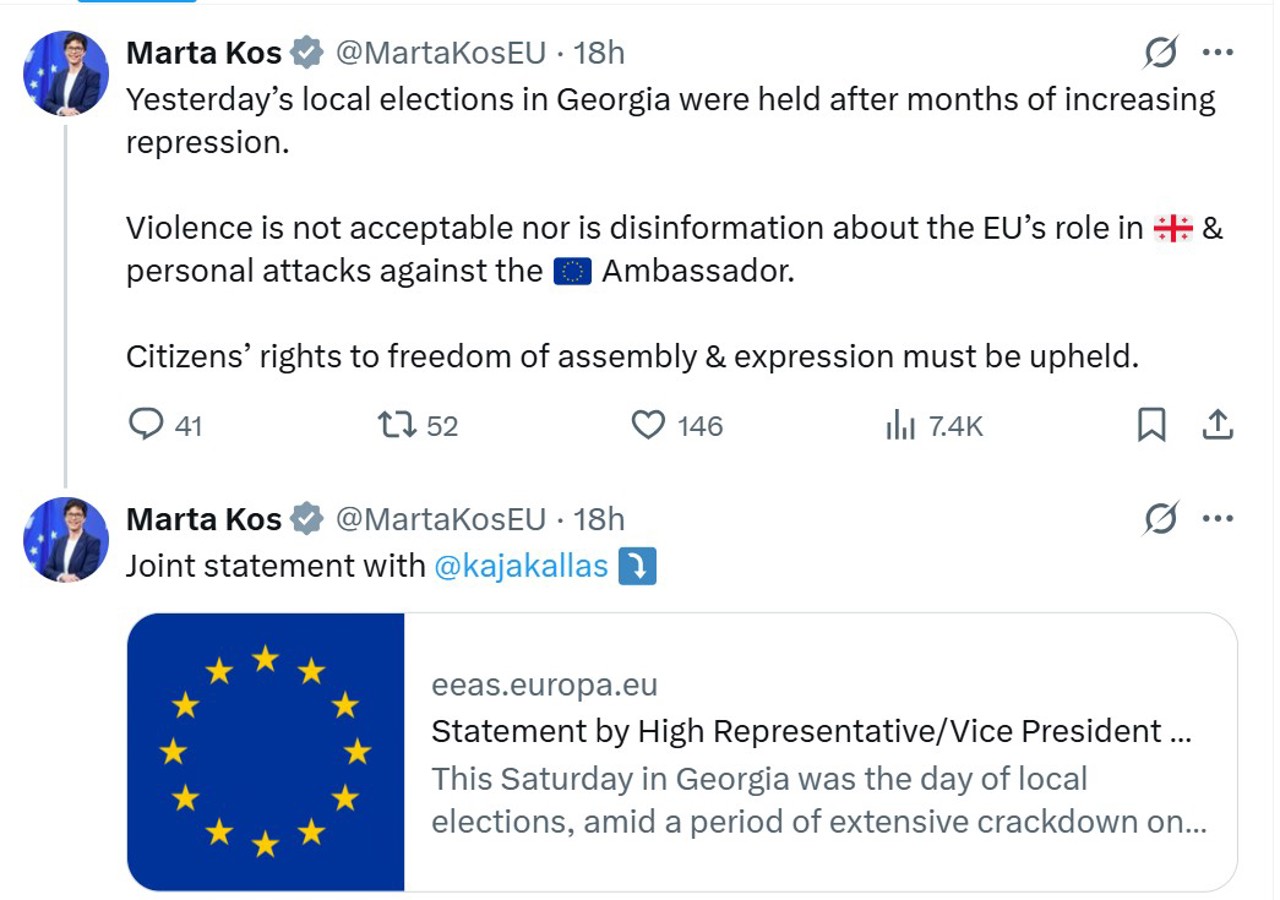
"A large part of the opposition boycotted these elections and the participation rate was relatively low," the EU representatives added.
They called for calm and restraint amid the prospect of new mass protests against the government, and urged the Georgian authorities to respect citizens' freedom of expression and freedom of assembly.
In the Georgian capital, Tbilisi, tens of thousands of people took to the streets on Sunday, shortly after the announcement of the vote results, to protest against the authoritarian drift of the "Georgian Dream" party.
According to the Georgian Ministry of Health, 21 police officers and six demonstrators were injured during the clashes. Prime Minister Irakli Kobakhidze described the events as an attempted coup.
On Monday 6 October, the Georgian Prosecutor's Office charged five opposition leaders with attempting to overthrow the government, after Sunday's protests led to clashes between law enforcement and demonstrators in Tbilisi, Reuters reports.
Opposition demonstrators had gathered in the city centre on Saturday, with some leaders promising a "peaceful revolution" on the occasion of the local elections, which were boycotted by the largest anti-government political groups. Minutes before the polls closed, a small group of protesters attempted to occupy the presidential palace but were repelled by police, who used a water cannon and tear gas.
The charges against the five arrested individuals carry sentences of up to nine years in prison. Officials maintain that the protests constituted an attempt to seize power.
Parliamentary elections took place in Georgia on Saturday 4 October. "Georgian Dream" announced its victory despite the boycott and low voter turnout. The ruling party claimed victory in all municipalities, obtaining about 81% of the votes. However, the opposition largely boycotted the vote, citing allegations of fraud and pressure on voters, according to DW.
Georgia has been going through a serious political crisis since controversial parliamentary elections held last year, when the "Georgian Dream" party declared itself the winner and Prime Minister Kobakhidze suspended the country's goal of integration into the European Union.
Popular movements have continued in Georgia for more than a year; the opposition accuses the ruling party, "Georgian Dream," of authoritarianism and of orienting the country towards Russia. The former Soviet republic was at one point one of the most pro-Western states that gained independence after the dissolution of the USSR.
In recent months, the protests have somewhat subsided, but Rustaveli Avenue in central Tbilisi is still often blocked by demonstrations at night.
Under the current ruling party, Georgia's relations with the West have deteriorated. The party is generally considered to be controlled by former Prime Minister Bidzina Ivanishvili, a billionaire sanctioned by the US for advancing Russian interests.
Translation by Iurie Tataru