Moldova ‘on the doorstep’ of Russia’s war, says Sandu
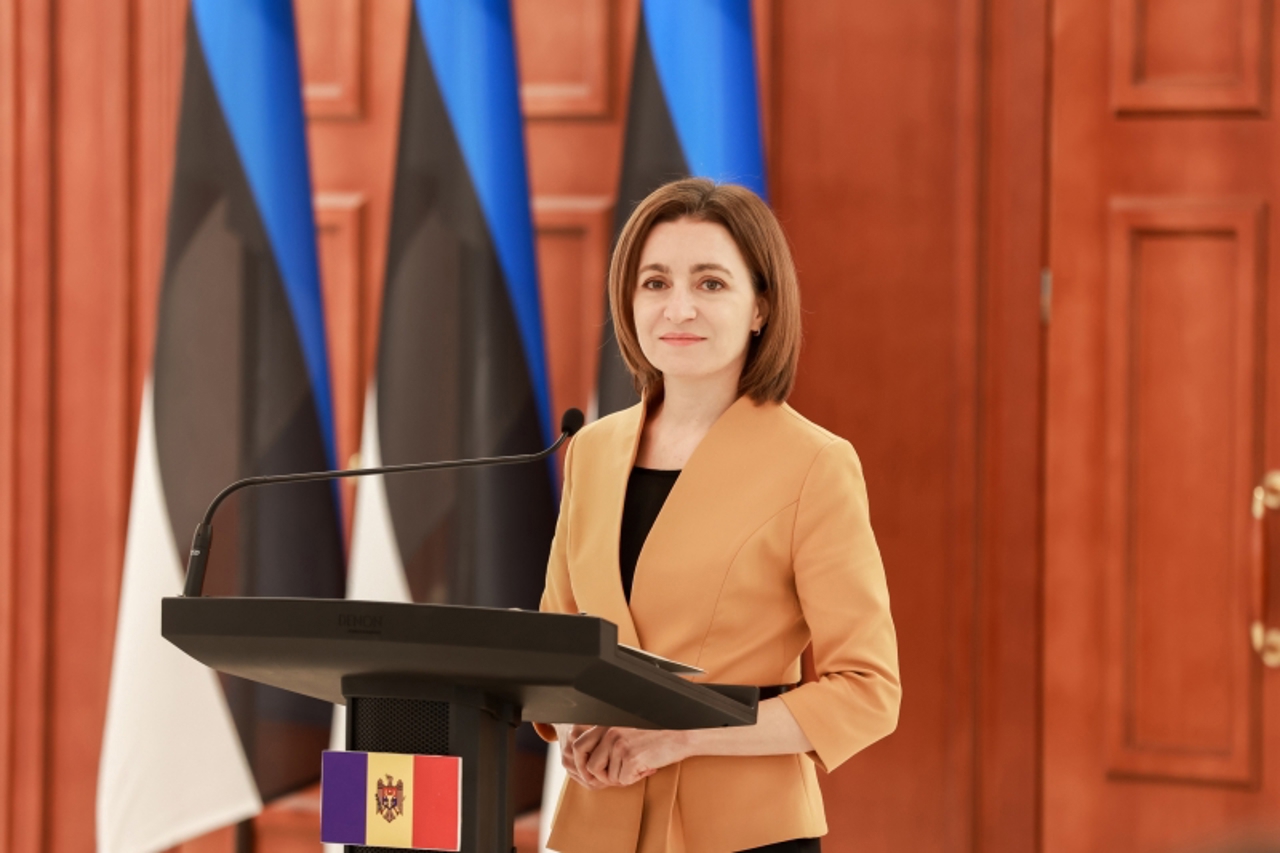
Moldovan President Maia Sandu has warned that the country's legal foundations, built with the help of the Venice Commission over 35 years, must be reinforced to protect its freedom.
Speaking at the Commission’s anniversary on Saturday, October 11, she said that “together we must design the legal and institutional instruments that will defend democracy from new threats.”
Ms Sandu also emphasised that the Commission’s opinions have been crucial benchmarks in Moldova’s process of joining the European Union, with each reform acting as a defense against those who might seek to abuse the young state.
“However, what the people of Moldova have built with your support is in danger. Two major, often overlapping, threats are jeopardizing democracy today – in Moldova and across much of Europe,” she stated.
“The first is the war Russia is waging against Europe. While its most visible front is the brutal aggression against Ukraine, Russia is also conducting a hybrid war against other European democracies, using drones, cyber-attacks, electoral interference and illicit financing.
"The second danger is the digital world itself, for which our democratic legal framework is largely unprepared.” She noted that these threats were fully manifested in recent elections.
Ms Sandu continued, arguing that Moldova’s vulnerabilities are being weaponised by foreign powers, amplified through technology and artificial intelligence, funded through cryptocurrencies, and hidden behind democratic language.
“These are no longer attacks on institutions, but assaults on our very sovereignty, coupled with military threats. For Moldova, which shares a 1,200km border with Ukraine, the war is literally on our doorstep,” she said.
The President noted that after being stopped by the courage of Ukraine, Russia found “another way: a hybrid assault on our democracy.”
“Elections have become the new frontline. The ballot box has become the target of a vast hybrid arsenal.”
She explained that the attack was insidious because it exploited the very essence of democracy, turning fundamental rights like freedom of association, assembly, and the free movement of capital into entry points for manipulation.
She concluded by offering to share Moldova’s experience – its successes, mistakes, and ongoing struggles – with any democracy facing similar dangers, adding that the defense of democracy today is a collective, not just a national, project.
According to the Presidency, the event was opened by the Secretary General of the Council of Europe, Alain Berset, and the President of the Venice Commission, Claire Bazy-Malaurie, in the presence of the President of the Italian Republic, Sergio Mattarella, and other high-ranking officials.
Translation by Iurie Tataru