45% rise in entry bans: Over 8,500 travelers denied access to Moldova in 2025
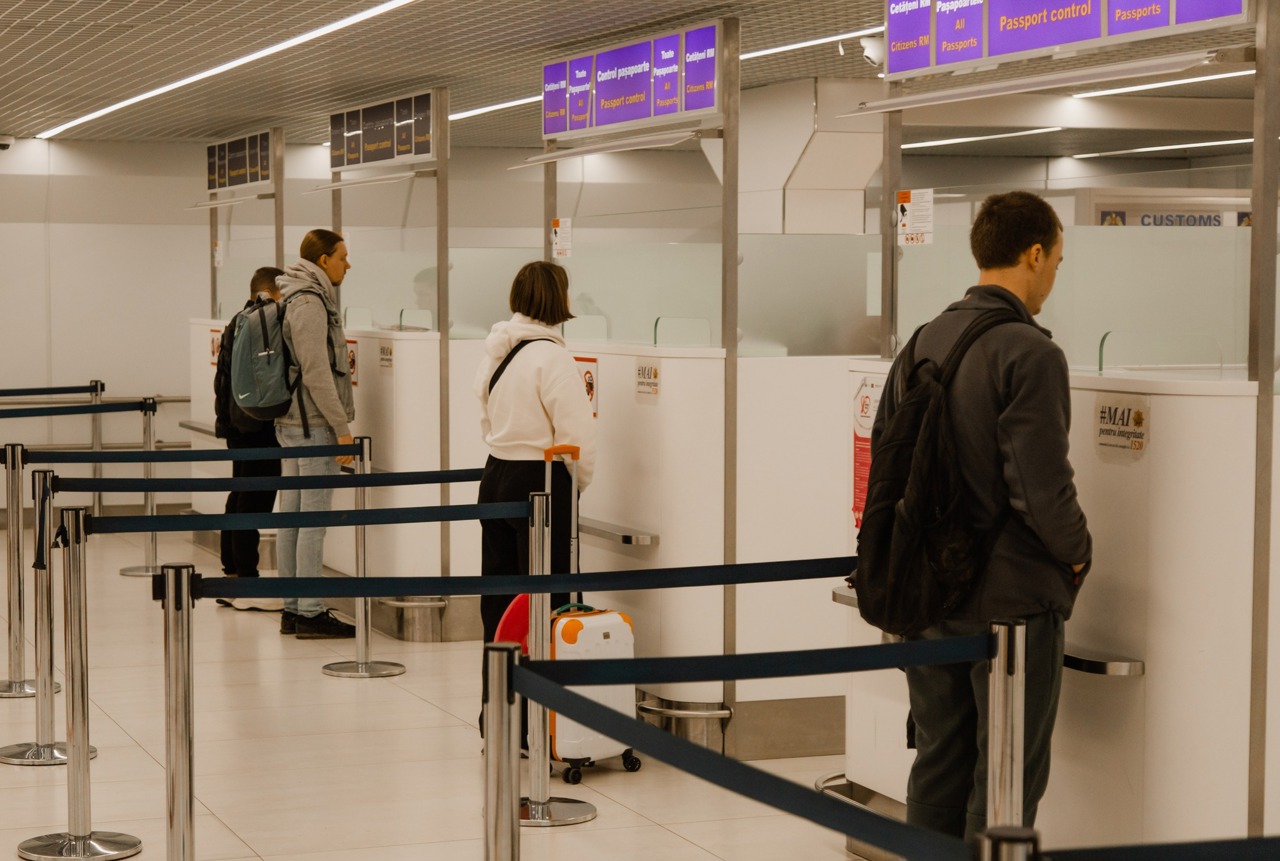
In 2025, the number of individuals banned from entering the Republic of Moldova has significantly increased. In the first nine months of this year, the Border Police refused entry to 8,578 people, marking a rise of approximately 45% compared to the same period last year. This group includes not only foreign nationals but also citizens of the Republic of Moldova who were turned away at the border.
Data presented to the "Teleradio-Moldova" Company by the General Inspectorate of Border Police (IGPF) shows that, during January - September 2025, the number of people denied access to the Republic of Moldova was 2,646 higher than in the same period last year—8,578 versus 5,932.
Among those stopped at the border are also citizens of the Republic of Moldova - 1,441 in 2025 compared to 1,176 last year.
The main reasons cited by the border authorities
Among the most frequent reasons cited by the Border Police when refusing access to the Republic of Moldova were the presentation of invalid or incomplete travel documents, failure to meet the legal entry conditions and exceeding the previously permitted period of stay.
In some situations, the decision is made due to suspicions regarding the real purpose of the visit or the lack of means of subsistence during the stay.
Also, some of the cases are related to customs procedures, where the authorities find inconsistencies between the passenger declarations and the contents of the luggage, or they impose additional checks on the goods transported.
Refusal of entry is not a simple administrative formality but a decision with immediate effects: the person is obliged to return to the country of departure and, in some cases, bears additional expenses for transport and accommodation.
Therefore, the authorities recommend that citizens inform themselves in advance about the conditions for crossing the border, the validity of documents and the rules applicable to each type of travel.
Threats to the security of the Republic of Moldova
We point out that, in recent years, the Republic of Moldova has adopted a firmer policy on border security, declaring more and more foreign persons suspected of posing a threat to democracy, territorial integrity, or public order as undesirable. The measures are coordinated by the Border Police, the Intelligence and Security Service and the General Inspectorate for Migration, based on Law No. 200/2010 on the regime of foreigners and the decisions of the Commission for Emergencies, which align the country with the sanctions of the European Union.
One of the most publicized incidents in the summer of 2025, the year in which the Republic of Moldova organized parliamentary elections, was the so-called "European kickboxing championship" in Chisinau. On June 23, the Border Police blocked the entry of 195 participants, mostly Russian and Belarusian, after it was found that many had risky profiles, including former military personnel or people with connections in Russian security structures.
The event was co-organized by the “Garuda” club and partially financed by the Chisinau City Hall. The authorities invoked “increased risk to national security”, and the Ministry of Education and Research canceled the competition.
The case was described by law enforcement as an example of an attempt at Russian hybrid influence under the cover of a sports event.
The case of Russian singer Filip Kirkorov also became one of the most famous examples of banning access to the Republic of Moldova on security and propaganda grounds. The artist, nicknamed the “king of Russian pop”, was stopped at the Chisinau airport in July 2022, when he was coming from Istanbul with a Bulgarian passport.
Authorities accused him of financial ties to the “Sor” Party, later declared unconstitutional. According to the then acting prosecutor general, Dumitru Robu, the group allegedly paid $260,000 (of which $200,000 to Kirkorov) for a concert planned to take place in the Grand National Assembly Square, considered part of an electoral destabilization campaign.