PISA experts on the Government's program: EU membership – a strategic necessity imposed by the security environment
The program unveiled by the designated Prime Minister, Alexandru Munteanu, proposes a security model that prioritizes citizens while emphasizing European integration, according to the Platform for Security and Defense Initiatives (PISA). The organization's analysis suggests that the success of this program will hinge on the government's ability to turn its stated commitments into concrete actions. This transformation aims to enhance national resilience and accelerate accession to the European Union.
In a regional context marked by hybrid threats and geopolitical pressures, the Republic of Moldova's membership in the European family is no longer seen as a mere political objective but as a strategic necessity imposed by the current security environment, PISA experts state. Basing the pro-European vision on the will of citizens and the imperatives of consolidating the state as a predictable and resilient actor, European integration becomes the central pillar of national security.
"The government undertakes to promote the image of the Republic of Moldova as a state prepared for accession and an equal partner in the European security architecture. This approach responds to both the need to strengthen internal cohesion and the need to counter disinformation campaigns and attempts at external influence through a security narrative centered on European values and democratic accountability", a commentary by the organization states.
Citizen safety is placed at the forefront. The program proposes measures to modernize the border infrastructure and develop crisis management capabilities, including through the operationalization of the National Crisis Management Center. And in terms of the country's reintegration, a model of gradual convergence of the Transnistrian region with the legal and economic space of the Republic of Moldova is promoted.
"The emphasis on the involvement of the European Union reflects the need for external support to guarantee peace and transform the current peacekeeping format into a civilian mission, oriented towards human security and the rights of citizens on both banks of the Nistru", notes the Platform for Security and Defense Initiatives.
PISA experts also highlighted the role of modernizing the National Army in the defense component and creating a security culture that contributes to the resilience of the state. The international cooperation mentioned in the program and the active participation in European security initiatives, according to experts, reflect a strategic reinterpretation of neutrality in line with the realities of the current security environment.
Alexandru Munteanu is the parliamentary faction's proposal for the position of prime minister from the Action and Solidarity Party, the majority party in Parliament. President Maia Sandu signed the decree designating the candidate for the position of prime minister on October 24, after consulting the parliamentary factions.
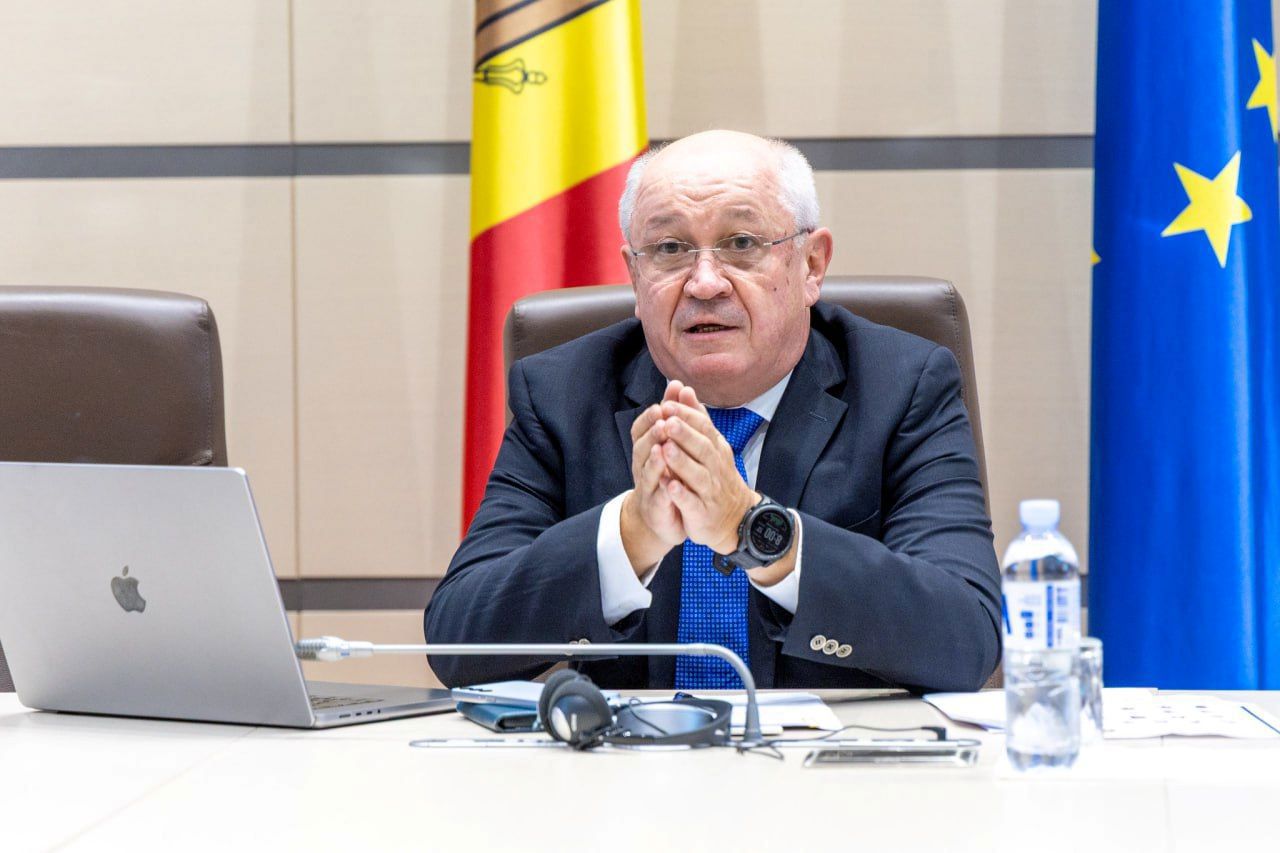
The "EU, Peace, Development" program was made public on October 28 and, according to the designated prime minister, is a framework program, which will be subsequently supplemented with precise measures in all the mentioned areas. The security and peace model is reflected in the chapters: Cohesion between the banks, Diplomacy for peace and Capable defense.
Cohesion between the banks
The reintegration of the country is a national priority and a responsibility towards all citizens of the Republic of Moldova. Through coherent, people-oriented policies, we undertake to strengthen trust, maintain peace and stability, and provide residents of the left bank of the Nistru with access to quality public services and equal opportunities. At the same time, we will ensure that the benefits of the Republic of Moldova's rapprochement with the European Union are also enjoyed by citizens and companies in the Transnistrian region. The priority lines of action in this regard will be:
- Maintaining peace, security and predictability on both banks of the Nistru, ensuring a coherent reintegration policy and gradual convergence in the legal, economic, customs, fiscal, social, informational and political spaces of the Republic of Moldova.
- Providing qualitative, non-discriminatory and accessible public services to the inhabitants of the eastern districts of the country, covering the entire spectrum of needs (social, humanitarian, health, education, energy, population documentation, economic activities, etc.) and continuing development and confidence-building projects.
- Making efforts to implement standards in the field of respect and protection of human rights on the left bank of the Nistru and in the municipality of Bender.
- Strengthening and enhancing the role of the European Union on the Transnistrian dimension in order to stimulate the uniform and full application of harmonized national legislation throughout the country.
- Undertaking diplomatic and political actions to minimize military risks related to the Transnistrian region and transform peacekeeping forces into an international civilian mission.
Diplomacy for Peace
In an international context marked by profound transformations and complex challenges, the Republic of Moldova must promote an intelligent, balanced and responsible foreign policy, oriented towards consolidating peace, stability and prosperity. Thus, Moldovan diplomacy aims to defend national interests through constructive dialogue, multilateral cooperation and sustainable strategic partnerships, thus contributing to regional security and the country's economic development, through:
- Strengthening bilateral strategic partnerships, deepening relations with neighbors, European Union member states and the entire Euro-Atlantic space, as well as priority regions in Central Asia, Southeast Asia and the Middle East, in order to support economic development and strengthen security.
- Increasing opportunities for multilateral cooperation within international and regional organizations, such as the UN, the Council of Europe and the OSCE, fully utilizing these platforms to promote national interests, re-integrate the country, attract investments and consolidate democracy, as well as mitigate global challenges in the field of climate change.
- Aligning diplomacy with the needs of the Diaspora and expanding the network of modern, accessible and efficient consular services and supporting Moldovan communities abroad through cultural, educational and economic projects, strengthening ties with the state and creating favorable conditions for returning home.
Capable defense
To strengthen national security, it is essential that the Republic of Moldova have a modern, professional and well-equipped army, capable of responding effectively to contemporary challenges. In this regard, a dignified defense requires investments in people and equipment, but also cultivating a national culture of resilience and security. At the same time, we consider it necessary to improve the military training system and strengthen inter-institutional and international cooperation. The main directions of action envisaged are:
- Increasing the attractiveness of military service, by improving working conditions, strengthening social guarantees and promoting an attractive military career.
- Improving the system of military education, training and research, for the continuous training of personnel and promoting technological and doctrinal innovation.
- Strengthening national resilience and security culture, by promoting the spirit of defense, increasing citizen involvement and developing mechanisms for responding to conventional and hybrid threats.
- Making inter-institutional cooperation more efficient within the national defense system, for a coherent and coordinated response to complex threats, including those of a hybrid nature.
- Accelerating the transformation and modernization of the military capabilities of the National Army, by adapting structures, equipment and processes to the requirements of the contemporary security environment.
- Expanding international cooperation in the field of defense, increased participation in international peacekeeping missions, in order to develop the operational capabilities of the National Army.
- Gradual integration into the European security architecture, using the harmonization of the regulatory framework, the adoption of common standards and active engagement in European initiatives within the Common Security and Defense Policy.
After consultations with parliamentary factions on October 29, Prime Minister-designate Alexandru Munteanu will request on Friday, October 31, a vote by Parliament to invest the Government and support the proposed government program.