IPRE urges the new Government to transform Moldova’s resilience into lasting progress on EU integration
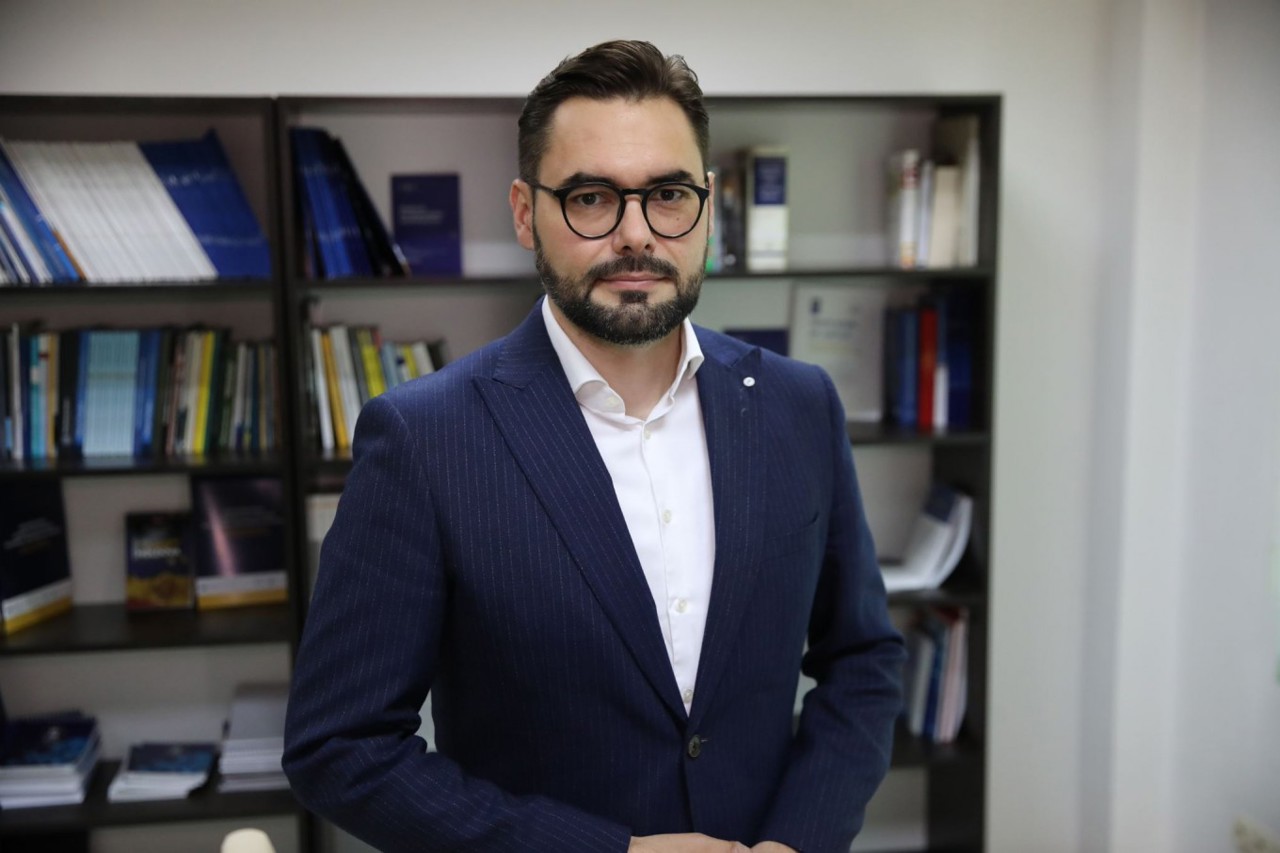
Moldova requires responsible and credible governance. The new government has the opportunity to turn our country's resilience into tangible progress, promoting economic growth and a steady path toward European integration. Also, the future Cabinet of Ministers must avoid fatigue, complacency, and a decline in public trust, as emphasized by Iulian Groza, executive director of the Institute for European Policies and Reforms (IPRE), in an editorial.
The expert warns that Moldova will continue to face hybrid attacks from outside. Still, in the post-electoral period, hybrid threats will evolve, moving from direct interference to subtle internal erosion.
According to the IPRE director, Russia's influence networks will adapt, exploiting governance gaps.
"For the Kremlin, a stolen election is not an objective in itself, but a divided society. Strategic communication must be institutionalized as a joint effort of the Government and society. Political financing must become completely transparent, in order to eliminate channels of external interference," the expert recommends.
Iulian Groza also believes that justice reform remains essential for national security, and a constant, fair and visible application can combat the perception of selective or externally imposed justice. Public trust is also crucial, Groza believes.
“Although the President of the Republic of Moldova and local authorities enjoy high support, trust in the judiciary and civil society remains limited, even if it has increased slightly in recent years. Closing this gap requires leadership, results and inclusion. The most credible local voices, such as teachers, mayors, community leaders, must be supported and actively involved in communicating reforms and countering manipulation,” recommended Iulian Groza.
In the same editorial, the IPRE director emphasized that the experience of the Republic of Moldova offers valuable lessons for the whole of Europe, and the 2025 elections have become “a real-time laboratory of democratic resilience under hybrid siege, which Europe should follow closely”.
The expert pointed out that resilience to hybrid threats must be built on transparency, exposing illicit financing, disinformation networks and malign actors to prevent infiltration. Prevention must replace ad hoc reactions through early warning systems and inter-institutional coordination.
According to the same source, strategic communication is an essential security tool, grounded in facts and empathy, that builds trust in society.
At the same time, Iulian Groza emphasizes that education remains the foundation of resilience, and media literacy and critical thinking must be integrated into the training of new generations. He also suggests a more transparent and responsible regulatory framework for the online space.
"No country can resist hybrid interference alone. The success of the Republic of Moldova was based on cooperation between institutions, civil society, the media and international partners. Europe must transform the defense of democracy into a common responsibility, linking national preparation with EU support and the responsibility of digital platforms", Iulian Groza emphasized.
The IPRE Executive Director also drew attention to the fact that, at the European level, Russia will continue to exploit fear and division, trying to create doubts among citizens towards state institutions, allies and each other. And Moldova's experience demonstrates that, currently, defending sovereignty is equivalent to protecting the integrity of information.
"Europe must act as one. Defending democracy must not be postponed until the next crisis. By supporting the Republic of Moldova in strengthening its institutions, independent press, and civic resilience, Europe strengthens its own democratic shield. Moldova's experience proves that, when the truth is defended collectively, freedom resists, and democracy, even under siege, can win", concluded Iulian Groza.
The government led by Prime Minister-designate Alexandru Munteanu will be inaugurated on Friday, October 31.