Historic moment for Moldova: customs clearance speeds up after joining the Common Transit Convention
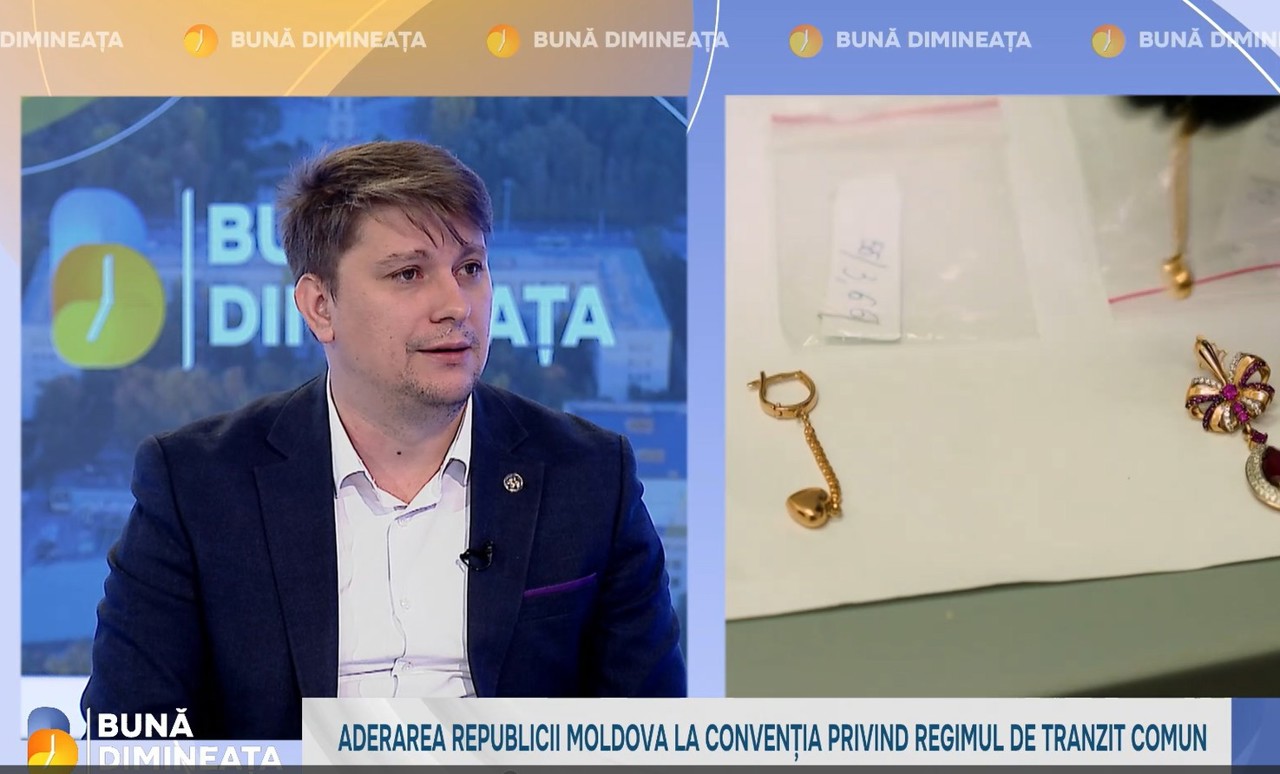
Beginning November 1, carriers from the Republic of Moldova will experience significantly faster customs control and will no longer face delays of hours, days, or even weeks as they did previously. This improvement is a result of our country's accession to the Convention on the Common Transit Procedure and the implementation of the New Computerized Transit System (NCTS).
"The accession to the Common Transit Convention, which will take place starting November 1, is a historic moment for the Republic of Moldova, an enormous leap for the economy and for the European integration process, given that everything related to the transit of goods will be linked to the common European space and the countries that are part of this convention: the European Union states, the EFTA countries (European Free Trade Association) - Norway, Montenegro, Turkey, Ukraine, as well as the Republic of Moldova", declared the director of the Customs Service, Alexandru Iacub, in the show Bună Dimineața, on Moldova 1 TV.
According to him, the new system brings significant advantages for economic operators from the Republic of Moldova, ensuring direct and unified communication throughout the community space.
"The economic agent that has completed the necessary procedures to work through the NCTS system - a common system for all member countries of the transit convention - can load the goods in Telenești and reach Berlin without any stops", explained Alexandru Iacub.
To prepare all those involved, the Customs Service organized multiple training sessions with economic operators, customs brokers and carriers.
“It is very important that operators know that this is a modern alternative for the transit process. We are not changing all the rules overnight, but we are offering a new opportunity. I am sure that economic agents will quickly understand the advantages: they will no longer spend 7 hours in the border transit process, but only 7 minutes. It is a huge difference,” Iacub emphasized.
The Head of the Customs Service added that by joining this Convention, one of the biggest problems of recent years will be solved – the huge queues formed by freight trucks at the border.
“With the integration of economic operators into the NCTS system, all necessary data will be transmitted electronically, from the starting point, and at the border the truck will pass through with a simple click. This will significantly reduce the workload of customs officers, because documentation and communication will take place in a single system, common to all countries. There will be no more duplication of processes, there will be no more need for the customs officer to run between the truck and the office – everything will be validated digitally, quickly and efficiently”, said Alexandru Iacub to Moldova 1 TV.
The system also allows obtaining the status of an approved consignor, enabling customs procedures to be carried out directly at the loading site.
"If the operator has the status of an approved consignor, he can seal his goods himself at the warehouse, and all procedures are completed from the place of departure - whether it is Telenești, Ocnița, to Paris or Lisbon. This principle is valid for any type of goods, except for those that require special authorizations," he explained.
Among the remaining challenges, the head of the Customs Service mentioned infrastructure issues but assured that they are being addressed. In parallel, the authorities of the Republic of Moldova are working closely with those of Romania to facilitate the passage of individuals through customs points, especially during the summer period.
"We are working together with the Romanian Customs Authority to create a common crossing point, which would streamline traffic and eliminate existing barriers," Alexandru Iacub said.