Moldova leads EU accession among candidate countries in 2025
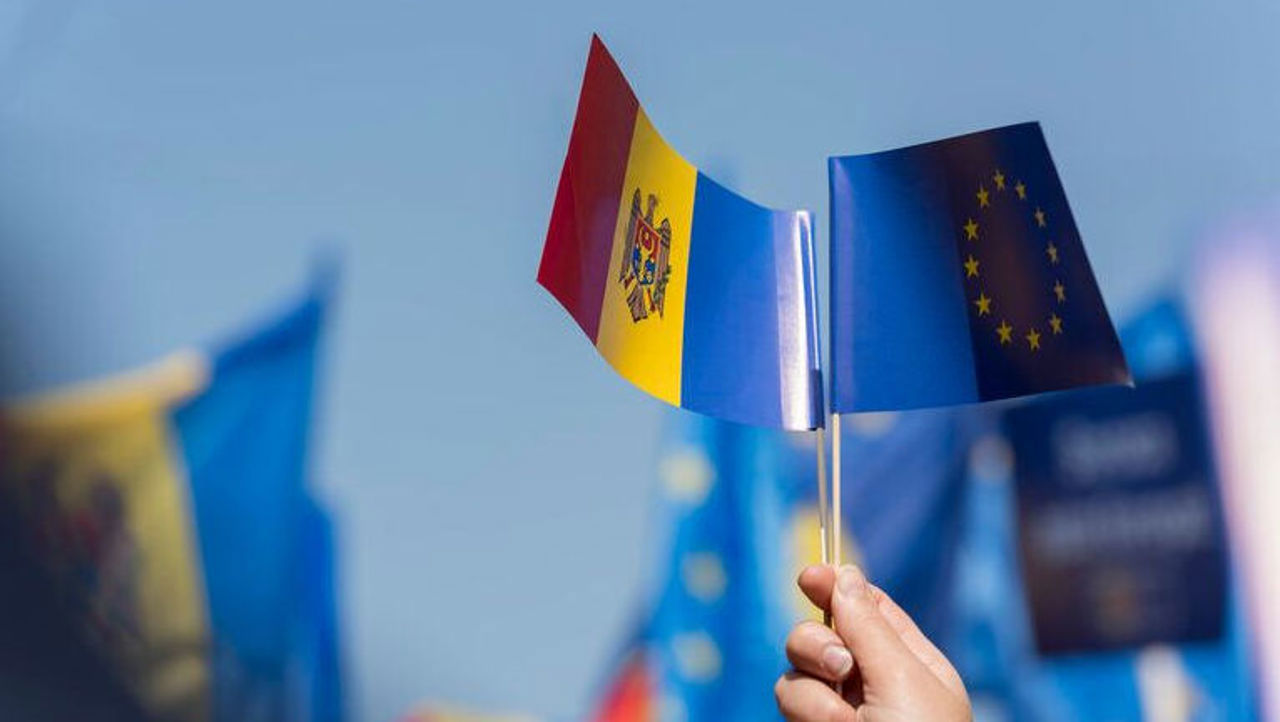
The European Commission will release its annual European Commission report on the progress of EU candidate countries on Tuesday, November 4.
While the overall situation appears challenging, the Republic of Moldova has shown notable advancement in its Moldova EU accession process, particularly when compared to Ukraine, Serbia, and Georgia.
The report stresses that what is needed now is not new ideas, such as abolishing the veto power in the EU Council, but genuine political commitment from EU Member States.
The forthcoming EU enlargement package, to be presented in Brussels—and which Teleradio-Moldova previewed—will highlight the progress made by Albania, where nearly all negotiation chapters have been opened, and the closure of certain chapters with Montenegro.
No other candidate country has achieved comparable results. Moldova, Ukraine, North Macedonia, and Bosnia have yet to open their first negotiation chapters. Serbia has not opened a new chapter in nearly four years, and Kosovo’s application has not even been submitted.
Negotiations with Turkey remain frozen, while Georgia has experienced significant setbacks. Under these circumstances, the progress reports will provide detailed updates across all monitored areas. Still, no tangible progress toward EU enlargement has been achieved.
This slowdown occurs amid heightened expectations. The EU has declared enlargement a top priority and strategic goal. Most EU citizens support the admission of new members. However, the stalemate comes as leaders discuss the possibility of EU expansion by one or two countries by 2028 or 2030 at the latest.
Report on Moldova
Technical screening of the EU acquis with Ukraine and Moldova was completed this autumn. The Commission submitted reports to the Council covering fundamental issues, the internal market, competitiveness and inclusive growth, and external relations. In May 2025, Ukraine and Moldova adopted roadmaps for the rule of law, public administration, and the functioning of democratic institutions. Ukraine also adopted an action plan for national minorities, in line with the screening guidelines.
The European Commission notes that Moldova has advanced toward EU accession at an accelerated pace, significantly deepening cooperation with the EU despite ongoing hybrid threats. Moldova’s commitment was reaffirmed during the parliamentary elections on September 28, 2025, which produced a majority dedicated to EU integration. The first EU-Moldova summit on July 4, 2025, opened a new level of cooperation. In parallel, Moldova has taken concrete steps for gradual integration into key parts of the EU single market, including the “Roam Like at Home” initiative starting January 1, 2026.
Corruption remains a major challenge for Moldova and other candidate countries, yet progress has been made in establishing national early warning systems for new psychoactive substances in Moldova and Albania. Closer cooperation with the European Union Agency for Drugs is being strengthened.
Moldova has also made steady progress in controlling small arms and light weapons (SALW). Efforts to combat money laundering and terrorist financing have improved over the past year, paving the way for joining the SEPA payments system.
Moldova demonstrated resilience against Russian interference during parliamentary elections and has continued to host Ukrainian refugees, contributing to protection and integration efforts.
However, GDP growth stagnated at 0.1%, mainly due to a significant decline in agriculture.
The Growth Plan for Moldova, adopted in October 2024, aims to accelerate socio-economic convergence with the EU and support the accession process. It rests on three pillars: accelerating reforms, improving access to the EU single market, and increasing financial assistance via the Reform and Growth Facility. The EU committed €1.9 billion for 2025–2027 through this Facility.
Pre-financing totals €294 million: €270 million in loans, disbursed on June 11, and €24.3 million in grants to support approved investment projects under the Neighborhood Investment Platform. The first loan tranche of €18.9 million was disbursed on September 2, 2025, following Moldova’s initial reform measures.
Moldova, Ukraine, and Western Balkans partners have all benefited from gradual integration in 2025, with visible results in telecommunications (roaming), payments, banking, anti-money laundering (SEPA), customs, energy, and industrial goods. Other areas of integration include agriculture, trusted services, space, healthcare, transport, and defense.
Moldova maintains strong relations with neighbors and other candidate countries through bilateral, trilateral, and regional initiatives. Regular exchanges with Ukraine and Western Balkan countries focus on the accession process. Amid Russia’s aggression against Ukraine, Moldova has strengthened cooperation with Ukraine and Romania, including trilateral arrangements, particularly in energy security, transport, and connectivity.
The pro-European government in Chișinău consistently aligns with international statements condemning Russia’s military aggression and shows solidarity with Ukraine.
EU Enlargement Stagnation
Twenty-five years ago, EU leaders met in Zagreb for a joint summit with Western Balkan countries. In November 2000, the EU offered the perspective of integration to the former Yugoslavia and Albania (except Slovenia, which was nearly completing accession negotiations).
Looking back, only Croatia has closed that circle. Despite joining on July 1, 2013, Croatia remains the “youngest EU member state.” Never in EU history have so many years gone by without EU enlargement through new member accession.
This demonstrates the EU’s actual willingness to expand. Positive statements cannot conceal the reality. Talks of “a new momentum for enlargement” or “renewed commitment” are frequent, but implementation remains limited.
While the Western Balkans situation has improved and Ukraine, Moldova, and Georgia have candidate status, the results are modest compared to past promises.
EU Lack of Willingness
The lack of progress appears to be due more to the EU than to candidate countries. Despite regional challenges and occasional lack of political will for reform, delays are largely caused by blockages from one or more Council members. Strong political commitment from EU Member States is essential to advance EU enlargement.
European Council President António Costa proposed abolishing the veto on opening negotiation chapters. While well-intentioned, it cannot resolve major blockages and lacks sufficient support from Member States. Capitals still retain many opportunities to block chapter closures or treaty ratifications.
Bulgaria, Greece, the Netherlands, and Croatia oppose lifting the veto to protect smaller states’ influence. Cyprus, Hungary, and France are reportedly skeptical or opposed. The proposal’s chances of adoption are therefore limited.
A similar fate awaits suspending veto rights for new members at the start of accession. This would last until the EU implements internal reforms, aiming to ease fears of a 35-member EU. Although “in an early stage,” the idea is taken seriously within EU institutions.
Those blocking Ukraine or North Macedonia are unlikely to agree. Limited voting rights at the start would make Balkan countries or Ukraine second-class members, providing further arguments for EU skeptics in candidate countries.
Translation by Iurie Tataru