AI risks and benefits debated at Moldova's Science Academy
Artificial Intelligence (AI) is rapidly conquering new ground, opening fresh horizons across various sectors.
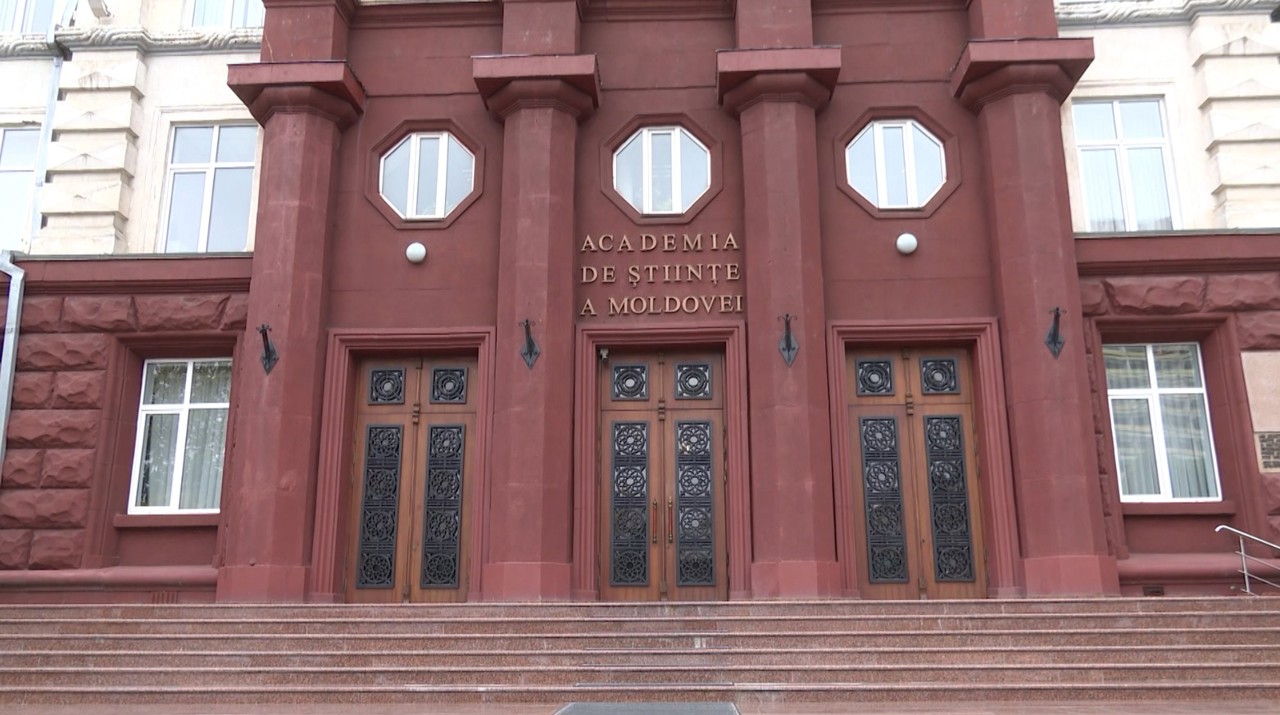
This wave of technological progress, however, necessitates an increased measure of caution. The crucial AI Risks and Benefits were the central focus of a recent scientific conference held at the Academy of Sciences of Moldova (ASM), featuring both national and international experts.
Ion Tighineanu, President of the Academy of Sciences of Moldova (ASM), highlighted AI's value: “The modern world is characterized by an ocean of information, and Artificial Intelligence really helps us to quickly pinpoint the sources and specific data pertaining to a narrow field.”
However, simultaneously, the scientific community warns that AI must be approached with profound responsibility and sound AI Governance.
Academician Svetlana Cojocaru emphasized the need for expertise: “You must possess certain competencies in the respective domain to utilize this tool, analyze the results it generated, and deduce if they are correct or if they led you toward a wrong track, which happens quite frequently.” This underscores the vital importance of digital literacy among users.
Consequently, Constantin Gaindric, an ASM corresponding member, relayed a key recommendation from AI companies: uninitiated users should refrain from seeking medical or legal advice, as the resulting answers can often lead to dangerous confusion.
“We should be patient for another year or two, and we will see stunning results,” Gaindric optimistically projected.
Despite the caveats, used efficiently, Artificial Intelligence offers a powerful solution for optimizing and expediting processes. Boris Boincean, also an ASM corresponding member, admitted that the new technologies are a considerable aid to his work.
“I have successfully dealt with – excuse the expression – these robots and I highly appreciate their assistance in the activities of scientific workers,” the academician stated.
Peter Gluckman, President of the International Science Council, further stressed the collective responsibility: “to make the most of this magnificent set of technologies and to limit the harm they might cause.”
In his view, one of the greatest dangers is that “Knowledge can be compromised in a world where Artificial Intelligence and social networks can manipulate the sense of what is real,” warning specifically about the risks of information manipulation.
To address these challenges, the academicians proposed creating an Expert Advisory Council. This body would gather specialists from diverse fields to offer society actionable recommendations on the responsible and correct use of Artificial Intelligence.
The important discussions were a joint initiative of the Romanian Academy and the Academy of Sciences of Moldova, in partnership with four other Academies from the region.
Translation by Iurie Tataru