EU enlargement enters 'most realistic stage' for Moldova and Ukraine
The EU enlargement process has entered 'the most realistic stage in the last 15 years,' President of the European Council Antonio Costa said today, concluding the EU Enlargement Forum.
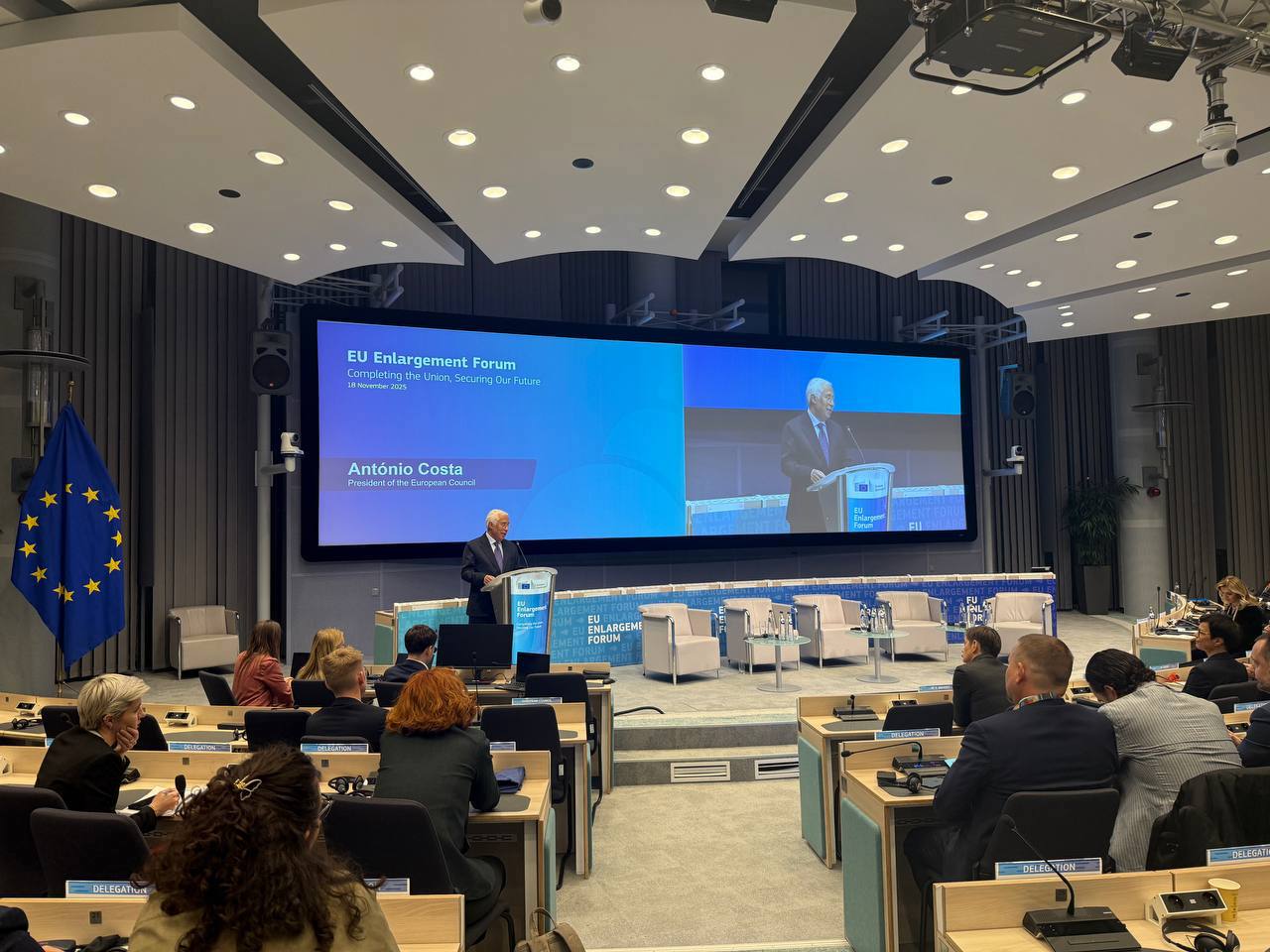
He focused his remarks on the Republic of Moldova and Ukraine, describing their integration as 'essential for Europe's geopolitical future.'
Costa highlighted the priority of expansion, noting that his mandate began 'in Ukraine, on December 1st,' followed shortly by a meeting with Western Balkan leaders in Brussels. This, he suggested, was a clear signal that enlargement is 'an essential priority' of his mandate.
Moldova and Ukraine Achieve Rapid Progress
The European Council President pointed out that Ukraine, despite being at war, and the Republic of Moldova, while facing 'constant assault on its democracy and sovereignty,' completed the European legislation screening process in just one year. This represents 'a record pace' in the history of the EU accession process.
'The success of one of these two states will also be a success for the other,' Costa stated, emphasising the interdependence of their European trajectories.
He also confirmed a direct benefit for citizens: from January 2026, Moldova and Ukraine will join the European free roaming zone, making communication across the continent cheaper and easier.
EU Expansion: A Strategic Necessity
Antonio Costa insisted that expansion towards the Republic of Moldova, Ukraine, and the Western Balkans is a strategic necessity for Europe.
'In a multipolar world, only a strong and united European Union is ready to defend its interests against the growing influence of China and Russia,' he conveyed, reinforcing the geopolitical dimension of the decision.
Montenegro and Albania Lead Accession Pace
Montenegro is currently the most advanced state in the accession process, according to President Costa. If the current intensity of reforms continues, Podgorica 'is on the right track to close negotiations by 2026.'
Costa stated the country could become 'the 28th 'ex-28',' a reference to the EU’s membership count before the UK’s departure (Brexit).
He also noted that Albania has made 'an enormous effort' and could potentially finalise negotiations by the end of 2027, provided the reform pace is sustained.
Western Balkans: Mixed Signals for Other Candidates
Costa indicated that Serbia has committed to implementing 'significant reforms in the coming weeks,' covering energy, audiovisual policy, and alignment with the EU's common foreign and security policy (CFSP).
He suggested that both Bosnia and Herzegovina and North Macedonia 'can still make progress by the end of this year.' For Kosovo, Costa reiterated that it 'should receive a positive signal,' three years after submitting its application, but avoided giving a timeline.
Investment and Economic Benefits
The head of the European Council highlighted that economic growth plans for the Western Balkans and the Republic of Moldova, totalling up to 8 billion euros, have already produced tangible effects.
'From joining the single euro payments area to reducing waiting times at borders, these measures offer immediate results,' Costa stressed.
He concluded by recalling the impact of previous enlargements: they have brought over 100 million citizens into the bloc, boosted the economy by more than 2 trillion euros, and generated 26 million jobs over the last 20 years.
Translation by Iurie Tataru