Moldova education staff crisis: 41% paid below poverty
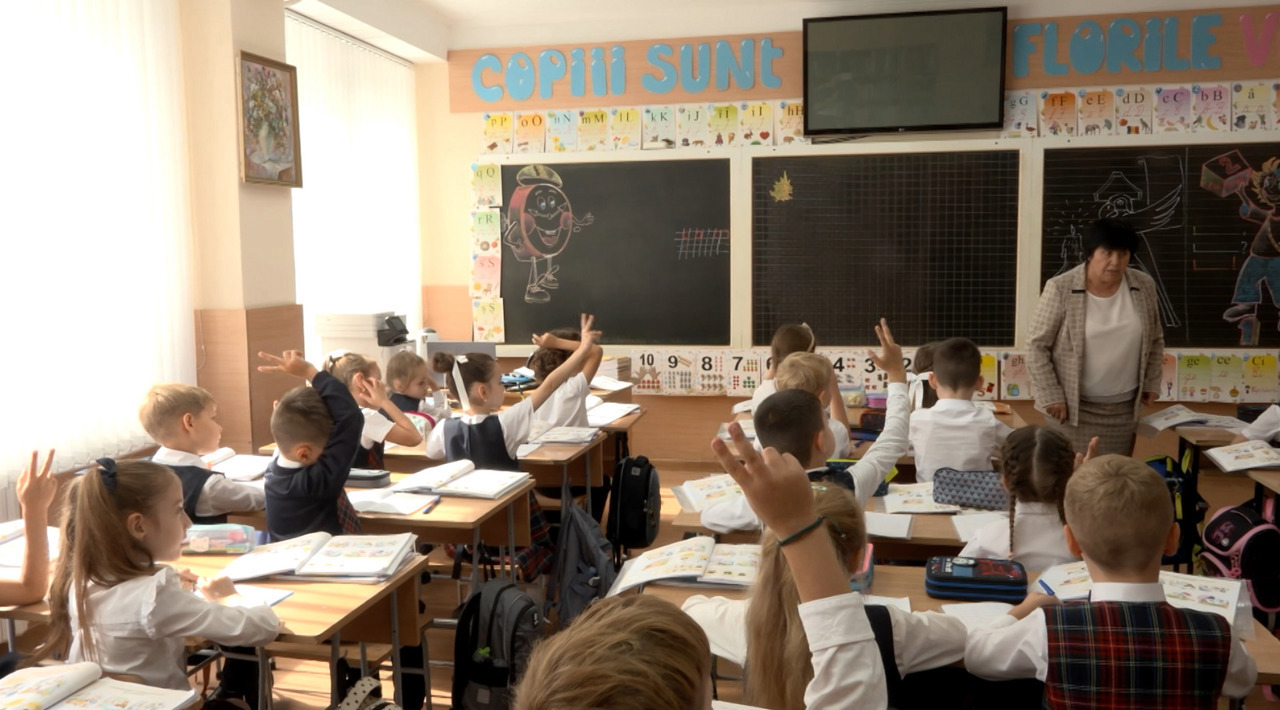
The crisis in the education sector is becoming increasingly evident, with 41% of system employees being paid below the national poverty line.
During the "Public Space" program on Radio Moldova, union representatives and officials from the Ministry of Education described a reality where low wages, staff shortages, and overwork are systemic issues.
The situation is felt most acutely by non-teaching staff—the most vulnerable category in the system, according to the unions. In many schools, directors are no longer able to hire auxiliary staff, and those who remain can barely cover their monthly expenses.
"The salaries of non-teaching personnel are below the poverty line, and it is very difficult to find a suitable person to come and work in a school, even in villages where there are fewer job opportunities," stated Ana Cimpoieșu, president of the Trade Union Center for Education and Science in Hâncești District.
The situation is also worsening for teaching staff: fewer and fewer young people are choosing to take jobs in schools. "We have a very large number of pensioners who are already exhausted, and that is why the problem of the quality of the teaching process arises," Cimpoieșu emphasized.
In addition to financial pressure, there is professional overwork. Teachers are forced to take on supplementary hours, and the teaching norm (norma didactică) has reached "difficult-to-bear levels," according to unions, while current academic requirements are much higher.
"Since the salary does not allow for a decent living, employees accept additional tasks. Consequently, both the quality of the work and the employee's health suffer," mentioned Silvia Chicu, president of the Union Committee of Employees at the Ion Creangă State Pedagogical University.
The Ministry of Education and Research (MEC) is aware of the situation and explains it by the staff shortage in the system—a problem that is currently under the authorities' attention.
"Most teaching staff work 1.25 norms. We even have 27 hours, which means a salary and a half," noted Valentina Olaru, State Secretary at the MEC.
Unions insist that the solution is a substantial increase in salaries.
"This demand, which we have been promoting for the fourth year, was included in the electoral platform of the President and the current government. And we are pleased that we have been heard. I think it is time to join efforts and achieve this objective step by step," underlined Ghenadie Donos, president of the Federation of Trade Unions of Education and Science.
Another request concerns salary bonuses. The union leader specified that these payments should not be borne by the institutions, whose budgets are already limited.
In an address to the authorities, education unions state that the average salary in education in the second quarter of 2025 was 12,169.7 lei, while the average salary across the economy was 15,470.6 lei. The unions are demanding rapid intervention.
Among the demands are a 21.5% increase in reference values, aligning the average salary in education with the national economic average, and bringing salary policies into line with international standards.
Translation by Iurie Tataru