25 years of IFAD in Moldova: $267M invested, thousands supported in rural areas

The International Fund for Agricultural Development (IFAD) is celebrating 25 years of activities in the Republic of Moldova. Over this period, the organization has invested nearly $267 million to modernize rural infrastructure and provide direct support to thousands of farmers and small businesses. During the anniversary event, officials and development partners highlighted the critical role of these interventions in transforming agriculture and revitalizing villages.
The IFAD Consolidated Programme Implementation Unit (IFAD CPUI) celebrated 25 years of activity on Tuesday with an event showcasing the results achieved through partnerships with national authorities, the banking sector, and rural communities.
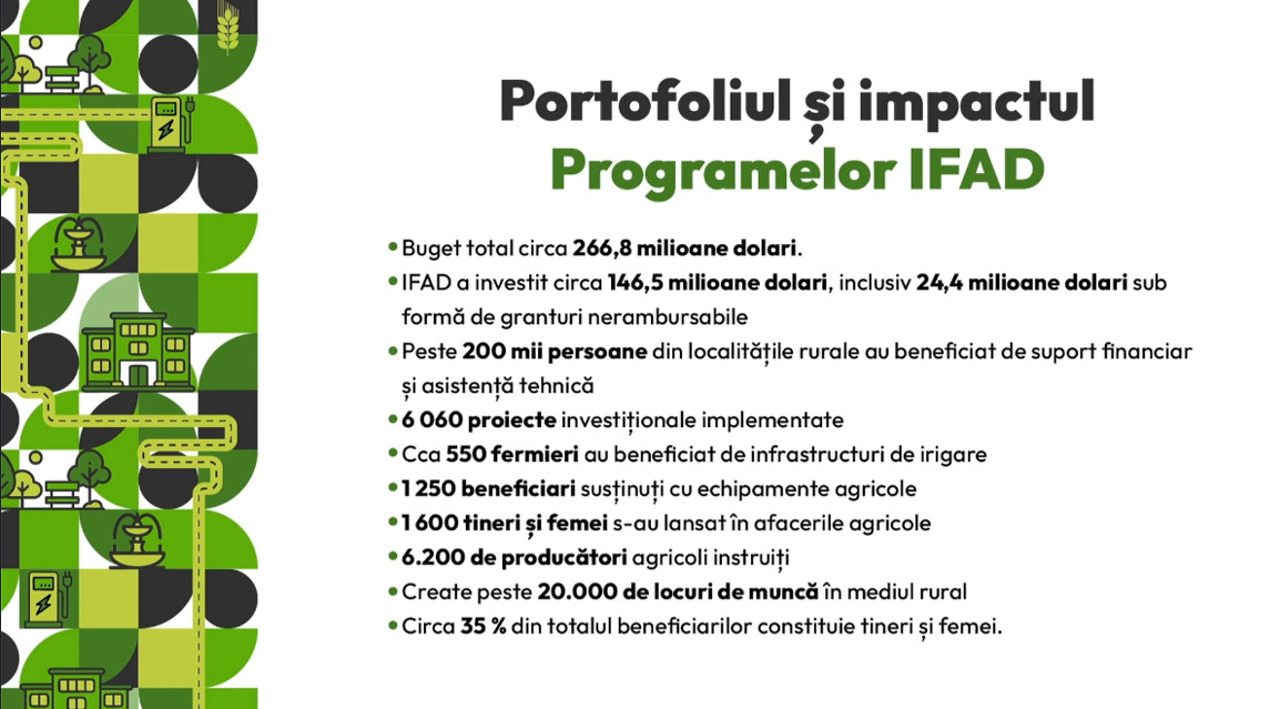
Since beginning its collaboration in 2000, IFAD has become a key institution supporting Moldovan agriculture, especially during economic crises and periods of climate instability. The total portfolio of the eight financing agreements with the Government of the Republic of Moldova exceeds $266.8 million, with IFAD contributing over $146 million.
Minister of Agriculture and Food Industry, Ludmila Catlabuga, emphasized that IFAD programs have not only provided farmers with resources but also with guidance during a challenging period for the sector.
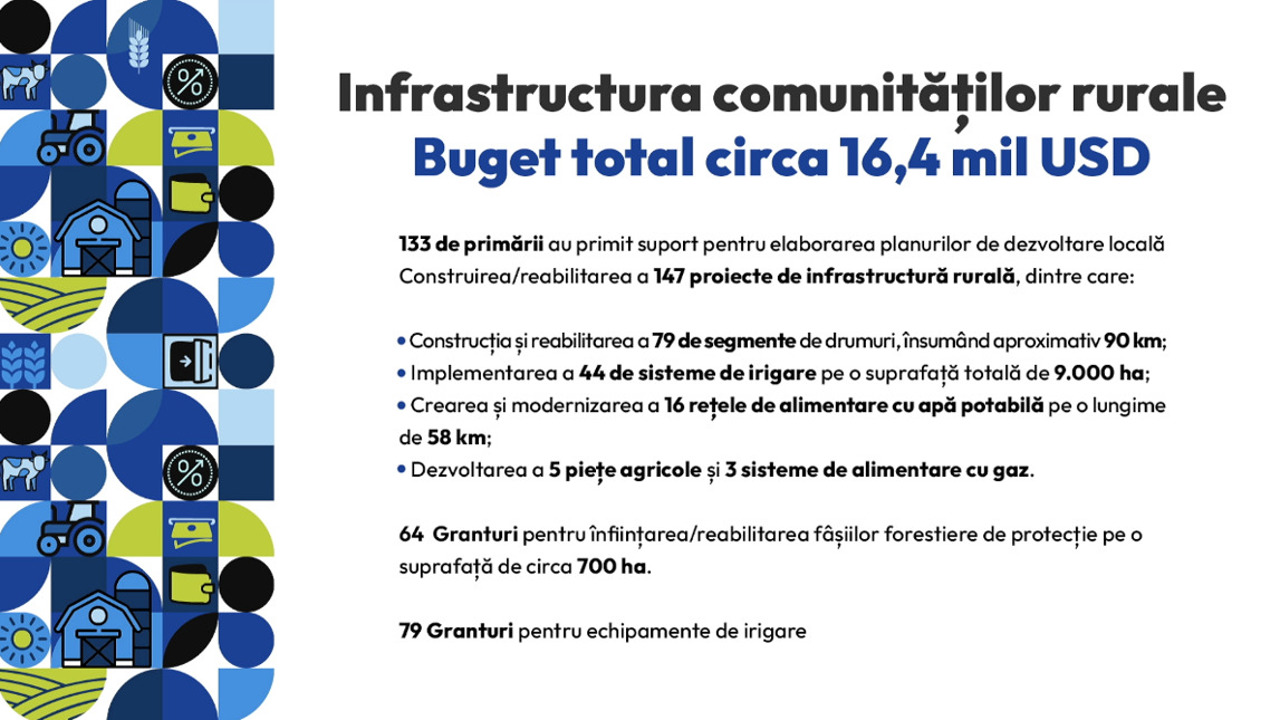
"IFAD has supported Moldova during a time when farmers needed direction, expertise, and care. Each implemented project demonstrates that progress is made step by step, village by village, and farmer by farmer. Over these 25 years, we have seen concrete results: 147 rural infrastructure projects, including roads, irrigation systems, and agricultural markets, in addition to supporting over 6,000 farmers and small and medium-sized enterprises with financing and modern technologies," said the Minister.
In this context, Ludmila Catlabuga noted that many localities have successfully modernized their agricultural roads and irrigation networks, enhancing working conditions and productivity.
Iurie Ușurelu, the Director of the IFAD UCIP, presented the social and economic outcomes of various projects, highlighting the number of beneficiaries and their impact on the labor market.
“IFAD represents an effective combination of professional dedication and collaboration among all stakeholders involved. Our shared mission was to reduce poverty in rural areas. We take great joy in seeing our efforts reflected in the smiles of those we serve. Our initiatives include small-scale irrigation systems, rehabilitation of agricultural roads, construction of markets, and many other activities that exemplify effective cooperation between donors, local public administrations, and agricultural producers,” he emphasized.
According to Ușurelu, over 130 mayors and 200,000 rural residents have benefited from financial support or technical assistance. The implementation of these projects has created more than 20,000 jobs in villages across the Republic of Moldova. Special attention has been given to social inclusion, with approximately 35% of beneficiaries being young people and women entrepreneurs, noted the IFAD UCIP Director.
“IFAD embodies a successful blend of professional commitment and collaboration among all actors involved. Our collective goal has been to alleviate poverty in rural regions. We find satisfaction in seeing the smiles of those we have worked with. We have implemented small-scale irrigation systems, rehabilitated agricultural roads, constructed markets, and initiated numerous other activities that serve as models of effective collaboration between donors, local public administrations, and agricultural producers,” stated Iurie Ușurelu.
IFAD Regional Representative Liam Chicca highlighted that the Republic of Moldova has moved, with the support of the programs, from an agriculture focused on basic needs to one oriented towards the market and export. “IFAD programs are fully aligned with the National Development Strategy “European Moldova 2030” and support the country’s efforts to integrate into the European Union, emphasizing climate resilience and adaptation to new economic realities,” noted Liam Chicca.
IFAD Country Director for Eastern Europe and Central Asia also emphasized that the institution focuses its efforts on strengthening climate resilience, a major priority in the context of economic and environmental changes affecting the agricultural sector.
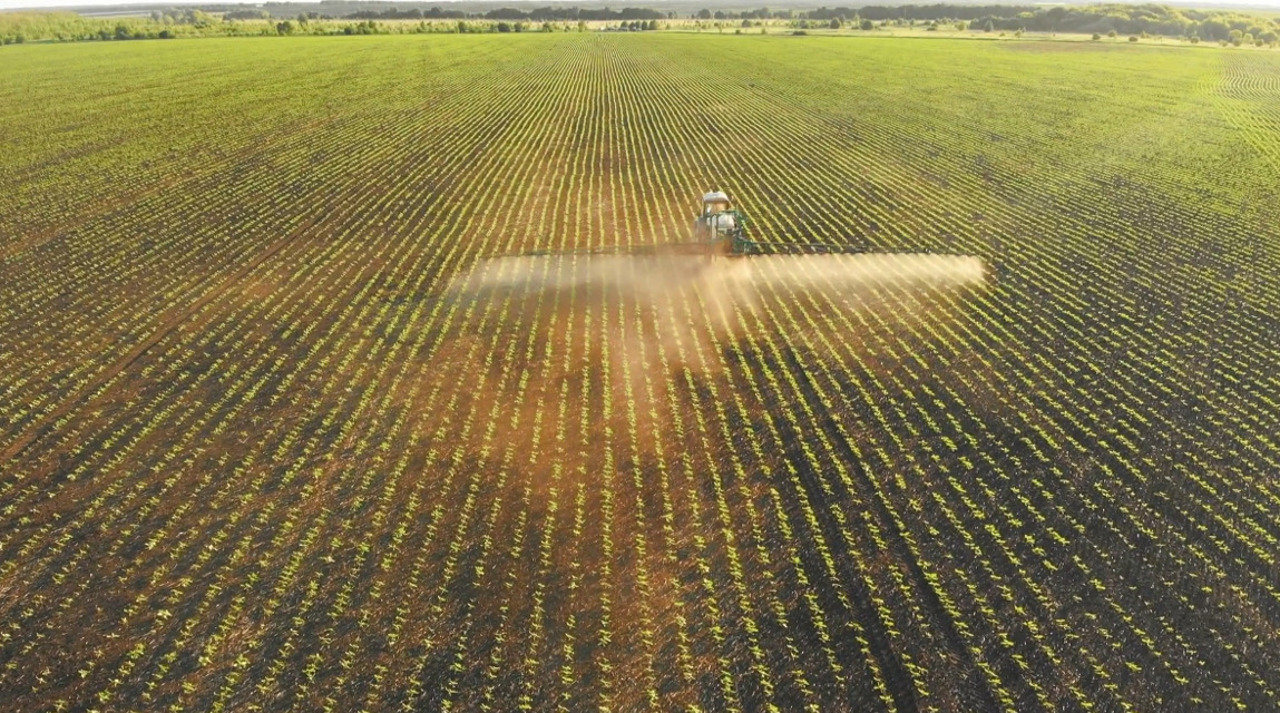
The event was attended by beneficiaries, including mayors and entrepreneurs, who shared how investments in agricultural markets, modern irrigation systems, and green energy solutions have transformed their businesses. Many local companies expanded their operations thanks to grants and preferential loans, allowing them to become competitive even in foreign markets.
Eduard Sturza, the mayor of Geamana village in the Anenii Noi district, explained that IFAD Moldova's support led to the construction of a modern agricultural market in the village.
"Now I can confidently say that local traders and producers in our village are thriving; they have optimal conditions to sell their goods. We started with just 5-6 economic agents in the working group, but now we have many more. These include local farmers as well as traders from neighboring villages, including those from the Transnistrian region," said Mayor Eduard Sturza. He also noted that the local market is popular among residents of Chisinau, particularly for "authentic homemade products, or organic products, as we like to call them."
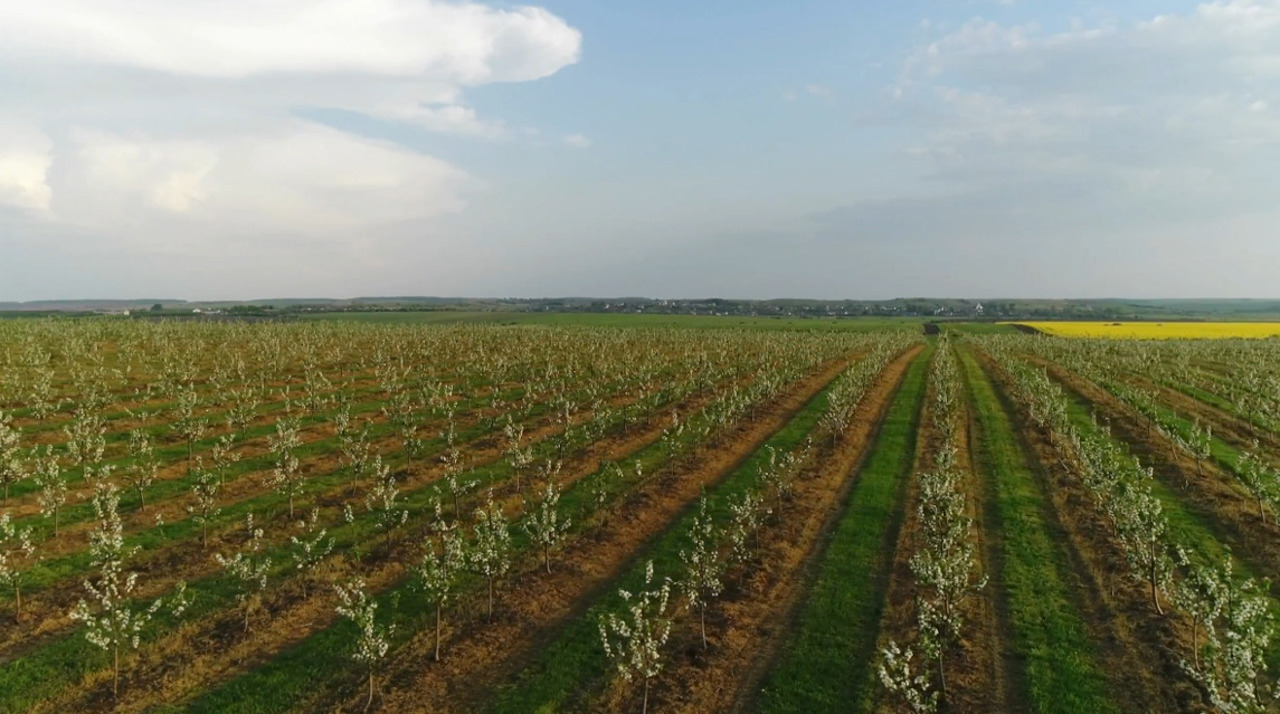
The Consolidated Unit for the Implementation of IFAD Programmes (UCIP IFAD) was created by the Government of the Republic of Moldova to implement programmes financed by the International Fund for Agricultural Development. In addition to infrastructure and financial support, IFAD programmes have placed greater emphasis on professional training and collaboration with research institutions, thereby facilitating the adoption of modern agricultural technologies and the training of specialists capable of managing sustainable agriculture.