PAS demands action on Chișinău school overcrowding crisis
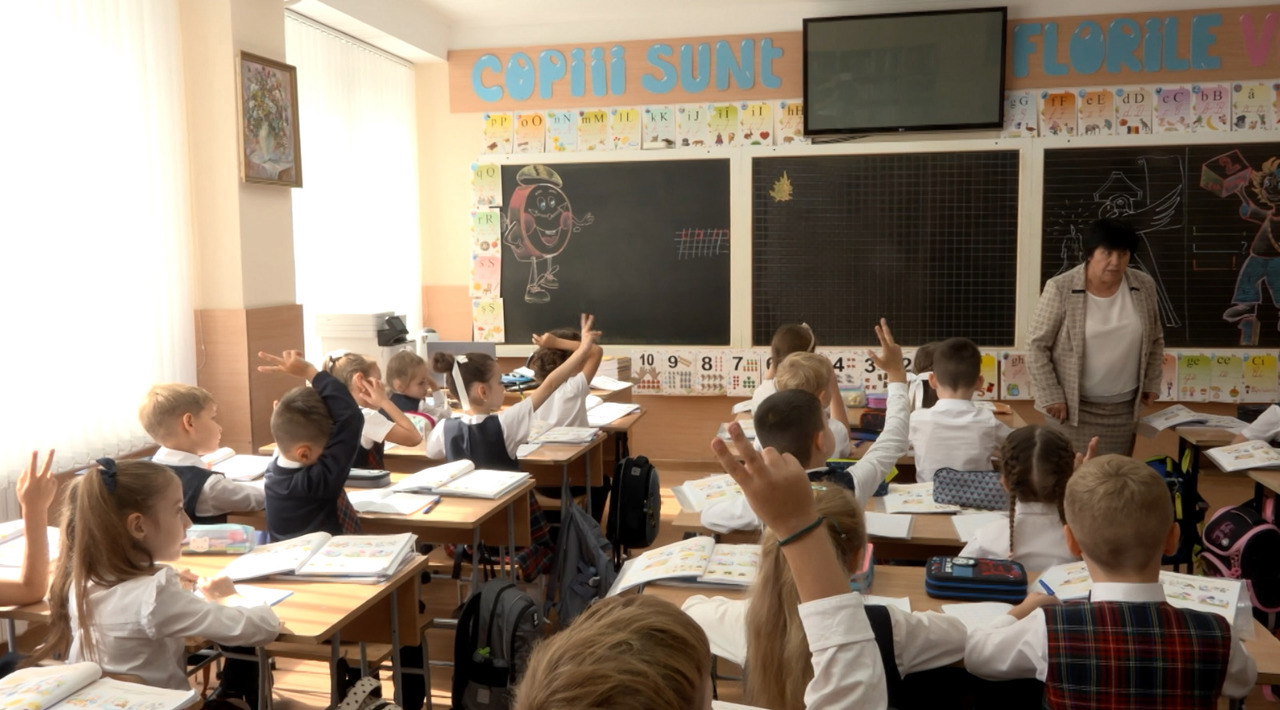
The Action and Solidarity Party (PAS) faction in the Chișinău Municipal Council (CMC) proposes the creation of an interdepartmental working group intended to break the "vicious circle of overcrowding" in Chișinău schools, accusing the Mayoralty of lacking a coherent plan to manage the crisis.
In response, municipal authorities accused the Ministry of Education and Research (MEC) of "closing schools across the republic," thereby indirectly contributing to the overcrowding of educational institutions in the capital.
PAS councilors maintain that the municipality must accept the solutions presented by the MEC, which, for the first time in 20 years, has come up with concrete and rapid measures: the free-of-charge transfer for use of two large buildings, capable of offering over 1,500 new places for students. Furthermore, the MEC is prepared to allocate up to 20 million lei for the outfitting and modernization of these spaces.
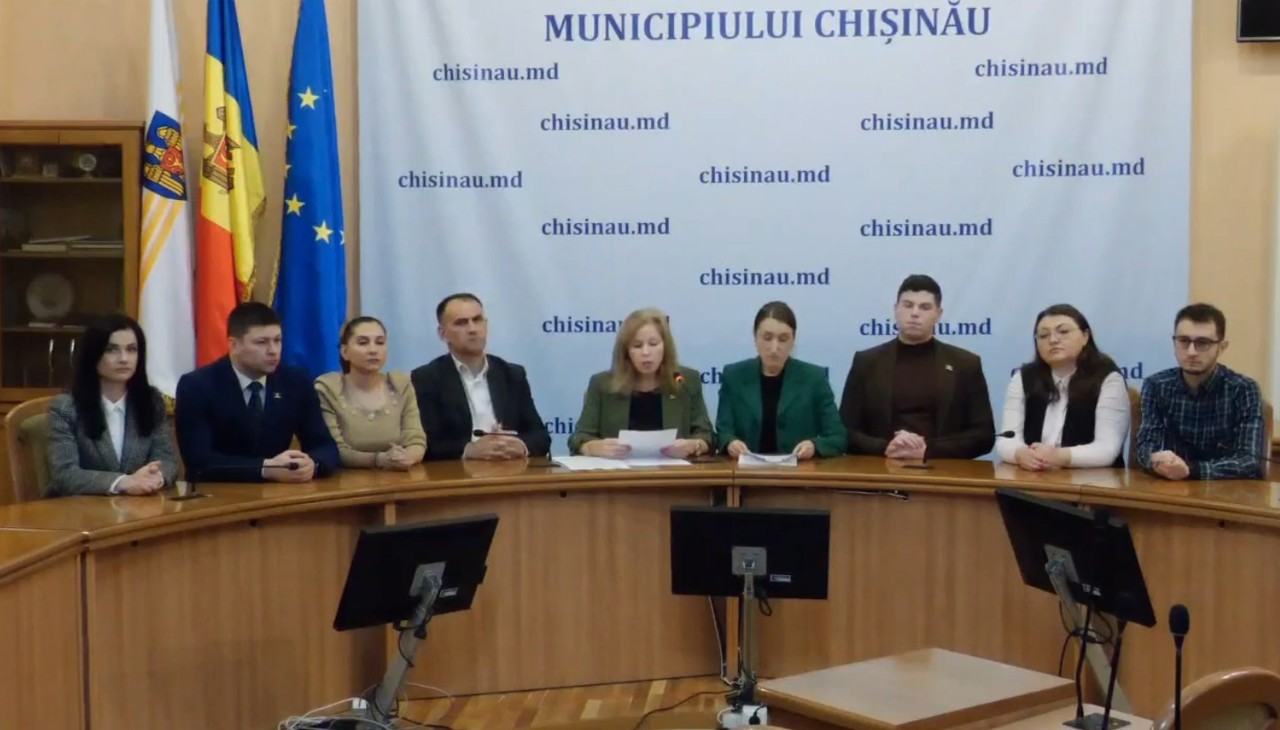
"As a solution to the problem, we see the creation of an interdepartmental working group with a clear mandate, precise responsibilities, and firm deadlines. We have drafted a decision on this matter and will proceed with all stages of approval and registration as stipulated by current legislation. We sincerely hope that the Chișinău Mayoralty will not sabotage this important process of solving this problem," stated PAS municipal councilor Lilia Scutaru during a press conference held on November 27.
According to the draft decision, the group will bring together specialists from the General Directorate of Education, Youth, and Sport (DGETS), the Legal and Urban Planning/Architecture Directorates, representatives of the MEC, and educational experts from civil society. Its task will be to analyze the situation in each sector, identify available spaces for reuse or expansion, reconfigure school districts, and present, within 90 days, a short, medium, and long-term action plan.
The PAS faction's proposal mandates that the Chișinău Mayoralty must, within a maximum of six months, elaborate the 2026-2029 Municipal Plan for Overcrowding Reduction, with clear measures, resources, and responsibilities; immediately initiate the procedures for accepting the two buildings offered by the MEC; and prepare the new spaces by September 1, 2026, so they can host students starting in the next school year.
"We will no longer accept delays, stalling, or political sabotage. For the first time in the last 15 years, a complete analysis of the organization of school districts in Chișinău will be conducted. Within 90 days, the working group will present proposals for reconfiguration so that student flow is balanced and school capacities are used efficiently," Scutaru elaborated.
The councilor underscored that the project represents an essential mechanism for implementing the solutions offered by the MEC and protecting the children of the municipality.
"It is the foundation for the city to correct its course and protect its children. Without this plan, the current chaos will continue, and overcrowding will become the norm," the PAS councilor warned.
At the same press conference, Zinaida Popa, head of the PAS faction in the CMC, stated that many schools in the capital operate far above their design capacity, while other nearby institutions have over 5,000 free places but remain neglected, lacking investment and insufficient equipment to receive students. She stressed that this situation is the result of years of "administration without a strategy."
She accused the municipal administration of encouraging urban planning chaos by issuing permits for the construction of multi-story buildings without requiring developers to build minimum social infrastructure, including new schools.
"What is the result of these actions by the Chișinău Municipal Mayoralty? Tens of thousands of new residents, zero new schools. Children from these families are pushed towards the same oversubscribed institutions, and overcrowding becomes inevitable. All this time, the Mayoralty has neither updated the school districts nor created a transparent digital enrollment system, nor has it ever presented a school network development plan. That is why, in Chișinău, people don't go to the closest school, but to the one that has labs, conditions, and motivated teachers—in other words, to the schools where the Mayoralty invests repeatedly, even though they are already full to capacity. This is how the chaos, massive student migration, and overcrowding are created," the faction head explained.
Pavaloi: "They're creating a problem out of nothing"
Andrei Pavaloi, Deputy Head of the General Directorate of Education, Youth, and Sport, dismissed the PAS councilors' criticisms as "preposterous claims." He asserted that the municipality has allocated funds to schools and gymnasiums in the suburbs precisely to balance student flow.
"These are aberrant statements, because they should have at least checked the data on allocations made for educational institutions and seen that we, on the contrary, have tried to finance gymnasiums and schools, including those in the less overcrowded suburbs. Let me give you a simple example. We have the gymnasium in Durlești and the Hyperion Lyceum, also in Durlești. Hyperion Lyceum is starting to get crowded. We are trying to modernize the nearby gymnasium, which has free places. But, at the same time, we cannot force a parent to take their child out of Hyperion and send them to the Durlești gymnasium. But we have rehabilitated it, we've made it very good, to attract parents to come to that gymnasium in greater numbers," Andrei Pavaloi told Teleradio Moldova.
He noted that similar investments were made in the locality of Vatra, given that many parents take their children to schools in the city because they work in Chișinău. The modernization of suburban institutions is intended precisely to keep students in their communities.
Pavaloi further added that the municipality has a development plan "to keep the situation under control," while, in his opinion, the Ministry of Education and Research "is closing schools across the republic" and thus indirectly contributes to the increase in overcrowding in the capital. This is because, according to the DGETS deputy head, students left without institutions in their localities migrate to Chișinău.
Referring to the over five thousand available places in municipal schools, Andrei Pavaloi clarified that the majority of these are located in suburban institutions. He emphasized that these places cannot directly solve the problem in the city, as "no parent from the Flacăra area will send their child to Condrița, just as a parent will not take their child from Ion Creangă street to Ciorescu just because there are free places there."
Pavaloi reiterated that the Ministry of Education's proposals will be analyzed, but expressed skepticism about the usefulness of one of the buildings made available.
"I said we would go and see. Although I looked at the location. Territorially, one building is on the outskirts of the city. I don't know how that building would solve the problem or how it would be used for an educational institution. But we will go, we will analyze, and we will see," he told us.
Pavaloi also stressed that if a real solution were desired, the MEC and the Chișinău Mayoralty should discuss it directly, instead of turning the subject into a "PR campaign."
He mentioned that the municipality has repeatedly requested the transfer for rehabilitation of the Republican Real Profile Lyceum, located across from the National Anti-Corruption Center headquarters, but has been refused by the ministry every time. In this context, Pavaloi believes that "a problem is being created out of nothing," arguing that only about 20-25 of the 131 institutions under DGETS management exceed the average of 30 students per class.
Regarding school districts, Pavaloi specified that the Directorate does not have the competence to allow simultaneous enrollment in two districts; this prerogative is established by the Education Code and belongs to the MEC.
The DGETS deputy head emphasized that the Mayoralty has a medium and long-term plan for managing the situation, which includes the construction of new blocks on the grounds of overloaded institutions—such as the "Mihail Berezovschi," "Waldorf," or "Mihai Viteazul" lyceums—and the rehabilitation of existing buildings.
Translation by Iurie Tataru