Moldova economic growth: New national plan and EU 1.9 billion
The economy of the Republic of Moldova "has emerged from stagnation" and is now on a robust growth path.
The Government is preparing a new National Economic Growth Plan designed to spur Moldova investments, generate better-paid jobs, and accelerate the absorption of the EU 1.9 billion in promised funds.
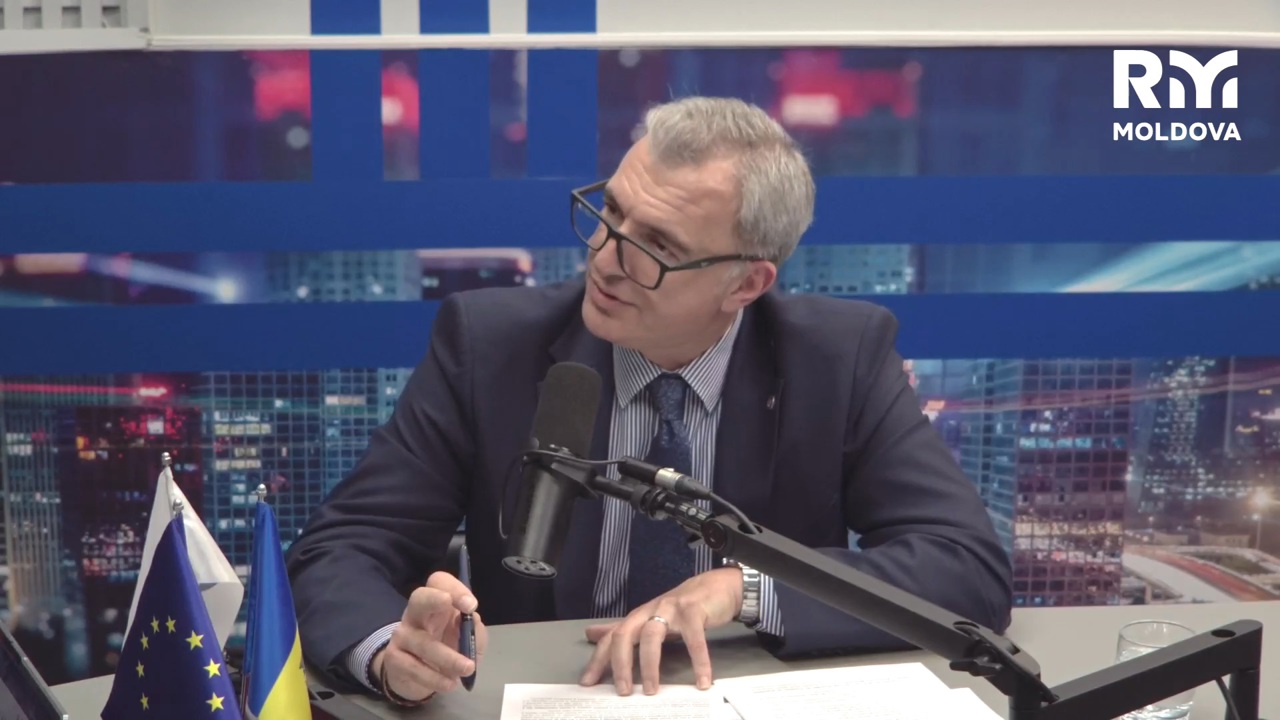
Minister of Economic Development and Digitalization, Eugen Osmochescu, announced on Radio Moldova's "La 360 de grade" that the plan is scheduled for a February 2026 launch.
Minister Osmochescu confirmed that 2025 brought the first clear signs of economic recovery.
"In the first half of 2025, the economy stabilized, and the trend is positive. We had a period of stagnation, but we are now entering growth," Osmochescu stated. "Industrial production is rising, trade is growing, and private Moldova investments have increased by 17%. Companies' own investments have grown by almost 20%."
The Minister argued that this positive momentum is the result of reforms applied in recent years, projecting that 2026 will significantly accelerate the pace of development.
The Government is set to unveil the new National Economic Growth Plan by the end of February 2026. This key document will guide future Moldova investments, industrial policies, and business support programs.
"The Economic Growth Plan will focus on state aid programs, private sector Moldova investments, capital market development, digitalization, and the streamlining of permissive acts and licensing reforms," the Minister explained. "We aim to mobilize both foreign direct investments (FDI) and reinvestments by Moldovan companies."
Moldova can fully utilize the EU 1.9 billion
Osmochescu affirmed the Republic of Moldova's capacity to fully utilize the substantial EU 1.9 billion in European funds promised over the coming years.
"We are preparing investment projects daily. We have concept notes and projects underway, with ministries heavily involved in their development. Yes, we have the capacity to attract and utilize this 1.9 billion euros," he stated.
These European funds will be directed towards key sectors, including infrastructure, energy, digitalization, economic competitiveness, and regional development projects.
Public debt is the fuel for growth
When questioned about concerns regarding the increase in public debt, the Minister immediately dismissed any alarmist scenarios.
"Debt that fuels investment is not a risk; it is the engine's fuel for growth," Osmochescu stressed. "You cannot run a car without gasoline. The economy is the same—the engine runs if you have fuel. We use debt purely for development."
He emphasized that the current public debt level—below 40% of GDP—remains sustainable compared to other European states.
Aiming to be the Ukraine reconstruction hub
The Minister acknowledged that the war in Ukraine initially deterred investors but noted a marked shift in 2024-2025.
"Moldova has demonstrated resilience. That matters significantly to investors," he said. "We aim to attract companies in the automotive, processing, logistics, transport, and IT fields. The Republic of Moldova can become a regional Ukraine reconstruction hub."
The Government is actively engaging with investors from the European Union and Romania, with several companies already expressing interest in expanding their operations.
The governing program targets a minimum wage increase to 10,000 lei and an average wage reaching 25,000 lei by 2030. Osmochescu expressed confidence that these figures are achievable, provided there is a continuous increase in productivity and economic development.
Sectors like IT and artificial intelligence, the Minister noted, are already succeeding in retaining young specialists in the country thanks to competitive salaries.
Shifting to a productive economy model
Transforming Moldova into a productive economy will require "European standards instead of Soviet ones, reducing bureaucratic burden, developing industry value chains, total digitalization of business services, and greater support for exporters and local producers," the Minister explained. "We must fundamentally shift from a consumption-based model to one based on production and innovation. That is our core direction."
The Republic of Moldova's Gross Domestic Product (GDP) grew by 1.1% in the second quarter of 2025 year-over-year, reaching 82.3 billion lei. This followed a 1.6% growth compared to the previous quarter (Q1 2025). According to authorities, these figures confirm strong signs of economic recovery, building on the 1.4% increase recorded in the first quarter of the year.
The Ministry of Economic Development and Digitalization has developed three scenarios for Moldova’s economic evolution through 2028, projecting annual GDP increases between 1.5% and 4.3%. Achieving the optimistic, highest rate is contingent on one essential factor: the successful implementation of investment projects planned under the European Union Growth Plan, valued at 1.9 billion euros.
Translation by Iurie Tataru