Siegfried Mureșan: Moldova's European integration is now irreversible
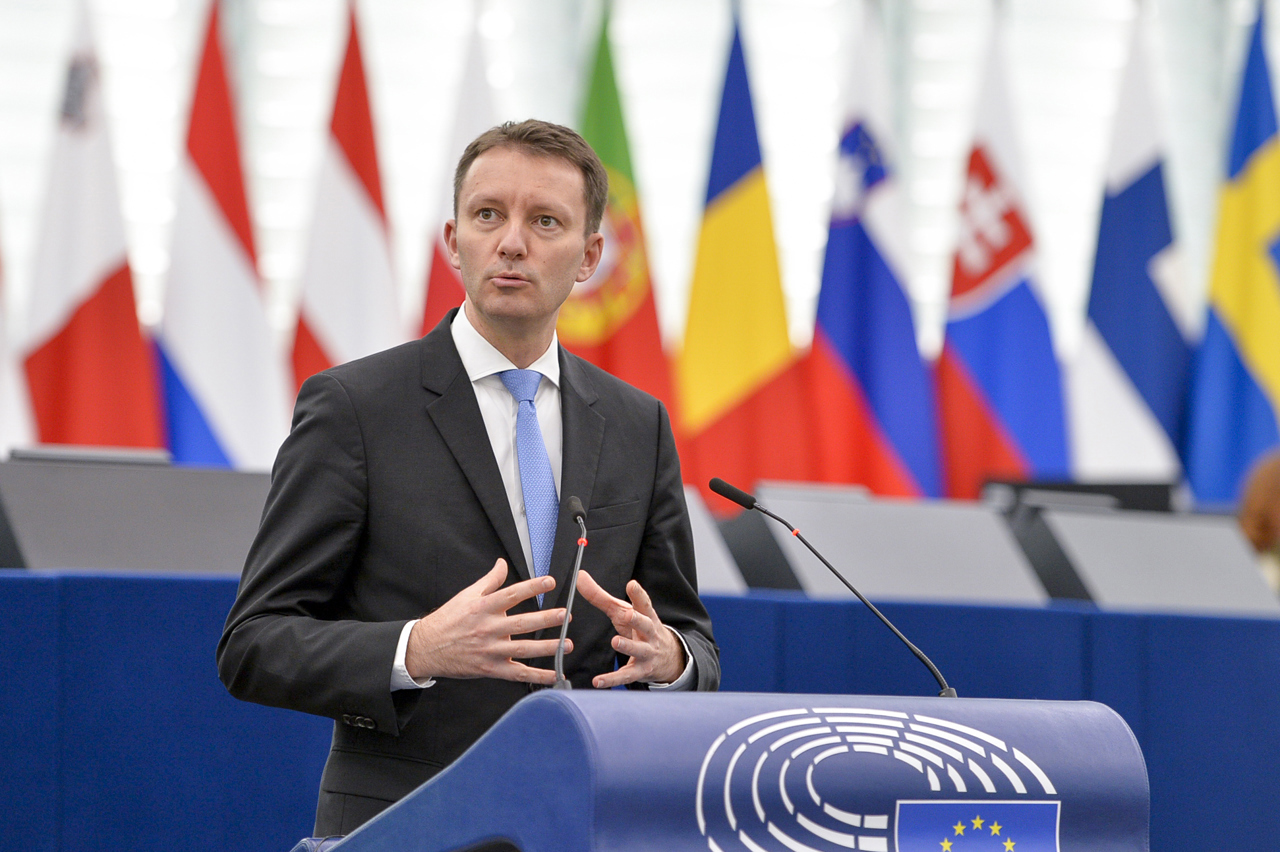
The Republic of Moldova EU accession process is currently at a favorable juncture, and the current pace of reforms is set to make the country's European integration trajectory irreversible within the next four years, according to Siegfried Mureșan, President of the European Parliament Delegation for relations with the Republic of Moldova.
In an exclusive interview with Moldova 1, the MEP stressed that joining the EU will depend, in particular, on the measures taken by the Chișinău authorities to strengthen justice, ensure the robust functioning of the rule of law, and secure the national border.
Mureșan expressed optimism for a rapid negotiation process. "I am optimistic because, in recent years, the authorities of the Republic of Moldova have managed to take steps toward European integration faster than the authorities of other Central and Eastern European states before they joined the EU," he stated.
"Less than two years passed from the moment the Republic of Moldova submitted its application for accession until the decision to start negotiations was taken. In the case of Romania, almost five years passed for these first stages at the time. So, the progress has been rapid," MEP Siegfried Mureșan told the public broadcaster.
The MEP praised the current political stability in Chișinău and predicted the definitive consolidation of the European integration trajectory during the current parliamentary term.
"We now have a pro-European majority with whom I have had discussions, and a government supported by this majority, all very determined to continue implementing reforms," Mureșan noted.
"I believe that, in the next four years, during the term of this Parliament, the European integration of the Republic of Moldova will become irreversible. The ambitious goals of the authorities are justified and correct," the European official added.
The head of the EP delegation urged authorities not to focus on a specific deadline for opening negotiations on the three initially proposed clusters, but rather on the reforms that must be implemented to ensure subsequent accession negotiations are much faster.
"The most important thing is that there is political will in Chișinău, and political will in Brussels at the level of the EU institutions. We have already made great progress. The better this preparation is, the shorter the negotiation will be afterward," Mureșan affirmed.
Regarding EU financial assistance, the European official confirmed that the mechanisms are working in sequenced stages.
"This $1.9 billion growth plan includes 18% pre-financing—nearly 300 million euros—which arrived in the Republic of Moldova in the middle of this year," he explained.
"A first installment has already been disbursed, and now the Chișinău authorities are fulfilling the conditions and necessary reforms for the disbursement of the next tranche. I believe this will happen early next year," anticipated Mureșan.
Siegfried Mureșan further specified that "there is no opposition from any EU member state" regarding the Republic of Moldova's accession to the European Union.
Asked about the decisive conditions dependent exclusively on the Moldovan authorities, the MEP emphasized that "a strong, independent judiciary and the robust functioning of the rule of law will always be essential conditions for being able to join the EU."
"The most important thing that the Republic of Moldova can do, and the only one that is in its own power, is strengthening justice and ensuring the proper functioning of the rule of law," Mureșan asserted.
He continued, "This involves combating corruption and money laundering. Accession will thus take place on its own merits."
The European official also underscored the importance of border security, an area where the EU is already offering assistance to the Republic of Moldova.
"Combating corruption, the proper functioning of state institutions, the Border Police, protecting citizens, and combating the risks of arms, drugs, and human trafficking—these are essential. EU institutions are prepared to help," he said.
"We have the European Border Protection Agency – FRONTEX, which also helps protect the border of the Republic of Moldova. It is clear that every state that joins the EU must be capable of protecting its border, as it is practically protecting an external EU border as well," the MEP concluded.
Translation by Iurie Tataru