Chernobyl protective structure loses key safety functions
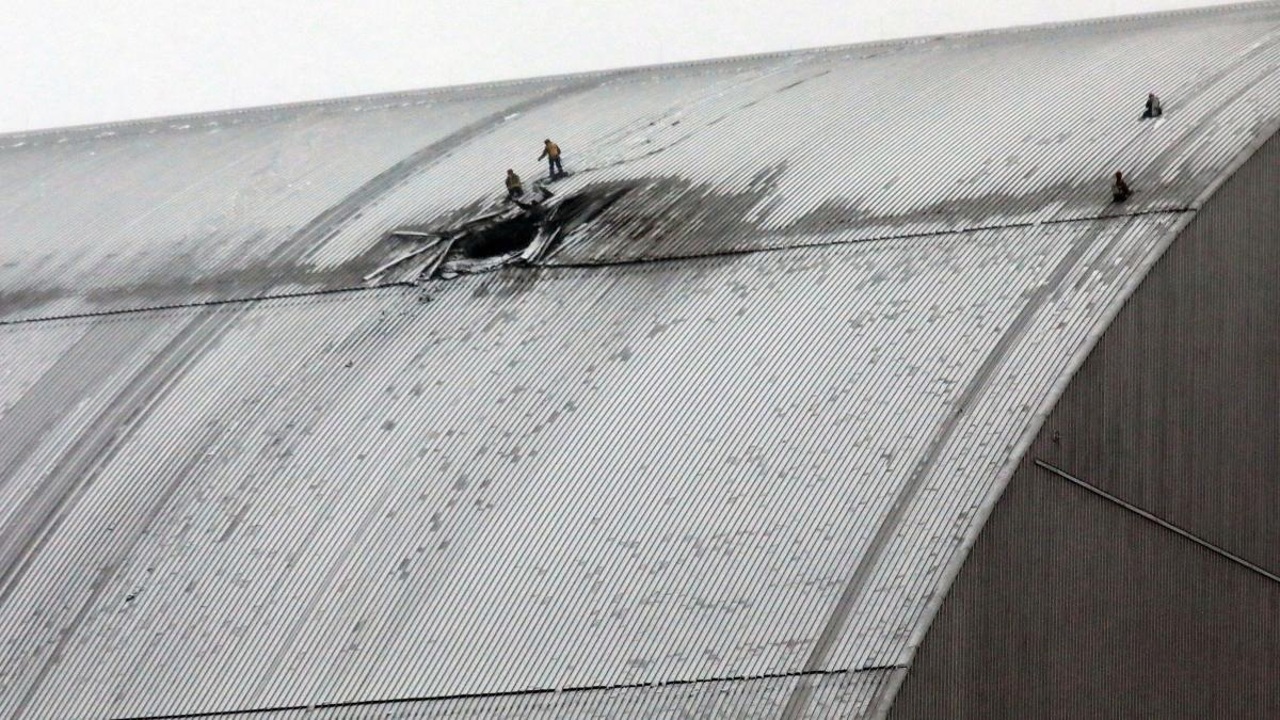
Chernobyl’s key protective structure, covering the destroyed reactor in Ukraine, has lost its primary function of blocking radiation after being hit by a drone attack in February, the International Atomic Energy Agency (IAEA) announced, citing The Guardian.
In February, a drone strike perforated the roof of the New Safe Confinement (NSC). This massive, €1.5 billion structure was engineered near the damaged reactor and then precisely slid into position on rails. Coordinated by multiple European states, the project was finalized in 2019 to ensure long-term radiation containment.
An IAEA inspection of the metallic structure last week revealed that the drone impact severely compromised the structure’s integrity.
The 1986 Chernobyl explosion, which occurred when Ukraine was part of the Soviet Union, scattered radiation across a large part of Europe. In the first months after the disaster, Soviet authorities erected a concrete "sarcophagus" over the reactor, designed to last approximately 30 years.
The NSC was built as a long-term solution. Its purpose is to isolate residual radiation during the prolonged process of dismantling the old sarcophagus, the destroyed building, and the molten nuclear fuel inside.
IAEA Director General Rafael Grossi confirmed that the inspection mission verified the protective structure "has lost its essential safety functions, including the ability to confine radiation." However, inspectors noted that the load-bearing elements and monitoring systems had not sustained irreversible damage.
Grossi added that while some preliminary repairs have been completed, "complete restoration is needed to prevent further degradation and guarantee long-term nuclear safety."
On February 14, Ukrainian authorities reported that a drone carrying a powerful explosive charge struck the facility, causing a fire and damaging the outer covering of the protective structure. Ukraine publicly accused Russia of the attack, but Moscow denied responsibility.
The UN reported that at the time of the incident, radiation levels remained normal and stable, with no indications of leaks.
Russia occupied the power plant's zone for over a month during the initial weeks of its February 2022 invasion, aiming to advance toward Kyiv.
The IAEA inspection was conducted concurrently with a national-level damage assessment of Ukraine’s energy infrastructure, including electrical substations, affected by the war.
Translation by Iurie Tataru