Popșoi warns: $107 million in crypto funds targeted for Pro‑Russian influence operations in Moldova
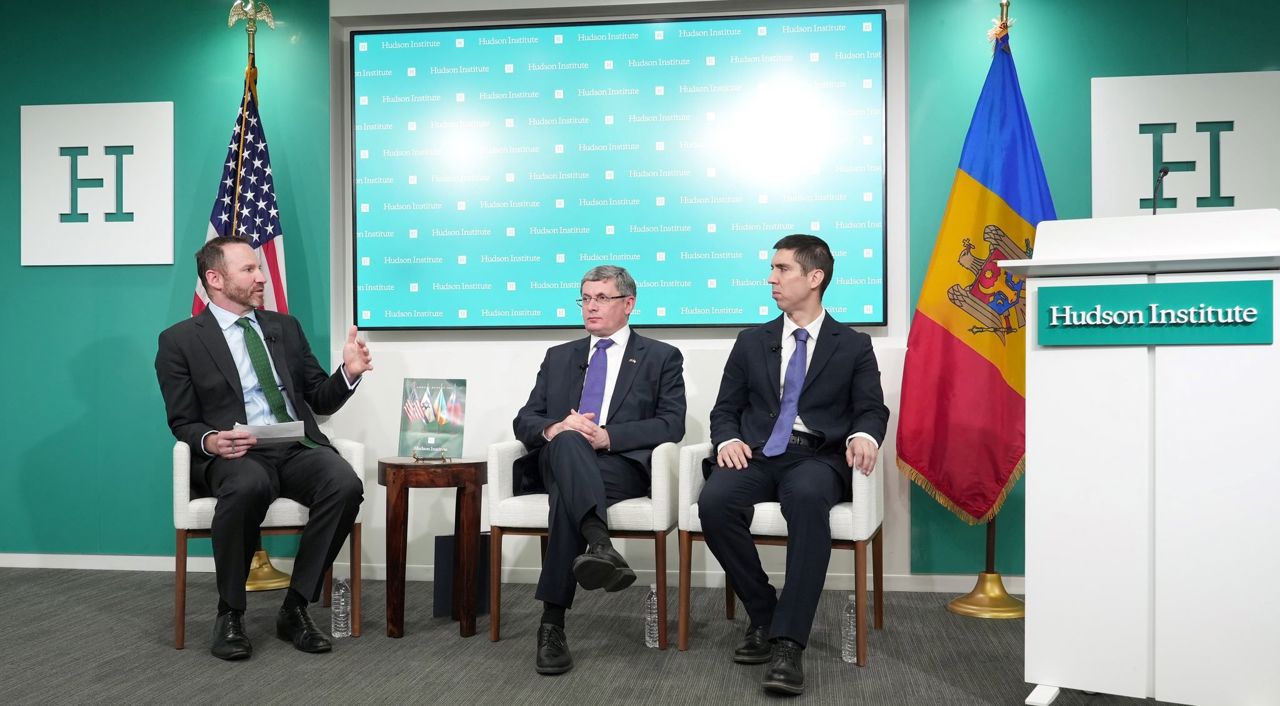
Investigative authorities uncovered $107 million in cryptocurrency linked to the illicit financing of pro-Russian political groups in the Republic of Moldova. This information was disclosed by Mihai Popșoi, the Deputy Prime Minister and Minister of Foreign Affairs, during a debate at the Hudson Institute in Washington.
According to him, this incident is part of a broader campaign of interference and destabilization funded by Moscow.
"In one instance, our investigative agencies successfully blocked cryptocurrency wallets totaling $107 million, which were intended for pro-Russian parties in the Republic of Moldova," stated Mihai Popșoi. He emphasized that, to date, law enforcement agencies have not made these details public.
Moldova has become a testing ground for the Kremlin's hybrid tactics.
The minister explained that the funding was not isolated but part of a comprehensive strategy to undermine the state. He referred to "Kremlin-powered networks" that attempted to buy political influence, finance protests, and organize violent actions.
"It was not easy. We had to confront networks built with millions of dollars, all with the goal of sabotaging our democracy and obstructing our path towards Europe. However, we successfully secured the information space and defended our institutions from this wave of interference," said Foreign Minister Mihai Popșoi.
He noted that Moldova is being utilized by Moscow as a "testing ground" for tactics that can later be exported to other countries, including disinformation campaigns, attempts to buy political influence, and the introduction of illicit money into the economy through complex schemes, including cryptocurrencies.
Lessons from the elections and the defense of the electoral process
Mihai Popșoi discussed how authorities have learned from past experiences to better protect elections. He noted that in previous elections, state institutions were "not prepared" for the extent of hybrid attacks and external interference.
"In the first elections, we were not adequately prepared. We realized how vulnerable a small state can be when faced with a well-financed machine that has significant resources. But we learned our lesson," said the foreign minister.
In the last parliamentary elections, the authorities adopted a much more active approach, focusing on both traditional security and cybersecurity measures.
"We were more proactive and courageous. We strengthened institutions' capacities and collaborated with our partners in the United States, Romania, and the European Union to safeguard electoral infrastructure. We successfully prevented scenarios in which the Kremlin might have attempted to disrupt systems on election night and undermine the results," explained Mihai Popșoi.
He emphasized that today, Moldova is “much more resilient than five or six years ago,” with institutions gaining valuable experience in identifying and countering both illicit financial flows and information and cyber attacks.
Money for destabilization instead of development
The Foreign Minister highlighted that the resources being funnelled by Moscow to destabilise the Republic of Moldova are comparable to the country's domestic expenditure in key areas.
He noted that, in addition to the case involving the $107 million in cryptocurrency, estimates suggest that tens of millions to hundreds of millions of lei are being used to finance pro-Russian parties, organized protests, and influence networks.
"For a small country like the Republic of Moldova, such sums represent a real tsunami. If we allowed this money to circulate freely, the impact on our political and economic stability would be catastrophic," the minister warned.
According to Mihai Popșoi, every leu and dollar that illegally enters politics means fewer resources for honest citizens, for reforms, public services, and development investments.
Message to Western partners
In his speech, Popșoi emphasized that Moldova is not fighting this battle alone and that support from EU and US partners is crucial for strengthening institutions and prosecuting those involved in corruption and illegal financing schemes.
“Moldova is stronger today thanks to the solidarity of the international community. We have managed to dismantle the networks that have robbed the country and bring to justice individuals who believed they would never face accountability for their actions. Now, we are ready to share this experience with other partners who are facing similar threats,” the minister concluded.
Deputy Prime Minister Mihai Popșoi is currently on a working visit to the United States from December 1 to 9. During this visit, he has met with representatives from Congress, the White House, the National Security Council, and the State Department to strengthen strategic dialogue and expand economic and security cooperation.
The agenda includes participating in the Hudson Institute conference, engaging in discussions with experts and think tanks in Washington, and giving interviews to several American media outlets. The program also features meetings with the Moldovan diaspora in Chicago and North Carolina, along with visits to companies managed by Moldovans, highlighting the strong partnership between the Republic of Moldova and the state of North Carolina.