Moldova's vertical farming boom: High-tech hydroponics ensures stable yields
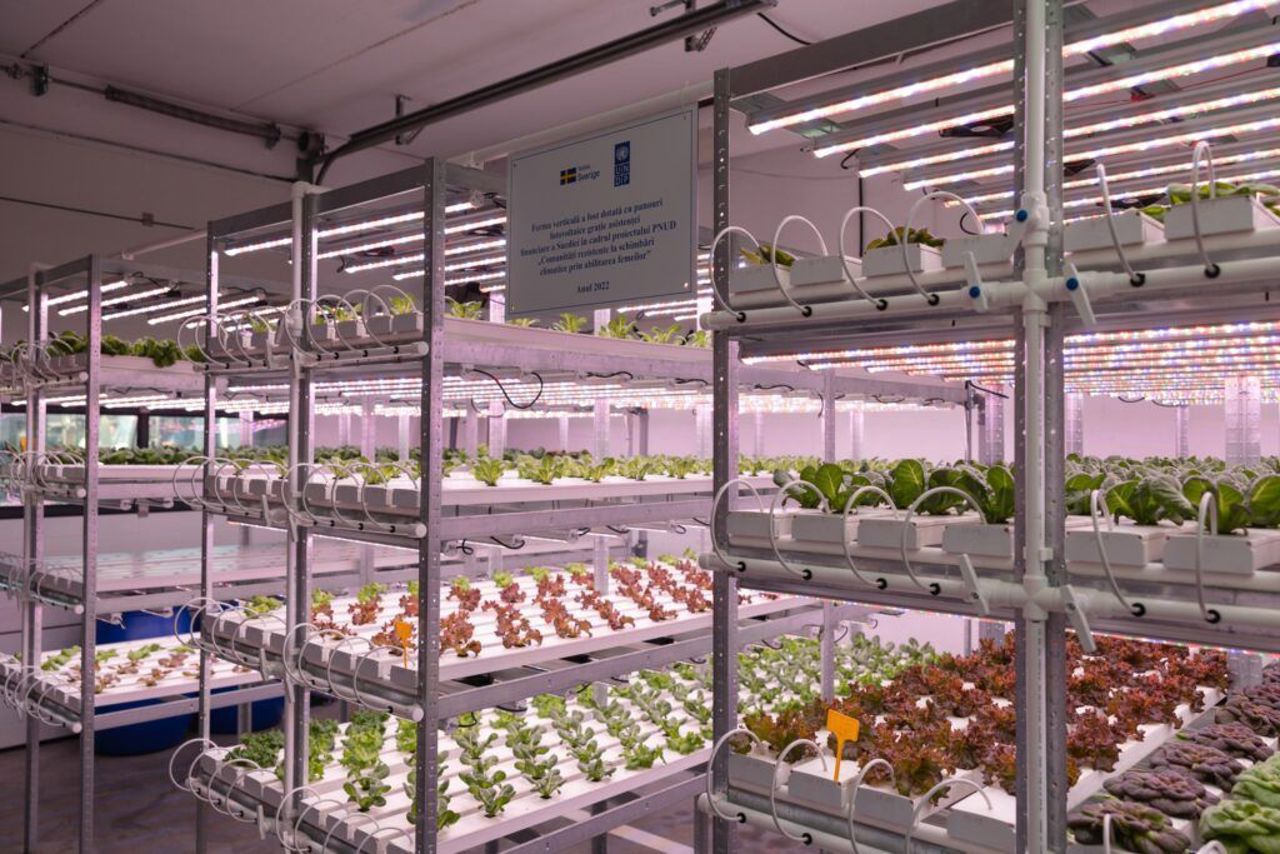
Lettuce grown without soil or sunlight is becoming, visibly, the symbol of a new phase for agriculture in the Republic of Moldova.
A growing number of local entrepreneurs are rapidly implementing hydroponic and vertical farming systems, prioritizing sustainability, ecology, and advanced, digitally monitored technologies. Local reports share the success stories of two pioneers who prove that the agriculture of the future can be built successfully right here.
One such pioneer is Dumitru Albot, an entrepreneur who successfully transformed an unconventional idea into a high-value, high-tech operation with global potential. His company specializes in cultivating lettuce and edible flowers using hydroponic technology—plants grown vertically in greenhouses, under LED lighting, guaranteeing consistent quality year-round.
"Our main growing technology is hydroponics, where we cultivate plants, edible flowers, and various types of lettuce without sun or soil, maintaining a high-quality standard," explains Dumitru Albot. "If we set the equipment to yield 123 grams for each head of lettuce, it will be 123 grams every day of the year."
In just three years, the operation has scaled rapidly, and yield stability is one of the key advantages of this controlled-environment agriculture (CEA). "We are stable, predictable, and can deliver regularly to supermarket and restaurant supply chains," the entrepreneur notes. His long-term goal is to develop a franchise and contribute to creating an ecosystem of modern agriculture innovation in Moldova.
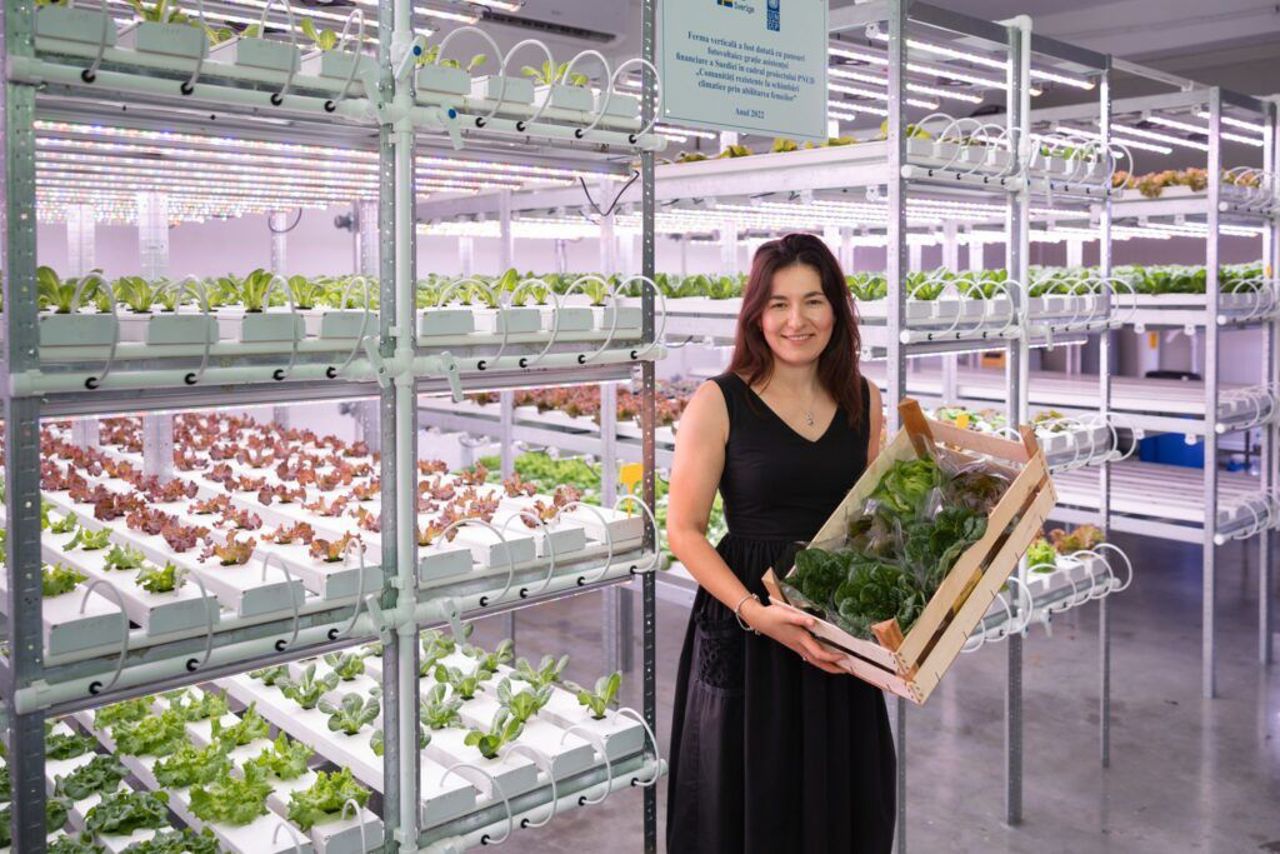
Another example comes from the town of Călărași, where Zinaida Plămădeală has been running a hydroponic greenhouse equipped with modern technologies for over three years. On an area of approximately 70 square meters, over 70,000 plants are cultivated annually, with fresh lettuce consistently reaching local market shelves.
"We decided to develop a business in hydroponics, a modern type of soilless farming for the Republic of Moldova, where plants only require a support system, such as a mineral wool substrate," Zinaida Plămădeală clarifies.
According to the entrepreneur, this type of soilless farming allows for reduced physical involvement and completely eliminates dependence on seasonality. "We produce lettuce 12 months a year; we have a continuous production cycle, which allows us to be consistent and reliable in our deliveries to customers," she affirms.
The Călărași greenhouse currently delivers up to 1,500 plants weekly. However, the operation depends exclusively on electricity, an aspect that remains a primary challenge for scaling. Globally, specialists estimate that over a million vertical farms, functioning on hydroponic and aeroponic systems, are operational, with the majority located in the United States, Japan, the United Kingdom, Norway, and the Netherlands.
Translation by Iurie Tataru