EU summit debates using frozen Russian assets for Ukraine loan
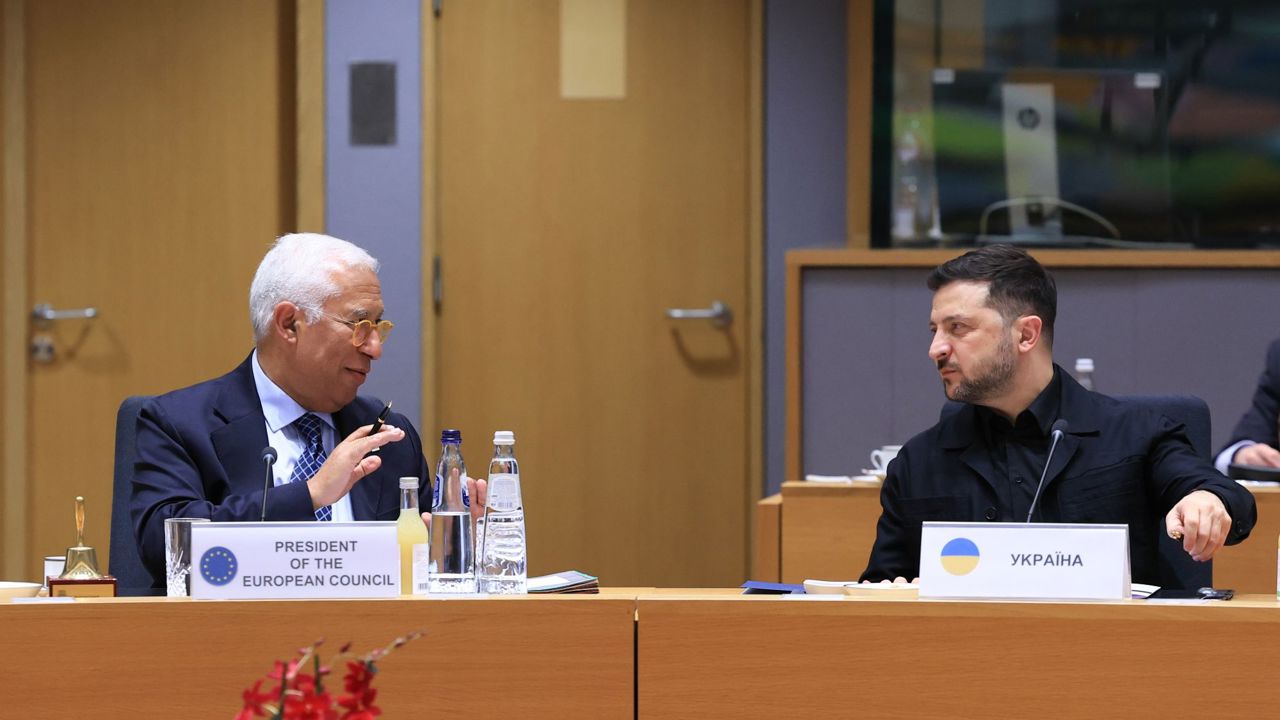
European Council President António Costa and Ukrainian President Volodymyr Zelensky at the European Council meeting held on December 18, 2025, in Brussels.
As the United States scales back its military and financial assistance and international pressure for a peace settlement mounts, EU leaders are scrambling to secure long-term funding for Kyiv.
The central issue is a plan to leverage frozen Russian assets held in Europe—an initiative championed by German Chancellor Friedrich Merz through a relentless diplomatic blitz in recent weeks.
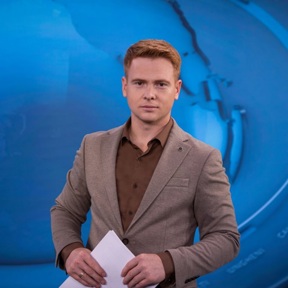
Speaking to the Moldovan public broadcaster Moldova 1, DW journalist Alina Kühnel explained that the summit is the culmination of weeks of intense negotiations. The focus is primarily on Belgium, which hosts the lion's share of blocked Russian wealth.
"Out of the €210 billion belonging to the Russian Central Bank currently held in Europe, €185 billion is sitting in Belgian accounts," Kühnel noted. "Ukraine will require at least €90 billion over the next two years alone."
Chancellor Merz has engaged in a series of face-to-face sessions with the Belgian Prime Minister to break the deadlock. While the EU is not planning to seize the capital directly, the European Commission has proposed using these assets as collateral for a massive loan to Kyiv.
Under this mechanism, the funds act as a guarantee. Once a lasting peace is achieved and war reparations are finalized for Ukraine’s reconstruction, any remaining funds would theoretically be returned to the Russian Central Bank.
However, the plan faces significant legal and political hurdles. Belgium remains anxious about potential legal liability, fearing it may be forced to shoulder the financial burden alone if the move is challenged in court. Furthermore, nations including Italy, Hungary, the Czech Republic, and Slovakia have expressed varying degrees of skepticism.
Kühnel emphasized that the EU effectively has no "Plan B." An alternative solution—issuing common EU debt, similar to the strategy used during the COVID-19 pandemic—would require a unanimous vote. This remains impossible given Hungary’s standing opposition to joint borrowing for the war effort.
Beyond the financial technicalities, the summit’s political message is vital. Leaders are desperate to project a "signal of unity" to Washington, particularly in response to recent criticisms from Donald Trump regarding Europe’s contribution to its own security.
As EU leaders meet in Brussels, a parallel diplomatic track has emerged in Florida. U.S. envoy Steve Witkoff and Jared Kushner are reportedly meeting with Putin’s representative, Kirill Dmitriev, in Miami to discuss recent talks with the Ukrainian delegation.
The Brussels summit concludes on December 19, with leaders also expected to debate EU expansion, economic security, and the urgent strengthening of European defense capabilities.
Translation by Iurie Tataru