Largest kindergarten in Moldova undergoes energy rehabilitation and mural revitalization
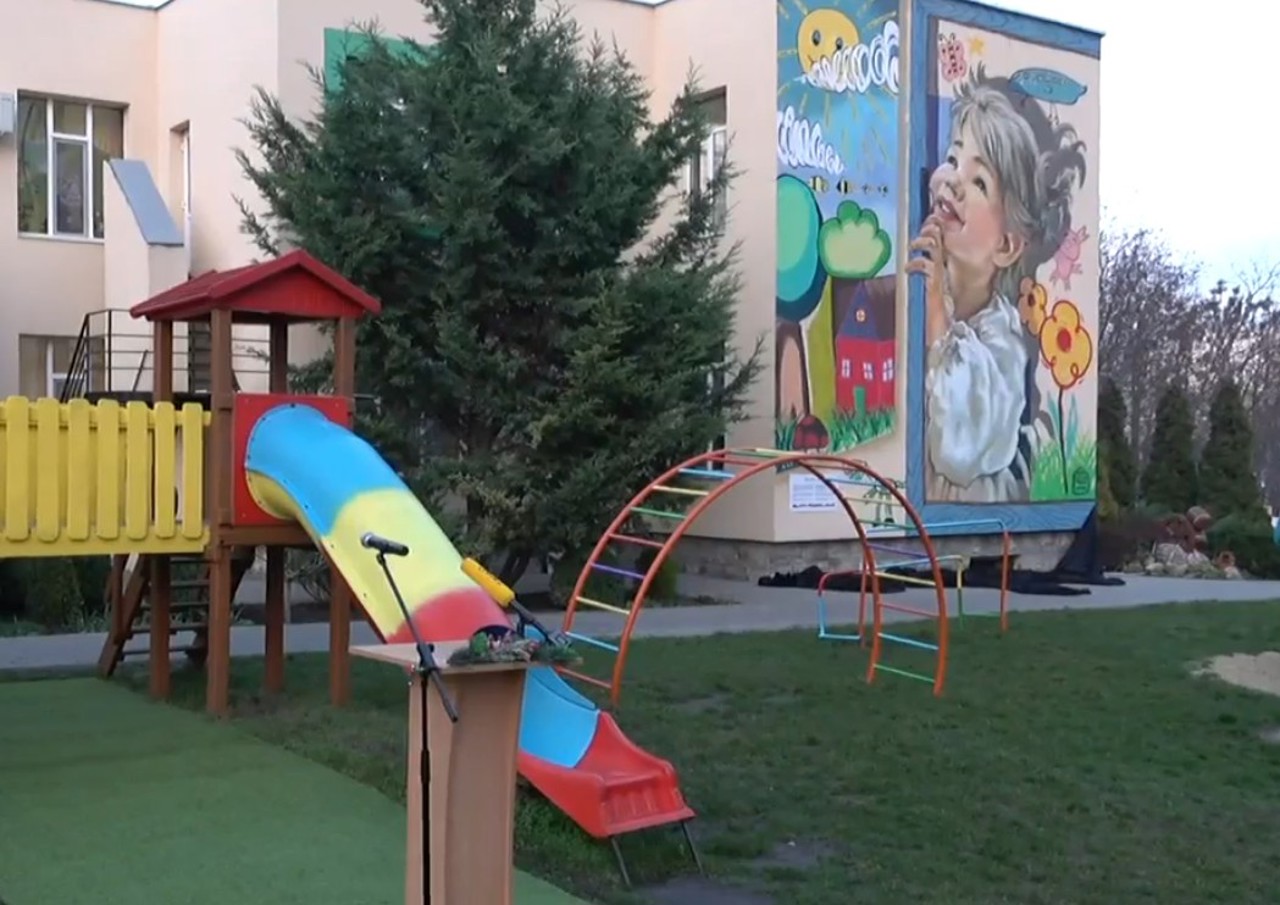
The largest kindergarten in Moldova, located in Chișinău, is easily recognizable from a distance. The building features two murals by a local artist that depict the children attending the institution, which was inaugurated on December 19.
The project is part of an energy efficiency initiative implemented by the Chisinau City Hall, with financial support from the European Bank for Reconstruction and Development (EBRD), the European Investment Bank (EIB), and the Eastern Europe Partnership Fund for Energy Efficiency and Environment (E5P).
As part of this initiative, several social institutions in Chisinau—including lyceums, municipal hospitals, and kindergartens such as "Spicușor"—have undergone energy-efficiency improvements and capital rehabilitation. This work includes renovating facades, replacing windows and roofs, modernizing utility networks, and other crucial tasks aimed at increasing comfort and reducing energy consumption.
“The 'Spicușor' Kindergarten serves as an example of how we can modernize public infrastructure through energy efficiency and enhance spaces for young children. I am pleased that the European Bank for Reconstruction and Development and our partners from the European Union are standing with us. This is a moment of collaboration and unity among authorities, the business sector, and society to develop our community,” emphasized Ion Ceban, the general mayor of Chisinau during the unveiling of the murals.
The artistic component of the project was created by a local painter, with contributions from children who became "little painters," drawing trees and rainbows. Some of their artwork was directly integrated into the murals.
Carolina Novac, the Secretary of State for the Ministry of Energy, who was also present at the event, noted that Kindergarten No. 225 was renovated with E5P support in a project valued at approximately 5 million euros. She expressed gratitude to all the countries that provided financial contributions, as well as to the EBRD and EIB for the loans that made the project possible.
“In the National Strategy for European Moldova, energy efficiency is the second priority at the government level. We have set targets toward the European Union because we aspire to become an EU member state by 2030. We also aim for a 0.8% reduction in energy consumption each year,” Novac stated.
The focus is not only on meeting targets but also on enhancing the comfort of children and educational staff who use these public institutions daily. Energy efficiency measures can reduce bills by up to 50%, enabling optimal temperatures in kindergartens during both winter and summer.
Novac also mentioned that the Ministry of Energy has launched the first energy efficiency fund for the residential sector, which supports thermal insulation of apartment buildings and individual houses, particularly for vulnerable citizens. This fund will also aid in the installation of photovoltaic panels, storage batteries, and other energy solutions.
Public institutions are also a key focus: ten of the largest hospitals are included in the first energy efficiency project, while the second project aims to thermally insulate 46 schools across the country, along with installing 300 individual heating points in buildings in Chisinau. In total, three projects are currently underway at the national level, with two more set to be launched in the near future.