Network of Local Ambassadors for European Integration launched to train City Halls in EU policies
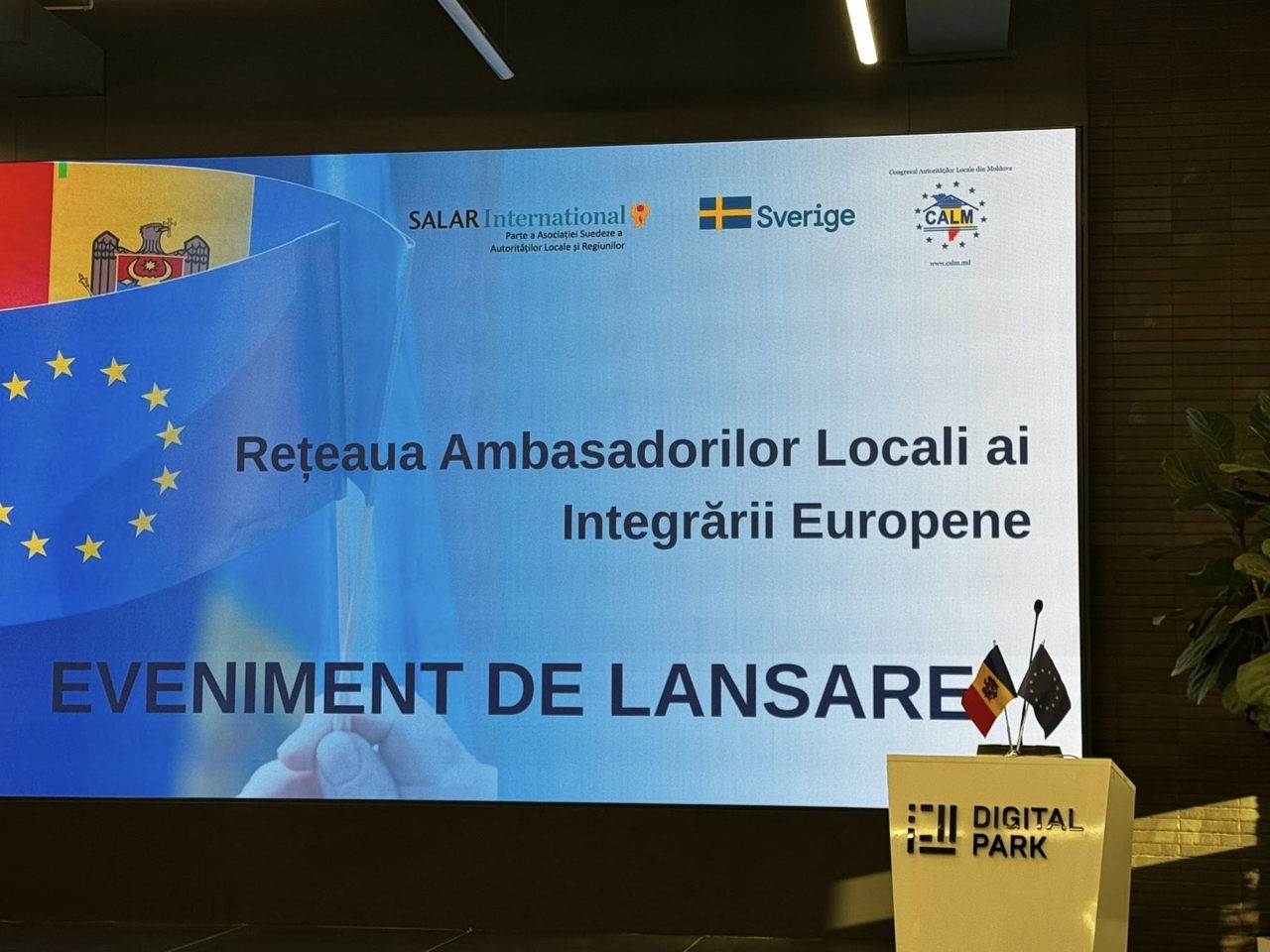
Local public authorities in the Republic of Moldova will have access to a new support mechanism as they pursue European integration. This initiative involves the launch of the Network of Local Ambassadors for European Integration, a platform for training, collaboration, and the exchange of experiences. The program is initiated by the Congress of Local Authorities of Moldova (CALM) in partnership with Swedish institutions.
On December 19, a new network was launched in Chisinau aimed at enhancing the capacity of city halls and district councils to implement the acquis communautaire, attract and manage European funds, and turn EU policies into tangible benefits for communities from 2025 to 2028.
Viorel Furdui, Executive Director of CALM, stated that this new network builds on CALM’s experience in creating effective professional networks at the local level, such as the CALM Women’s Network and networks for secretaries, accountants, tax collectors, and architects.
According to Furdui, these models have proven effective by improving internal communication and facilitating the exchange of experiences, documents, and practical solutions among local authorities.
The primary objectives of the new network include increasing institutional capacity, developing a professional community of specialists relevant to European integration, and ensuring the coordinated and proactive participation of local authorities in working groups and consultation processes.
The network will operate at two levels: a political level composed of mayors and deputy mayors who will advocate common positions among local authorities, and a technical level comprising specialists in various fields who will provide essential expertise.
“We must enhance our capacity so that the unique perspectives of local administrations are represented in areas such as the environment, agriculture, infrastructure, finance, and public procurement,” emphasized Viorel Furdui.
He also mentioned that the network would help local authorities access European funds through information sharing, training, and coordination, as European projects are often complex and necessitate greater administrative capabilities, including for pre-financing and co-financing.
Maria Tropp, Head of the Development Cooperation Section at the Embassy of Sweden, welcomed the launch of the Network of Local Ambassadors for European Integration, describing it as crucial for local public authorities' involvement in Moldova's EU accession process.
“Sweden is committed to supporting the Republic of Moldova on its path toward a stronger, more democratic, and inclusive society. We are pleased to support this initiative from 2025 to 2028. This partnership is based on three key pillars: the first supports the central government in implementing public administration reform and institutional strengthening; the second focuses on improving service delivery at the local level, where local authorities will collaborate to modernize services; and the third pillar encourages local involvement in Moldova's EU accession process by enhancing dialogue between central and local authorities and citizens,” noted Maria Tropp.
The diplomat added that local authorities play a vital role in converting European policies and standards into real benefits for communities. This process requires administrative capacity, inter-institutional cooperation, and a participatory approach.
Spătari: “We must Increase the absorption capacity of European funds”
Marcel Spătari, the Chairman of the Parliamentary Committee for European Integration, reported that the initiative launched by CALM (the Congress of Local Authorities of Moldova) aims to establish structured, functional dialogue between local public authorities and Parliament. This dialogue is especially important for harmonizing national legislation with the European acquis communautaire.
“European integration presents numerous opportunities for local authorities, including modernization, digitalization, and projects for regional and local infrastructure and environmental protection. Therefore, it is crucial for us to consolidate our efforts in the European integration process and our accession to the European Union. We need to enhance our absorption capacity, meaning we must develop sufficient expertise to implement European projects and coordinate effectively. When local authorities face challenges, efficient communication with central authorities is essential to clarify how to submit, report, and execute these projects,” Spătari emphasized.
He further explained that European integration is a collective national project that involves not only central institutions but also requires the participation and commitment of local authorities and citizens. Although the necessary reforms may entail costs and disrupt society's comfort, they are vital for bringing European standards to local communities and improving quality of life, according to Rodica Crudu, Secretary of State for European Integration.
“We want to ensure good living standards in our communities, including quality roads, public services, and infrastructure for our citizens, so that we can bring European standards home. It’s not just about the journey from Chisinau to Brussels; it’s about implementing those standards here,” Crudu stated.
Tatiana Badan, the president of CALM, said that the launch of the new network is an acknowledgment of the crucial role local public authorities—referred to as “ambassadors of change”—play in Moldova’s path towards Europe.
Badan noted that local public administration has been advocating for years to align the country with European standards and improve the quality of life for its citizens.
“We aim, within this network, to connect more with citizens, provide them with relevant information, support local authorities, and have time and opportunities to engage with residents in our villages and cities. We want to inform them about these benefits that we all aspire to achieve,” Badan explained.
She stressed the importance of maintaining communication and a consistent dialogue with central authorities, highlighting that her organization is an open partner for the Government and Parliament, committed to delivering concrete benefits to citizens without hidden political agendas. Badan concluded that the complex reforms necessary for European integration will succeed only through the cooperative involvement of all levels of administration.
This project is implemented by CALM in partnership with the Swedish Association of Local Authorities and Regions (SALAR), with support from the Embassy of Sweden, and runs from 2025 to 2028.