IN CONTEXT | Alexandru Flenchea says Russia is behind the left-bank gas crisis
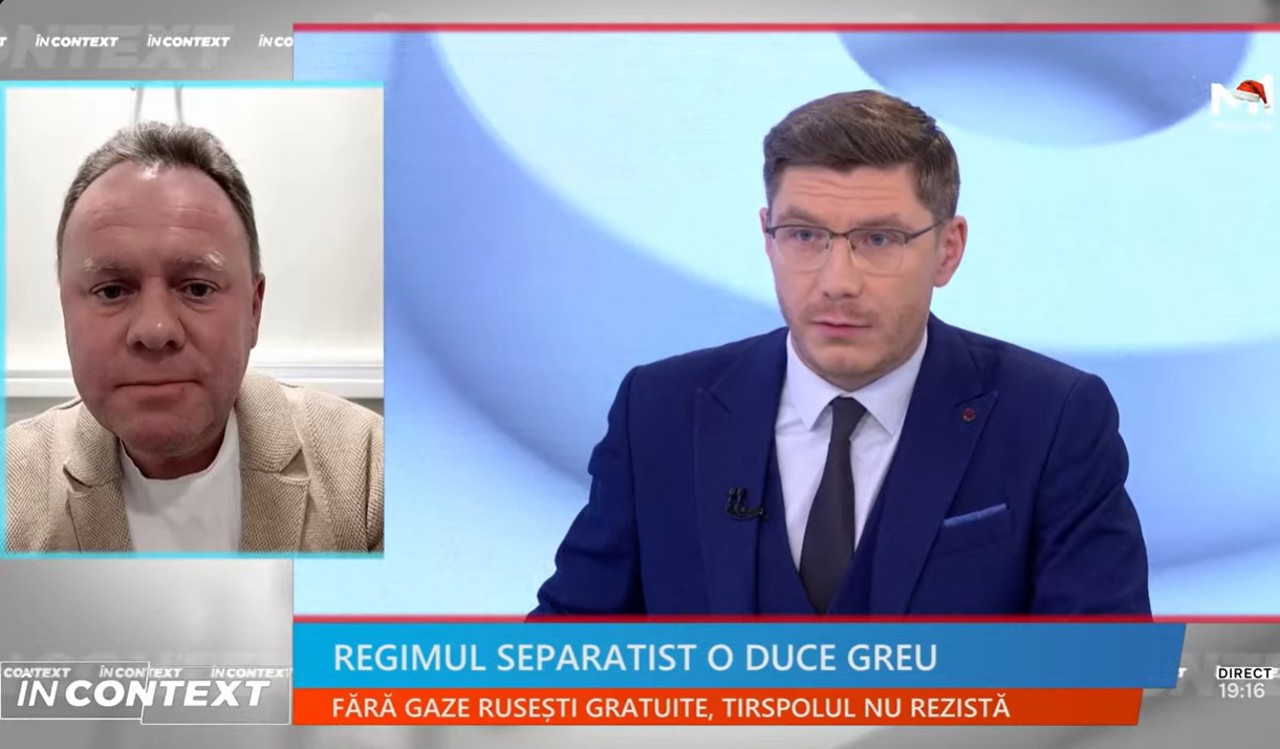
The ongoing extension of the state of emergency in the Transnistrian region is not merely a technical issue; it is a political tactic employed by a secessionist regime that effectively keeps over 300,000 Moldovan citizens "in captivity." Russia continues to financially support this region through unclear mechanisms. According to former Deputy Prime Minister for Reintegration, Alexandru Flenchea, the only viable solution is reintegration. He made this statement during the show IN CONTEXT on Moldova 1.
Gas issue on the left bank of the Nistru is political, not technical
Alexandru Flenchea emphasized that the ongoing crisis is being artificially sustained, asserting that “it is not a technical problem; it is an entirely political issue.” He pointed out that Russia continues to subsidize the region through obscure financial channels.
“The underlying issues remain unchanged. The gas is still being paid for through unclear channels by the Russian Federation and delivered to the left bank of the Nistru through a long list of companies. I reiterate, this is fundamentally a political problem. The so-called administration of the Transnistrian region has the option to pay for gas or not, even though they must face the consequences,” Flenchea stated during an interview on public television.
Chisinau's responsibility in restoring legality
The former deputy prime minister suggested that Chisinau has the necessary leverage to establish a legal framework for activities in Tiraspol.
"It depends on how the authorities of the Republic of Moldova, as a whole, address this issue and present it to the Tiraspol administration. It is not Chisinau that is preventing the delivery of gas. Let's be clear: this gas is paid for with money subject to international sanctions. Clearly, paying for it is not straightforward. I believe that a year ago, in February 2025, it should have been insisted that gas deliveries to the left bank of the Nistru become legal, according to the law of the Republic of Moldova, with all necessary licenses and at market price, just as gas is consumed and paid for on the right bank of the Nistru,” Flenchea said.
Revenues without responsibility: An illegal option
The expert warned that the regime persists due to subsidies from Moscow, disregarding the economic collapse of local businesses in the secessionist region.
“We should not expect Krasnoselski, Ignatiev, or other leaders in Tiraspol to begin making responsible decisions and being accountable to the 300,000 citizens they claim to govern. As long as they can choose between legal and illegal solutions, without any political or legal consequences, they will naturally opt for the option that provides them income without accountability. The regime is financed by the Russian Federation through gas payments made by Moscow, for which they still do not pay,” the former deputy prime minister said.
The solution of reintegration for 300,000 "hostages"
Alexandru Flenchea argued that reintegration is no longer just a political process but the only way to offer a predictable framework for those who are currently “held hostage.”
“Of course, they no longer receive income from electricity sales on the right bank, as that was a significant source of their revenue. (...) Integration is the only viable solution for all the problems faced by citizens on the left bank of the Nistru. Honest businesses there would like to operate within a predictable and legal framework but cannot because they are under the control of an illegal administration. The question is: how much longer will the Republic of Moldova tolerate the situation where effectively 300,000 of our citizens are held hostage by a small group of individuals?” the former Deputy Prime Minister for Reintegration asked rhetorically.
Crisis on the left bank of the Nistru and the proposal for reintegration
The Transnistrian region is facing significant economic instability, which is exacerbated by the ongoing extension of the emergency regime. On January 15, the self-proclaimed administration announced that these special measures would be extended until mid-February due to challenges in supplying energy resources, difficulties within the industrial sector, and a decrease in budget revenues. The emergency regime allows for control over the capital flows of the few functional enterprises remaining in the region.
Valeriu Chiveri, the Deputy Prime Minister for Reintegration, stated that the current economic crisis could be resolved if the Transnistrian authorities accept Chisinau’s proposal for reintegration into the Republic of Moldova.
In response, the so-called foreign ministry in Tiraspol advised Chiveri to “not speak on behalf of” the citizens of the Transnistrian region and accused him of avoiding meaningful dialogue.