Transnistria energy crisis: Moldova warns of persistent gas supply risks amid 41% budget deficit
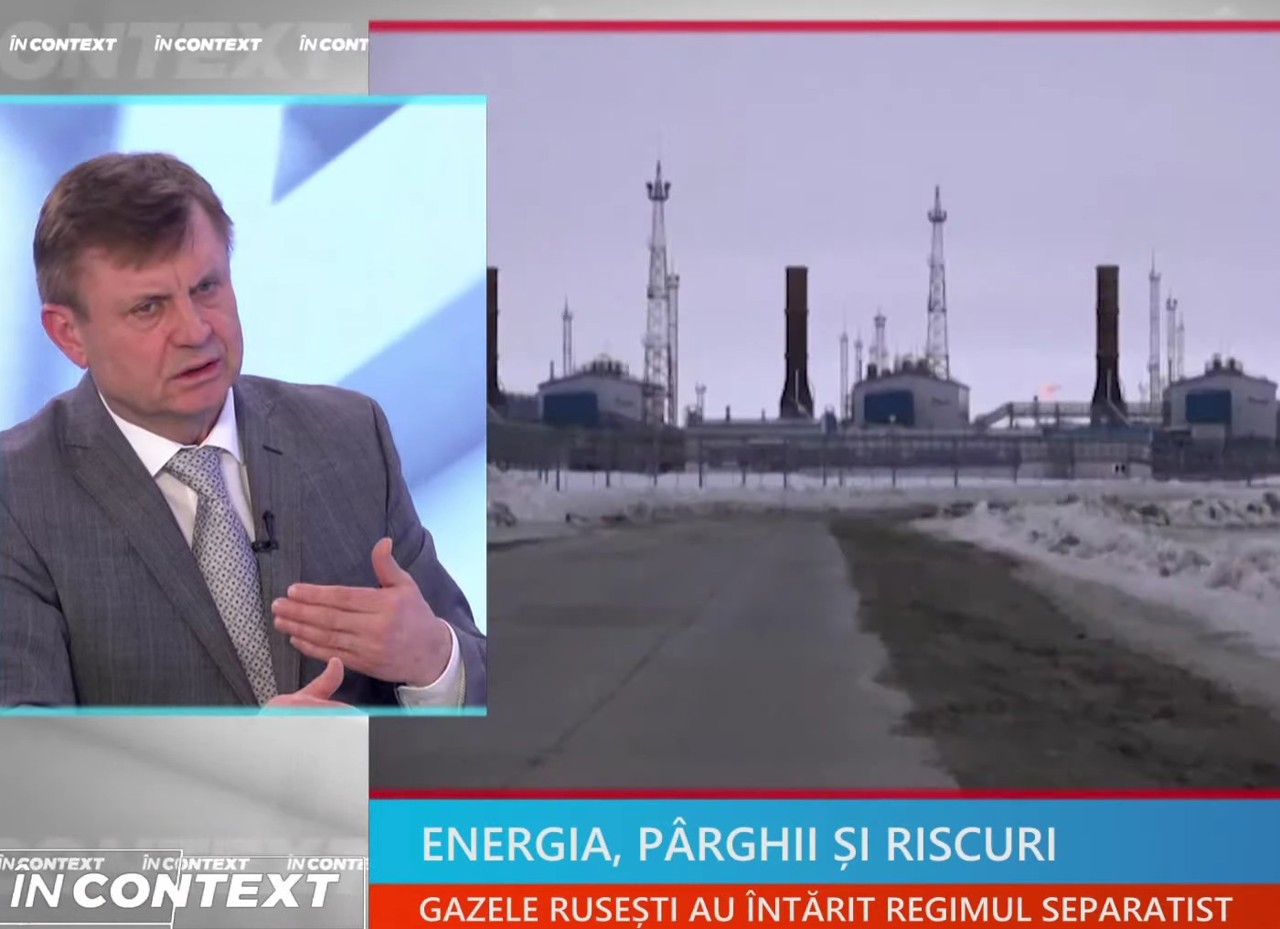
Moldova’s Deputy Prime Minister for Reintegration, Valeriu Chiveri, warned on January 21 that the risk of a total natural gas cutoff in the Transnistria region remains critical. The breakaway enclave has operated under a state of economic emergency for over a year, triggered by geopolitical shifts and energy sector blockades.
This persistent instability directly impacts the region's population, the vast majority of whom are Moldovan citizens. Chiveri emphasized that the crisis stems from the cessation of gas transit through Ukraine and Russia’s refusal to redirect supplies via alternative routes.
A cycle of constant uncertainty
Speaking on the public broadcaster Moldova 1, Chiveri noted that the region faces potential supply disruptions every 10 to 14 days. This cycle creates a climate of "constant uncertainty" for both the local population and the industrial sector.
While the Tiraspol administration has accepted an alternative supply mechanism, Chisinau officials have criticized the model for its lack of transparency. Despite these concerns, the Moldovan government has avoided imposing political conditions on gas deliveries to ensure the welfare of its citizens.
Financial safeguards and humanitarian aid
Chiveri revealed that an overwhelming 99% of the residents in the eastern districts hold Moldovan citizenship. To prevent a major humanitarian disaster, Chisinau is prepared to utilize €60 million (approx. 1.17 billion MDL) fund supported by European Union partners.
This fund is intended to act as a safety net if the current delivery model fails. Chiveri believes these resources would be sufficient to cover the remainder of the current cold season, though he warned that long-term solutions require a complete strategic overhaul.
Economic fragility and social integration
The regional economy is currently functioning in an "emergency mode," struggling with a projected budget deficit exceeding 41% for 2026. Chiveri pointed out that this figure is comparable to the deficit of Ukraine, a nation currently defending itself against a full-scale invasion.
"The situation is grave because every two weeks a new mini-crisis arises," Chiveri explained. He added that the payment agents for energy are under constant pressure and risk of international sanctions.
Chisinau’s growing social role
Despite the political divide, social integration between the two banks of the Dniester continues to deepen through practical dependencies:
Social Support: Approximately 75,000 residents in the Transnistria region—over 20% of the population—receive social allowances from Chisinau.
Labor Market: Between 15% and 20% of the region's workforce (roughly 25,000 people) are employed on the right bank of the Dniester.
Documentation: Over 356,000 residents out of a total population of 364,885 hold Moldovan citizenship, with 60,000 holding national driver’s licenses.
Chiveri concluded that while the Tiraspol regime continues to resist, the integration of the region into Moldova’s legal framework remains the most realistic long-term solution to the ongoing energy and economic crisis.
Translation by Iurie Tataru