Left-bank residents who spoke to Moldova 1 TV were intimidated by Tiraspol’s alleged authorities
Several people from the left bank of the Nistru River, who recently gave interviews to the public television station Moldova 1, were called by representatives of the so-called ministry of security (mgb) in Tiraspol.
The situation concerning press freedom in the Transnistrian region remains extremely difficult. Both journalists who travel there and individuals willing to speak on camera face real risks, according to Andrei Curăraru, a security policy expert from the Watchdog Community.
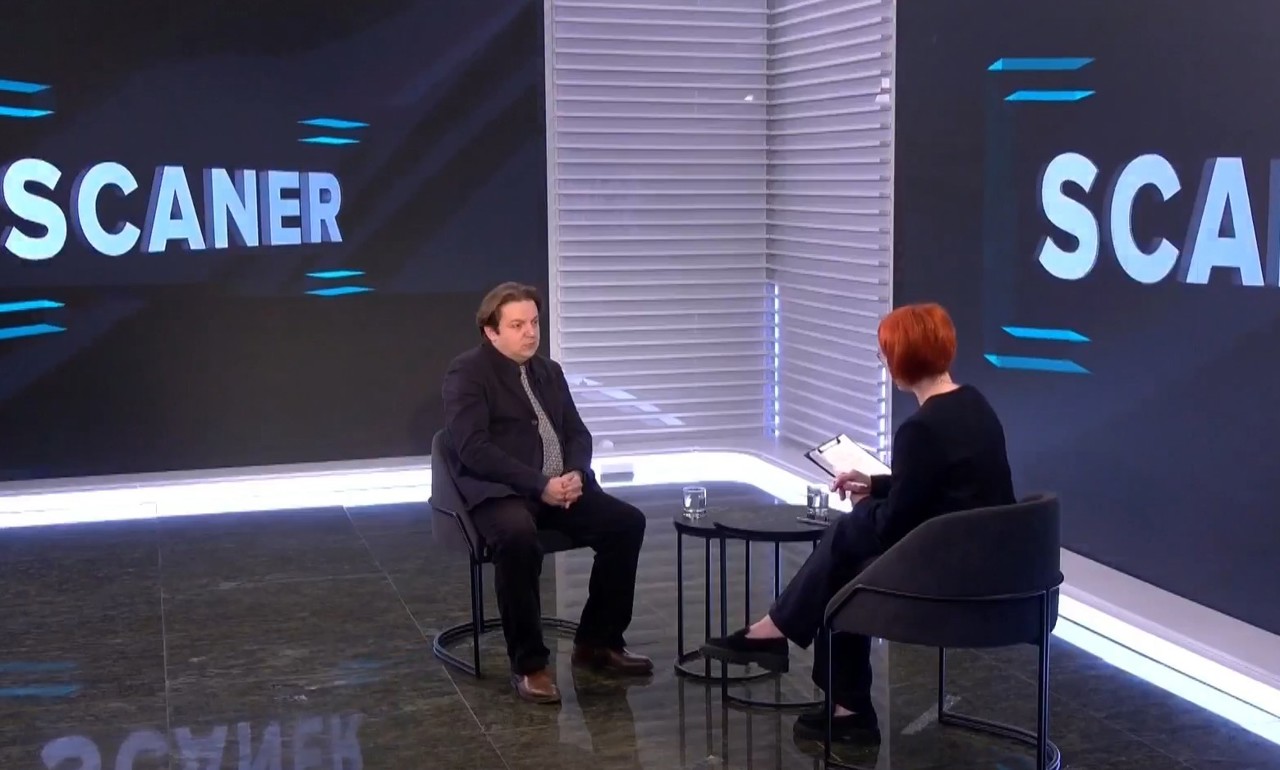
“The people who spoke with journalists from Moldova 1 on the streets of Tiraspol were called in by the mgb after the report aired,” the expert stated on the Scaner program on Moldova 1.
The report produced in Tiraspol covered several topics of public interest and captured residents' opinions about the country's reintegration and European integration efforts. Our journalists engaged with ordinary people they encountered on the street.
The response from the unrecognized authorities in Tiraspol highlights a climate of intimidation, Curăraru notes.
In this context, Andrei Curăraru reminded us that Vitali Ignatiev, the political representative of Tiraspol, recently stated during a meeting with Deputy Prime Minister for Reintegration Valeriu Chiveri that journalists are allowed access to the region based on “accreditation.” However, he asserts that obtaining this accreditation is extremely difficult and serves more as an instrument of control over the press.
Curăraru compared the current situation in the region to that of North Korea, Syria, or Belarus—countries governed by authoritarian regimes. He stated, “Their message is: come to us, everything is fine here. But take one step to the right or left, and someone will suffer.”
He warned that if tensions escalate, representatives of the constitutional authorities of the Republic of Moldova—such as police officers and journalists—could become targets of hostage-taking. This tactic is often used by Belarus as a bargaining chip in political negotiations.
“Journalists should think twice before going there, especially if they are not part of official delegations. There are real risks, and such situations have occurred before, including instances of police officers being detained,” the expert cautioned.
Chisinau no longer "plays" by Tiraspol's rules
Commenting on the first meeting of political representatives from Chisinau and Tiraspol in over a year, Andrei Curăraru emphasized that the concrete results of the discussions are still not visible. We can only assess their effects after the implementation of the announced measures, including a draft law initiated by deputies of the Action and Solidarity Party aimed at gradually eliminating tax and customs benefits for economic agents on the left bank of the Nistru River and establishing a special convergence fund for the reintegration process.
"This meeting was more about recalibrating the relationship between Tiraspol and Chisinau. Until now, we always played by their rules, part of a 'negotiation fatigue' where only technical or economic issues were discussed—political issues were not addressed. Now, we see a qualitatively different position from the Republic of Moldova, where we come with demands, and it's clear what will happen if they are not met," Curăraru explained.
Experts estimate that gradually eliminating tax incentives for the Transnistrian region could generate more than 3 billion lei annually for the budget.
“Why is this happening now? The reason is the path to European integration. We cannot afford budget losses. We must signal to the European Union that the Republic of Moldova controls export and import relations with the left bank to prevent the Russian Federation from using the Transnistrian region for re-export. We've seen how this occurs in Georgia, where such mechanisms generate significant problems. In the past, smuggling forced every Transnistrian to consume vast quantities of pork or chicken. Although the problem is smaller now, a Moldovan farmer still cannot compete with someone from Transnistrian region who does not pay taxes. We need conditions where exports contribute to the Republic of Moldova’s budget at the same level as any other producer,” Curăraru explained.
The proposal is not just an economic initiative but also signals that reintegration can be achieved through economic incentives rather than pressure.
“The pressure will be applied to local elites, as the low salaries in the region reflect a policy that seeks to maintain control over the population. If prices and taxes are aligned with national standards while salaries remain low, the region risks collapse. Entities like Sheriff have essentially operated poorly paid 'slaves,' but that must change. Chisinau's pressure must ensure that the average salary in the region approaches that on the right bank, with financial resources directed towards development and infrastructure projects conditioned on democratization and transparency. Direct communication with the cities of the Republic of Moldova located in the separatist region will also be crucial for successful reintegration,” the expert emphasized.
Curăraru added that out of the three billion lei, approximately 30% could be utilized for direct social support to residents of the region. This would help them recognize the benefits of economic reintegration over the Transnistrian pseudo-state.
“If this money reaches the citizens of the Republic of Moldova in the Transnistrian region directly, it will send a strong signal for reintegration. Many avoid this not because of the right bank, but out of fear of the alleged ministry of security in the region,” Curăraru concluded on the public television station.
The state of economic emergency in the Transnistrian region has been extended by 30 days, now lasting until March 17, following a decision made by the Supreme Council in Tiraspol on February 10 of this year.
Additionally, the authorities in Tiraspol have implemented a special payment system for salaries of employees in the public sector. This system will be in effect from March 1 until December 31, 2026.
Under this new arrangement, salaries, allowances, and other payments will be distributed twice a month in equal installments, occurring in the first and second halves of each month. Those in charge have justified this measure as necessary to optimize budget expenditures and maintain strict control over public finances.