Moldova seeks hybrid defense solutions as radars struggle with low-altitude drone threats
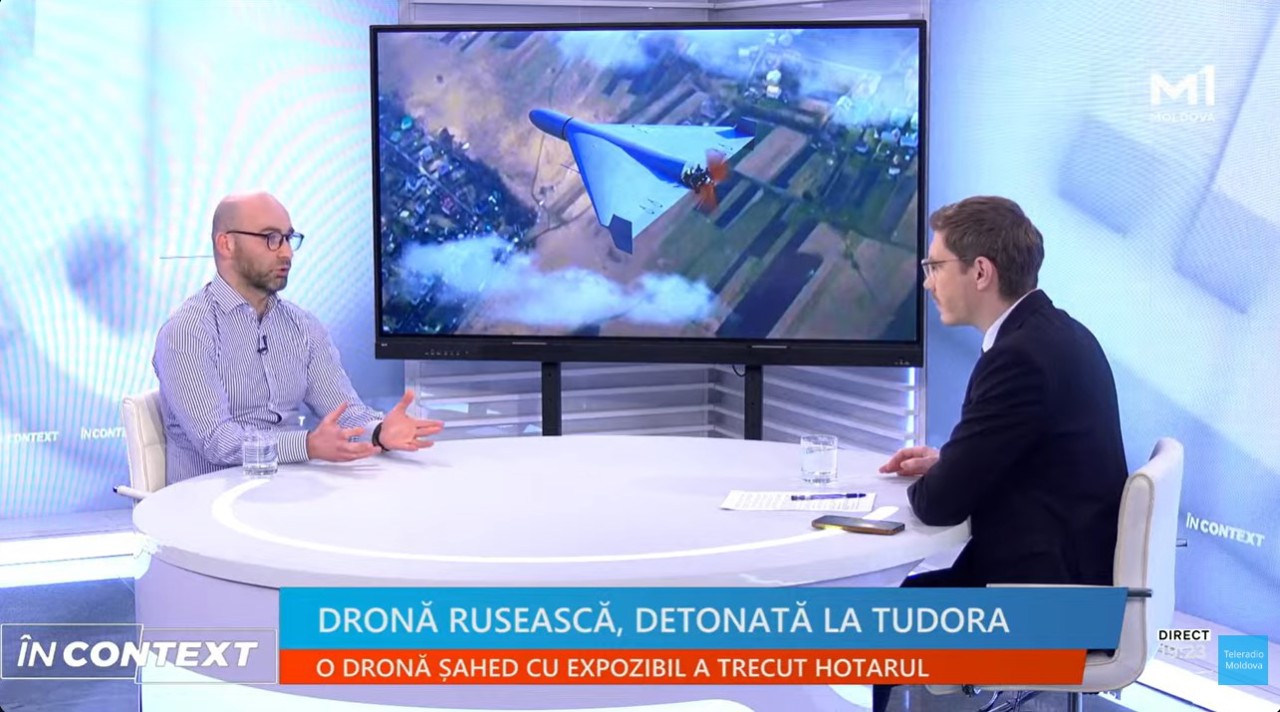
The Republic of Moldova remains critically vulnerable to drone incursions despite recent investments in Western technology. Military expert Artur Leșcu warns that current monitoring systems are not optimized to detect small, low-altitude objects, leaving the national airspace exposed to the ongoing "drone war" along the Ukrainian border.
While the French-made Ground Master 200 (GM200) radar is a high-performance asset, it was designed to track large, high-altitude metallic targets. Modern drones like the Shahed-136, constructed from composite materials with low radar cross-sections, often bypass detection by flying at extremely low altitudes.
"The radar sees them, but often too late—only once they have already penetrated our airspace," Leșcu explained during an interview on Moldova 1. He emphasized that high-quality air defense must be "layered," combining active radar with passive detection methods to close these security gaps.
The shift toward low-cost passive detection
Drawing from the Ukrainian front, Leșcu advocates for acoustic sensors to complement existing radar networks. These sensors can provide vital telemetry on drone flight paths, allowing mobile machine-gun units to intercept threats at a fraction of the cost of traditional missiles.
A typical Shahed drone costs between $20,000 and $30,000 (approx. €27,600 or 541,000 MDL). "The goal is to use interceptors that are cheaper than the target itself," the expert noted. This strategy transforms defense into a sustainable process, countering Russia’s attempt to exhaust regional defensive resources.
Escalating border incidents and public safety
The urgency is underscored by recent violations of Moldovan airspace. On March 18, a drone was detected near the Palanca border crossing. A day earlier, a Geran-2 (Shahed-136) drone carrying a 50kg high-explosive payload was discovered in Tudora, Ștefan Vodă.
To mitigate risks to the population, the government has approved the "MD-ALERT" system, modeled after Romania's RO-ALERT. This cell-broadcast mechanism is expected to be fully operational by late 2027, providing citizens with real-time warnings regarding imminent security threats or extreme weather events directly on their mobile devices.
Modernizing a Soviet-era legacy
Currently, the GM200 is Moldova's only modern air surveillance asset. The remaining 20 radars in the national inventory are Soviet-era relics that are increasingly difficult to maintain due to a lack of spare parts.
Defense Minister Anatolie Nosatîi has reiterated that the intensifying regional threats demand a superior capacity for risk anticipation. Moving forward, the strategic focus remains on building an integrated, multi-layered system capable of neutralizing the "low and slow" threats of modern asymmetric warfare.
Translation by Iurie Tataru