Chișinău marks 123 years since the anti-Jewish pogrom: “People were killed just for being Jews”
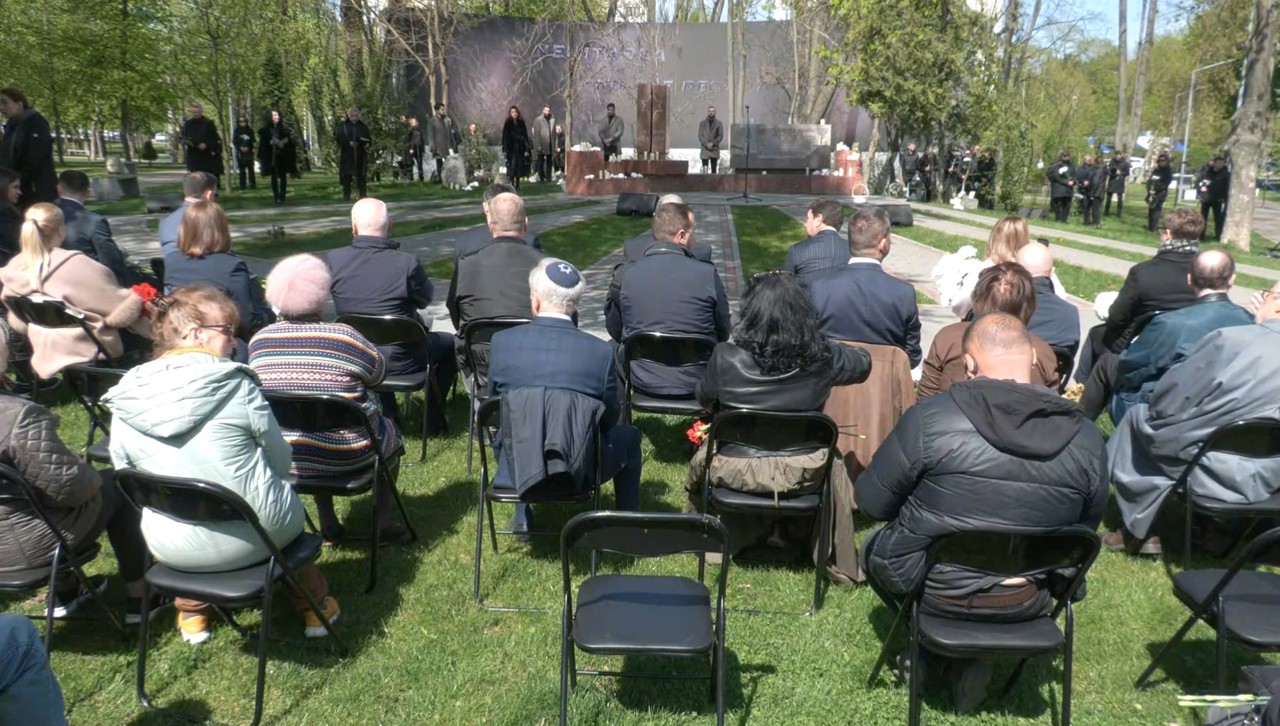
On April 23, members of the Jewish community, along with officials and diplomats, gathered in Chisinau to commemorate the 123rd anniversary of the April 1903 pogrom. Participants honored the memory of the 49 victims of anti-Semitic violence with a moment of silence and laid flowers in remembrance, reflecting on the profound impact this tragic event had on the city's history.
During the ceremony, testimonies were read by the descendants of victims, who provided detailed accounts of the tragedies experienced by their families.
"Grandfather Kelman Boliovici was a grain merchant in Chisinau, while Grandma Hina took care of the children and the household. In April 1903, during Pesach (Jewish Passover), a neighbor and a friend came to visit Grandfather Kelman. They were aware that Jews in the city were being beaten and robbed, and they decided to take advantage of Grandfather's hospitality. When they saw his daughters, Ita and Hava, young and beautiful girls with long black hair, they attacked them. Grandfather tried to defend them but was mercilessly beaten over the head with an iron rod. He died the next day in the Jewish hospital. Grandma passed away shortly after the pogrom. Ita and Hava recovered physically but were left with lifelong psychological effects from that tragedy. That day has become a symbol of suffering for our family."
Another testimony illustrated the suffering of Zahar Benderschi's family during those days of extreme violence.
"I remember my grandmother was paralyzed and used a wheelchair. In 1903, one of the most violent pogroms against Jews occurred in Chisinau. It lasted three days, resulting in many deaths and the destruction of numerous homes. The police did not intervene. My father and grandfather reminisced about the pogrom. I once had many photos that my grandfather took after that massacre, but they were lost during the war and evacuation. I recall a photo of my grandfather's shop with its windows broken and the inside a complete mess. There is also a photo of our house after the pogrom and another depicting the bodies of our neighbors on the sidewalk. My father mentioned that my grandfather submitted these images to the court. My grandmother was also a victim of this pogrom. During the chaos, my grandfather was away on business in the surrounding villages, leaving my grandmother home alone. The attackers severely beat her and left her unconscious in the yard, thinking she was dead. However, she survived but suffered a spinal injury, spending the rest of her life in a wheelchair.”
Officials present at the event sent messages of solidarity, emphasizing the need to preserve historical memory and combat all forms of hatred, discrimination, and violence while promoting respect among communities.
The Ambassador of the State of Israel to the Republic of Moldova, Yoram Elron, highlighted the historical significance of the tragedy and the relevance of its lesson.
"The Chisinau pogrom remains a tragic symbol of a period when Jews were defenseless. Forty-nine people were killed, hundreds were injured, and thousands were left homeless. This tragedy represents the kind of persecution that ultimately culminated in the Holocaust. Today, anti-Semitism is rising again. We reaffirm our commitment to combat hatred and build a future of dignity and peace,” the diplomat stated.
According to Culture Minister Cristina Jardan, the April 1903 pogrom remains one of the worst tragedies in Chisinau’s history.
"It was violence directed against a community, fueled by prejudice and propaganda. People were killed simply because they were Jews. This commemoration is a gesture of respect and a duty to convey the truth to future generations,” the official said.
The event serves as a lesson in history and responsibility, said Ion Ceban, the mayor of Chisinau.
"It is an honor that together we learn, remember, and draw lessons from our shared history. Hate cannot be tolerated. Hate speech breeds violence, and we must never allow it. Over a century ago, half of Chisinau's population was made up of the Jewish community, and what happened then had global repercussions," concluded Ion Ceban.
Notably, during the pogrom of April 1903, 49 Jews were murdered, around 500 were injured, approximately 2,000 Jewish families were left homeless, and 1,500 Jewish shops and houses were destroyed.