Maia Sandu in Kyiv: Chernobyl exposed Soviet contempt for human life
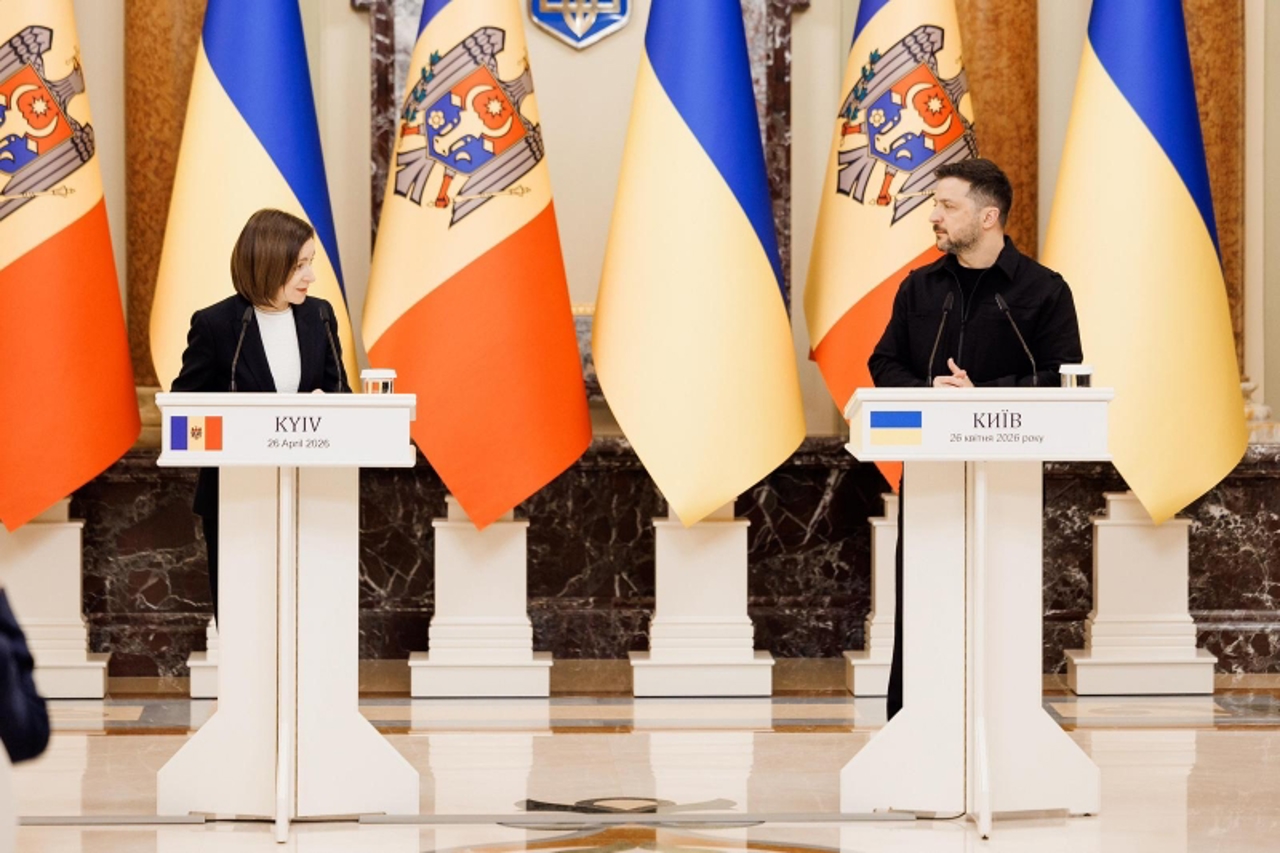
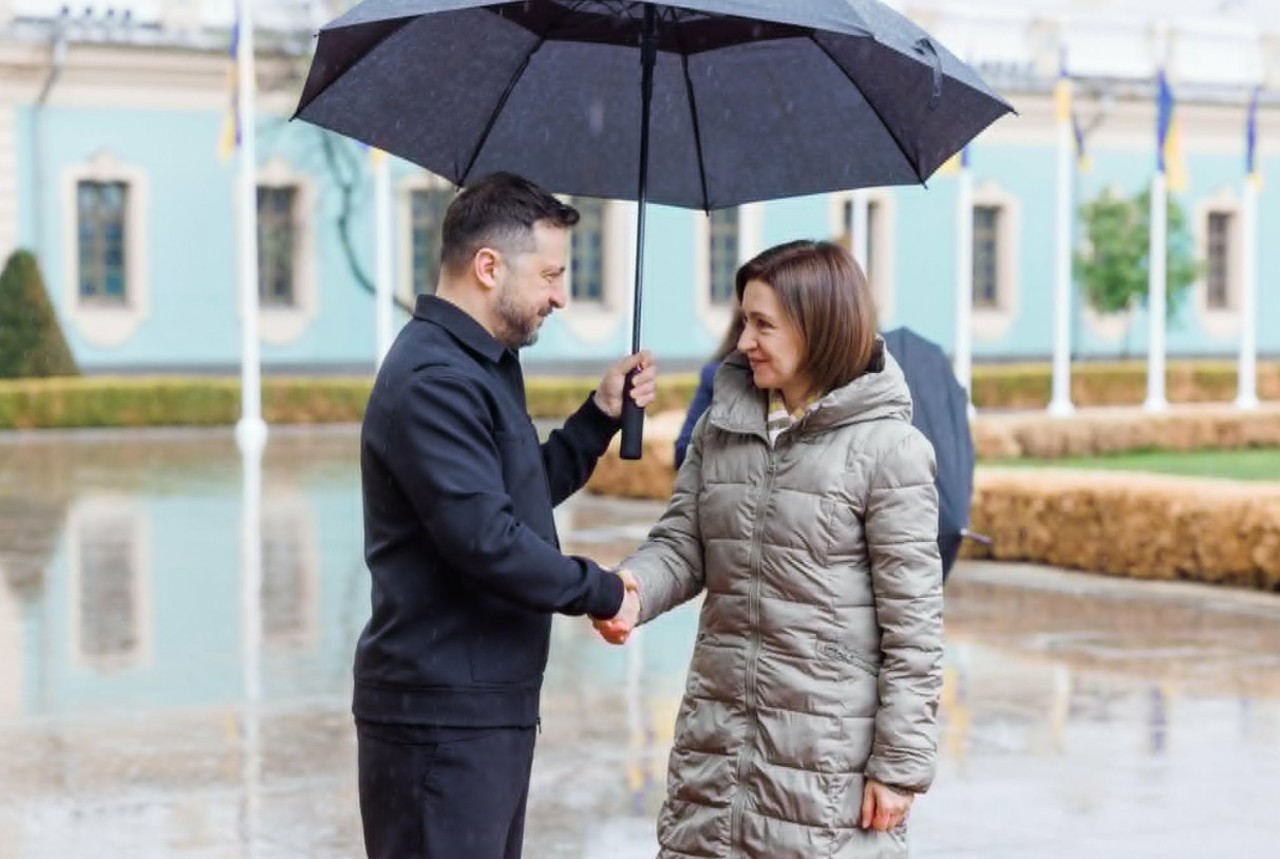
During a joint press conference with Ukrainian President Volodymyr Zelensky in Kiev on April 26, President Maia Sandu stated that the Soviet regime's disregard for human life and its culture of secrecy, which posed a threat to an entire continent 40 years ago at Chernobyl, can still be seen in the Kremlin's actions today. She emphasized that Ukraine has now become a "security provider" for Europe and called on the European Union to commence accession negotiations "without delay" with both Ukraine and Moldova.
The President of the Republic of Moldova, Maia Sandu, sent a message of European solidarity from Kiev—a city that has shown the world what it means to stand firm against adversity. She linked the tragic memory of the Chernobyl disaster to Russia’s ongoing war against Ukraine.
“Chernobyl revealed the Soviet regime’s contempt for human life, and little has changed in the Kremlin since then. This same contempt is reflected in Russia’s behavior today. Yet, despite this disregard, Ukraine is fighting, innovating, and resisting,” declared Maia Sandu.
According to the President, the Chernobyl disaster served as a reminder to an entire continent that the threats posed by authoritarian regimes do not respect borders.
“The Soviet regime knew what happened and chose to hide the truth while radiation spread across Europe, endangering millions of lives. Liquidators, including Moldovans, were sent without protection or prior notice of the truth. Many paid for this service with their health and lives. We commemorate them today,” Sandu said.
Ukraine: Europe’s new security provider
Beyond its tragic aspects, Maia Sandu praised Ukraine’s resilience and military innovation, which have transformed global strategic paradigms. Ukraine is now recognized not just as a country in need of assistance, but also as a model of expertise for the entire continent.
“Dear Volodymyr, what your country has achieved in defending its people and sovereignty is remarkable. Ukraine has rewritten the doctrine of modern defense. Your soldiers and engineers have developed capabilities that are now being studied and sought after throughout Europe and beyond. Ukraine has become a security provider for the entire continent,” Maia Sandu told her Ukrainian counterpart.
The President of Moldova expressed her support for the European Union’s decision to provide a €90 billion loan to Ukraine and to implement new sanction packages against the Russian Federation.
“A lasting peace requires justice. The Republic of Moldova is proud to be a founding member of the Special Tribunal for the Crime of Aggression against Ukraine, which will be established within the Council of Europe. As the Chairman of the Committee of Ministers of the Council of Europe, we place accountability at the heart of our mandate through the Register of Damage Caused by Russian Aggression, the International Commission on Claims for Ukraine, and the Special Tribunal itself. In a few weeks, Chisinau will host the Council of Europe Ministerial Meeting, where we expect the Extended Partial Agreement on the Management Committee of the Special Tribunal to be formally adopted, thus moving from political commitment to operational reality,” Maia Sandu concluded.
"The war is reaching us too."
During the same press conference, Maia Sandu emphasized that holding the Russian Federation accountable "is a personal matter for us."
"Russia's war is extending to the Republic of Moldova as well. Recently, three hundred thousand people in northern Moldova were left without safe drinking water for nearly a week due to the Russian attack on the Novodnistrovsk hydroelectric power plant. A few weeks later, our electricity supply was disrupted when Russia targeted Ukraine's energy infrastructure. Our airspace has been violated countless times. We are grateful to Ukraine for its collaboration in addressing the river pollution, restoring the electricity connection, and much more. By defending itself, Ukraine is also defending us," pointed out the President of the Republic of Moldova.
A Call for the EU to honor Its commitments to Moldova and Ukraine
Finally, Maia Sandu appealed to the EU member states to officially and "without delay" open accession negotiations for both Moldova and Ukraine, emphasizing that both countries have met the necessary conditions.
"Chernobyl, forty years ago, taught us what shared vulnerability means. Today’s war in Russia teaches us this lesson again. That is why we assert clearly: Moldova’s security and Ukraine’s security are interconnected. This is precisely why our European path is so important. The European Union has always promised that progress will be rewarded. Moldova and Ukraine have fulfilled the conditions for opening official accession negotiations. Honoring this commitment would not only be the right thing to do but essential for the credibility of the entire enlargement process," declared Maia Sandu.
Additionally, the head of state assured her counterpart in Kiev of Moldova's full support in achieving a real, lasting, and principled peace based on Ukraine’s sovereignty and territorial integrity.
"Moldova is also prepared to contribute to the reconstruction of Ukraine. The reconstruction of Ukraine is a shared responsibility of Europe, and Moldova embraces this as its own responsibility," concluded the president.
We remind you that President Maia Sandu visited Ukraine on April 26, where she participated in events commemorating the victims of the Chernobyl nuclear disaster and held talks with Ukrainian President Volodymyr Zelensky.
On April 26, 1986, reactor No. 4 at the Chernobyl Nuclear Power Plant, located in what was then the USSR, exploded and caught fire during a failed maintenance operation and safety test. The explosion released a radioactive cloud that spread over much of Europe.
Thirty-one people died in the initial disaster, but many more succumbed later to radiation-related illnesses, primarily in what is now Belarus.
Hundreds of thousands of individuals known as "liquidators" were mobilized from across the Soviet Union to mitigate the impact of the radioactive contamination, including over 3,500 from the Moldovan SSR.