EU High Representative: May 9 is not a “Victory Day”
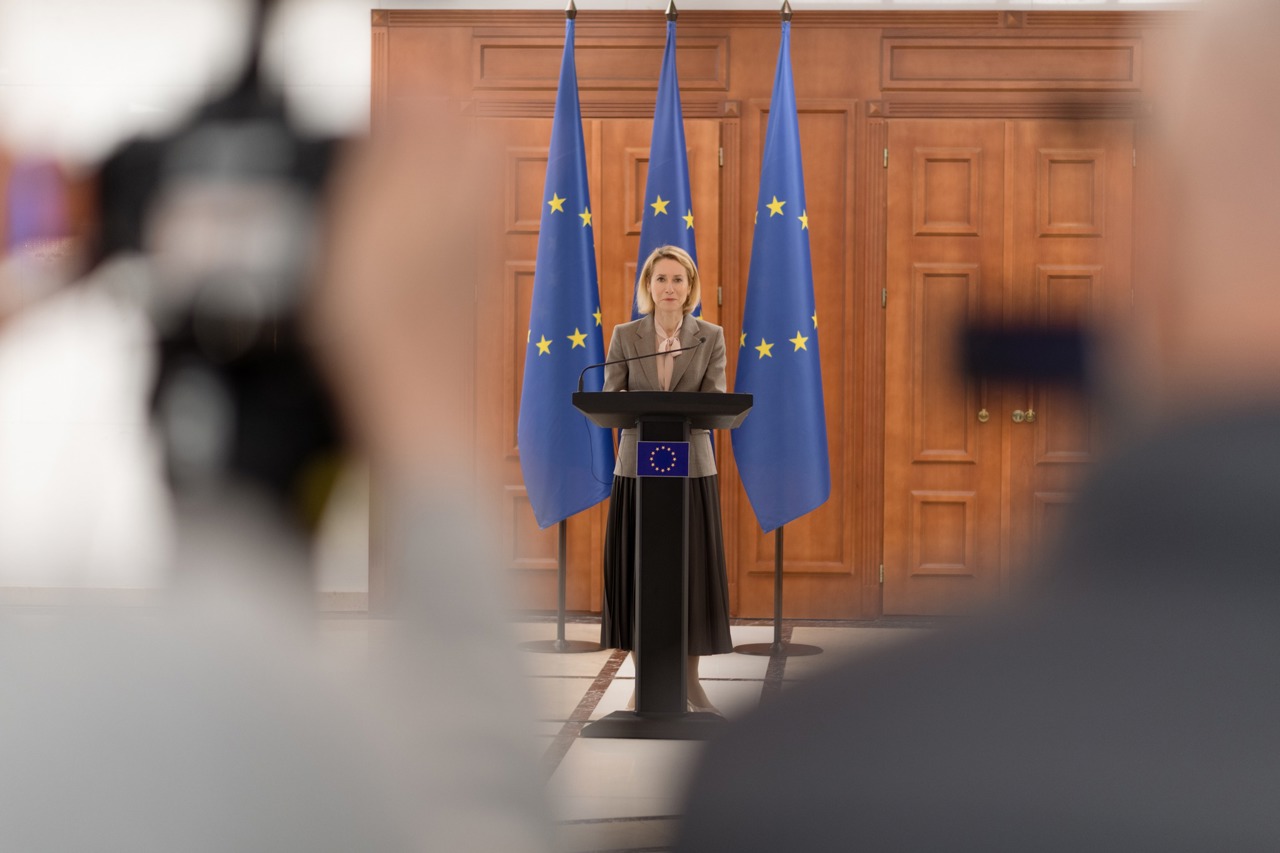
On May 7, during a press conference in Chisinau, Kaja Kallas, the High Representative of the European Union, stated that May 9 should not be celebrated as Victory Day because of the atrocities that occurred after World War II. This statement was made alongside President Maia Sandu.
Kaja Kallas, who hails from Estonia, noted on May 9 that her country is home to diverse communities with varied perspectives. While the historical contexts may differ, she emphasized the importance of focusing on "our common future," which is the essence of Europe Day.
She expressed, "If, after May 9, when the war ended, Stalin had told us that we were free and could enjoy our freedom and independence, we would have celebrated May 9 as Victory Day as well. However, because it was on this day that the atrocities against my country began, we cannot commemorate May 9 as Victory Day." The statement was made by the head of European diplomacy.
When asked how to reconcile communities that view this day differently or even in opposition, President Maia Sandu emphasized that the European Union represents peace. On May 9, we honor the lives lost while simultaneously celebrating the peace project known as the European Union.
“After the Second World War, recognizing the countless lives lost and the extensive destruction caused by the war, the European Union determined that a different path must be taken. We pay tribute to the sacrifices of the tens of millions who lost their lives. At the same time, we celebrate peace and the peace project called the European Union,” the President stated.
Europe Day is observed on May 9 to commemorate the Schuman Declaration, which laid the foundation for the European Coal and Steel Community (ECSC)—the first in a series of European institutions that eventually led to the formation of today’s European Union.
Europe – built through solidarity
In 1950, the countries of Europe were still grappling with the devastating aftermath of the Second World War, which had concluded five years earlier. They were seeking ways to prevent a future conflict. The states concluded that by pooling coal and steel production, a potential war between France and Germany—historical rivals—would be "not only inconceivable but also materially impossible."
The declaration made by the French Minister of Foreign Affairs, Robert Schuman, on May 9, 1950, is recorded in the history of European construction as the "Schuman Declaration." It proposed establishing a community in which member states would jointly manage these two resources.
The European Coal and Steel Community was formed by France, Germany, Italy, the Netherlands, Belgium, and Luxembourg. This initiative helped to raise living standards and foster a more unified Europe.
The Schuman Declaration states that "world peace cannot be secured without creative efforts proportionate to the dangers that threaten it," and that "Europe will not be built all at once or as a result of a single plan, but through concrete achievements that will first create a de facto solidarity."
Europe Day was established in 1985 during a summit of European leaders in Milan, with May 9 chosen to commemorate the Schuman Declaration. The first official European-level celebration took place the following year, on May 9, 1986.
In the Republic of Moldova, Europe Day was celebrated on a large scale for the first time at the Grand National Assembly Square (GNA) on May 9, 2016. This marked a shift from previous years, when the event was observed more modestly. Subsequently, a legislative initiative was supported to officially mark Europe Day concurrently with Victory Day against Fascism, a project that was approved by Parliament in April 2017.