REPORT | Moldova faces Europe’s lowest water quality levels

Water quality is a significant issue in the region, and the Republic of Moldova has the poorest record in Europe, ranking last in terms of drinking water safety. The country's sanitation infrastructure is also in critical condition, placing it behind countries like Albania and Georgia, according to the Environmental Performance Index.
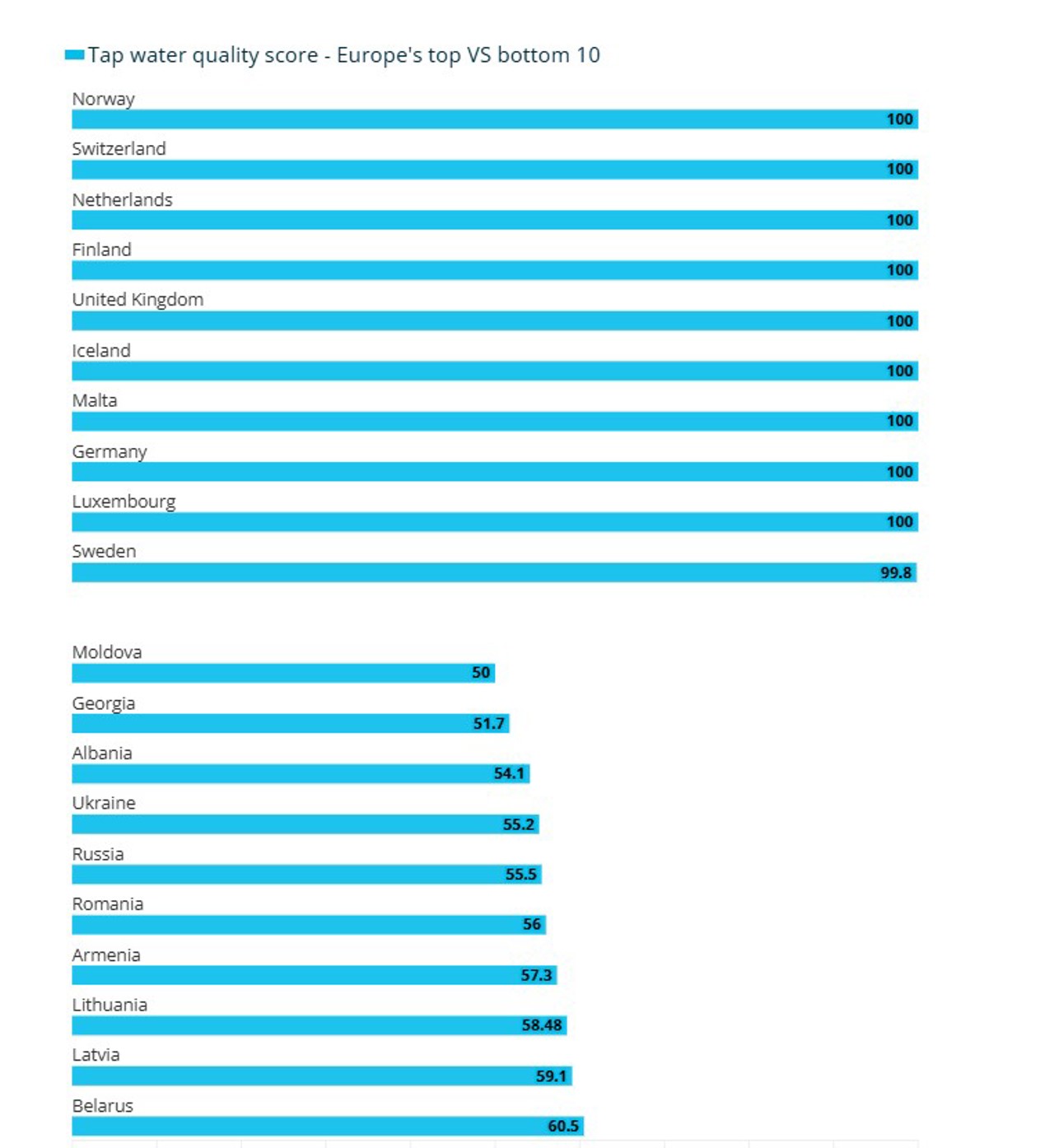
The Environmental Performance Index shows that the Republic of Moldova received a score of only 50 points in the drinking water and sanitation category, the lowest in Europe.
In contrast, the top-ranking countries—Finland, Iceland, the Netherlands, Norway, Switzerland, and the United Kingdom—achieved the maximum score for safeguarding public health against unsafe water and poor sanitation conditions.
While northern European countries invest heavily in protecting water resources and providing the population with water of the highest standards, thousands of people in the Republic of Moldova continue to consume water contaminated with nitrates, pesticides, and dangerous bacteria.
Specialists warn that the problem has become a public health one, given that the costs of treating and ensuring safe water are constantly increasing.
Data from the European Environment Agency show that groundwater is one of the continent's most vulnerable resources. Over 20% of it is in a precarious chemical state due to high concentrations of toxic substances such as mercury, cadmium, and nitrates, which exceed the limits set by European legislation.
The pressure on water resources is also amplified by the enormous costs of treating water for consumption. The elimination of nitrates from agricultural fertilizers alone would cost the European Union up to 320 billion euros annually.
According to the European Commission, the permissible limit of 50 milligrams of nitrates per liter was exceeded at 14% of groundwater monitoring stations in Europe.
Water from around 75% of wells contains excess nitrates
The situation is also alarming in the Republic of Moldova. Data from the National Public Health Agency show that over half of the public water supply systems in rural areas have presented non-compliant samples. In many cases, both chemical and microbiological standards were exceeded, endangering consumer health.
The situation of wells is even worse. Approximately 75% of them contain excessive concentrations of nitrates, sometimes ten or even twenty times above the permissible sanitary limits. Specialists claim that a large part of the wells were built chaotically, without respecting sanitary norms and without consulting the relevant authorities.
Over 60% of deep water sources, especially artesian wells, have substandard quality. The water may contain ammonium, hydrogen sulfide or iron, which influence the smell and color of the water. In other cases, elements that pose serious health risks, such as nitrates, fluorine or boron, are detected, warn ANSP specialists.
Experts warn that the problem of groundwater pollution will continue to worsen in the absence of massive investments in water and sewage infrastructure, as well as stricter control over the use of pesticides and chemical fertilizers.
In recent years, access to centralized water systems for the rural population of the Republic of Moldova has increased, and almost 70% of village residents are connected to water supply networks. However, experts say that well water may no longer be a safe alternative for consumption in the coming decades.
Authorities recommend that citizens periodically request information on the quality of the water provided by operators and avoid consuming water from unverified sources, especially for children.