Moldova continues to preserve monuments of the totalitarian regime
A European future with Soviet symbols visible everywhere. The Republic of Moldova is not rushing to remove monuments of the totalitarian regime. The Ministry of Culture has stated that the issue is sensitive and that discussions are ongoing on a case-by-case basis for each monument.
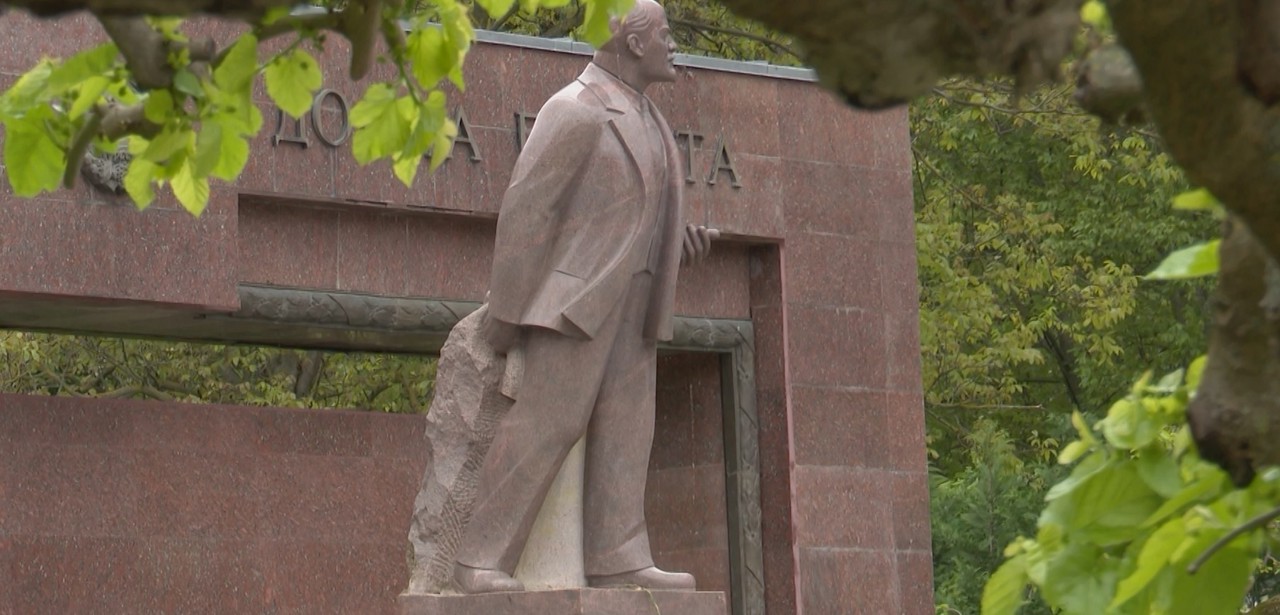
In 1991, the deputies of the first Parliament of the Republic of Moldova adopted the Law on the Liquidation of Monuments and Other Communist Symbols. However, over 30 years later, this law has yet to be implemented.
The granite statues of Lenin, Marx, and Dimitrov were "exiled" from the city center to the Moldexpo Exhibition Center in 1991. These statues were later joined by additional figures, including the ideologist Karl Marx and Bulgarian communist leader Georgi Dimitrov.
The presence of symbols from a regime that orchestrated deportations and famine in Chisinau's public space is disputed. Some citizens who seek a European future view these symbols as outdated, while others, nostalgic for the Soviet era, feel a connection to them.
Dr. Sergiu Mustață, a historian, stated, “The decommunization of the Republic of Moldova has not happened even after thirty years. In light of our aspirations for EU accession and our development as an independent society, it is time to relocate these monuments to museum sites. Liquidating or erasing our past is neither permitted nor advisable since understanding our history is crucial. These monuments no longer represent us as a state.”
Opinions among Moldovans are divided. Some believe the monuments should remain in their current locations or be moved to specially designed museum spaces, while others advocate for their destruction.
One passerby commented about the monument to the Soviet revolutionary Kotovsky, saying, “We cannot turn the page on history simply because we like or dislike it. It is important to preserve what is beautiful. This monument does not confuse us. I will not say he was a hero of Moldova, but we have lived through those times.”
In Balti, a monument to a Soviet T-34 tank stands in the city center, with locals describing it as a significant symbol that should remain.
“It is the most valuable monument we have,” said one resident. Another woman added, “At least we have a monument. People gather on Victory Day and lay flowers. Should it be preserved? Definitely.”
A similar sentiment is found in Comrat, where a Lenin statue has stood since 1970. Locals view it with pride, considering it an emblem of their city. One resident insisted, “It is our past, our history. We must honor it. It does not bother anyone, and children learn from it. It should not be demolished; destroying it would be barbaric and a desecration.”
Another city resident noted, “When tourists come here, they stop at Lenin and take photos. For Gagauzia, it is a place that represents history.”
The Ministry of Culture approaches the subject of Soviet monuments with caution. Minister Cristian Jardan remarked that it is a sensitive topic that requires discussion on a case-by-case basis for each monument. “These monuments are important for teaching future generations about the past. Since they are located in the center of the capital and in prominent areas, they should be relocated to other places. This reflects international practices,” he stated.
In the Republic of Moldova, there is a museum that houses over 60 statues and busts from the Soviet era. This collection, assembled over several decades by Petru Costin, includes exhibits from across the country.
Visitors to the museum come face-to-face with figures such as Lenin, Stalin, Sergei Lazo, Cotovschi, Gagarin, and Karl Marx. The era's atmosphere is further enhanced by large exhibits, including two helicopters and a Soviet-built An-2.
Petru Costin expressed his views on the monuments: “I believe they should be preserved in the museum for historical purposes. I gathered them from various corners of the country, despite numerous bureaucratic challenges. I have allocated another piece of land and am considering expanding the museum.”
In various European countries, Soviet monuments have found homes in museums. For instance, in Latvia, all Soviet monuments are housed in the Museum of Occupation, the most visited museum in Riga. Ukraine also adopted a law to remove Soviet communist monuments following Russia's annexation of Crimea.